Cisco ASA/FTD Exploitation Makes VPN Availability An Emergency
Cisco confirms active exploitation of ASA and FTD CVE-2026-20349. Exposed remote-access services need the correct hot fix and reload-focused triage.
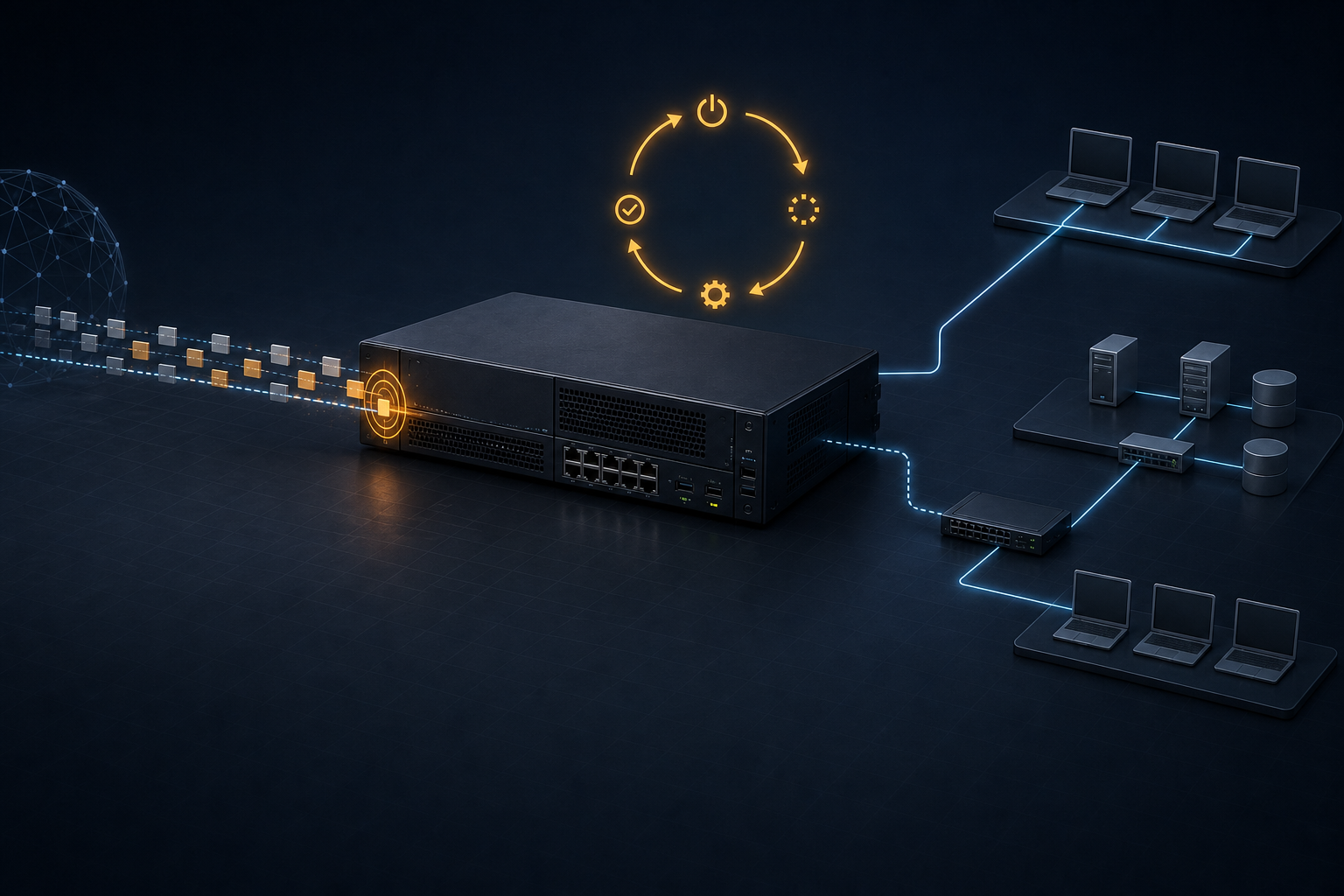
Cisco disclosed CVE-2026-20349 on August 11 and says its incident response team became aware of active exploitation in August. An unauthenticated remote attacker can send a crafted HTTP request to the Remote Access SSL VPN service on a vulnerable ASA or FTD device and force an unexpected reload. Cisco rates the flaw High at 8.6, has released branch-specific hot fixes, and says no workaround addresses it.
Exposure depends on both software and configuration. IKEv2 remote access with client services, SSL VPN, and FTD Zero Trust Network Access can enable the affected SSL listen sockets. CISA added the CVE to KEV with an August 14 deadline for covered federal systems. Operators need to prove configuration and version, install the exact platform package, protect service continuity during the change, and investigate unexpected reloads without misreporting this denial-of-service flaw as remote code execution or data compromise.
Key Takeaways
- check_circle Cisco confirms active exploitation of CVE-2026-20349, and CISA added it to KEV on August 11.
- check_circle The attack is remote and unauthenticated but has a confirmed effect of device reload and denial of service, not code execution.
- check_circle Affected configurations include IKEv2 remote access with client services, SSL VPN, and FTD Zero Trust Network Access on vulnerable releases.
- check_circle Cisco says no workaround addresses the vulnerability; remediation requires the correct ASA or FTD hot fix.
- check_circle ASA branches 9.16 and 9.18 need an ASDM compatibility step because their hot-fix numbering starts with 89.
- check_circle Cisco has not published an actor, victim count, request signature, campaign infrastructure, or evidence of ransomware use.
Active Exploitation Put A Three-Day Deadline On A DoS Flaw
Cisco published the advisory on August 11 and states that PSIRT became aware of active exploitation during August. CISA added CVE-2026-20349 to KEV on the same date and set August 14 as the remediation due date for covered federal systems under BOD 26-04. The catalog lists ransomware use as unknown and points agencies to both the vendor fix and CISA's forensic triage requirements.
The CVSS 3.1 base score is 8.6. The vector is network reachable, low complexity, requires no privileges, and needs no user interaction. The scored technical impact is availability, not confidentiality or integrity. That distinction should remain visible in executive and incident reporting: the confirmed vulnerability can interrupt the firewall and remote access service by forcing a reload. Cisco does not describe it as authentication bypass, remote code execution, or persistent compromise.
A denial-of-service label does not make the operational consequence trivial. A firewall reload can disconnect remote workers, administrators, third parties, contact-center staff, and automated systems. Repeated triggers can undermine a failover design or complicate a change window. Priority should reflect internet exposure, dependency on remote access, redundancy, recovery time, and current reload evidence, while the update remains the required technical fix.
A Crafted HTTP Request Reaches The Remote-Access Listener
Cisco attributes the flaw to insufficient error checking while the Remote Access SSL VPN service processes HTTP requests. An attacker sends a crafted request to the service on an affected device. Successful exploitation causes the device to reload unexpectedly and produces a denial-of-service condition. No credentials or user action are required, so an exposed listener can be attacked directly from its reachable network.
The public advisory does not provide the malicious request fields, a packet capture, source addresses, a rate of exploitation, or a statement about how reliably one request produces a reload. It links two Snort rules, but Cisco does not publish a campaign-specific indicator set on the advisory page. Defenders should not create a precise exploit signature from the short vulnerability description or assume that every generic HTTP error is an attempt.
The narrow impact also controls incident scope. An unexpected reload on a vulnerable exposed appliance is a lead that needs review, not proof that configuration or traffic was stolen through this CVE. If the same device shows unauthorized configuration, new accounts, persistence, command execution, or data access, investigate those facts as a broader incident and consider other attack paths. Do not attribute them to CVE-2026-20349 without evidence.
Configuration Determines Which Appliances Expose The Path
A vulnerable software release alone is not Cisco's full exposure test. The device must also have at least one configuration that enables the relevant SSL listen sockets. For IKEv2 Remote Access VPN with client services, Cisco points to crypto ikev2 enable on an interface with client-services and a port. For SSL VPN, the basic indicator is webvpn with enable on an interface. FTD can also be exposed when zero-trust is enabled.
On FTD, remote-access VPN features may be configured through Firewall Management Center under Devices, VPN, Remote Access or through the local Device Manager. Inventory both the managed intent and the running device state. Cisco confirms that FMC itself is not affected, but that does not mean an FTD appliance managed by FMC is safe. The vulnerable listener runs on the firewall data-plane device covered by the advisory.
Build a list containing appliance role, platform, ASA or FTD release, hot fixes, exposed interfaces and ports, enabled remote-access features, public addresses, upstream controls, active-passive or clustering design, and business owners. Include virtual appliances, disaster-recovery peers, cold standbys, lab gateways, and temporary remote-access endpoints. A secondary node can become internet-facing during failover even if it is not currently serving user sessions.
The Correct Hot Fix Depends On Branch And Platform
Cisco provides ASA hot fixes for branches 9.16, 9.18, 9.20, 9.22, 9.23, and 9.24. The advisory lists 89.16.4.50, 89.18.4.50, 9.20.4.235, 9.22.3.191, 9.23.1.211, and 9.24.1.221 respectively. The branch mapping is important: selecting a familiar package from another train is not safe proof of remediation.
For FTD, Cisco publishes platform-specific packages across branches 7.0, 7.2, 7.4, 7.6, 7.7, and 10.0. Operators should use the full advisory and Software Checker for the exact release and hardware combination rather than copying one tar filename into a fleet-wide job. Check memory, compatibility, management dependencies, and the supported upgrade path before changing a perimeter device.
ASA 9.16 and 9.18 require special attention because their hot-fix names begin with 89. Cisco says to install ASDM 7.24.1.374 when using those fixes because earlier ASDM versions do not recognize that numbering format. That is an operational dependency, not a separate vulnerability. Plan it into the change, and verify both the running ASA build and the management tool after installation.
Patch Proof Must Include Service And Redundancy
Cisco states that there is no workaround that addresses the vulnerability. Disabling an affected service may change reachability, and upstream controls may reduce some exposure, but neither should be recorded as the vendor fix. Install the appropriate hot fix on every in-scope member. Sequence active-passive pairs or clusters according to the supported procedure so an emergency change does not create the outage it is intended to prevent.
After the change, record the running release and hot-fix state from the appliance, not only a completed management task. Confirm that remote-access listeners still bind to the intended interfaces, authentication succeeds, policy and routing are intact, tunnels pass traffic, monitoring has resumed, and failover members agree on state. Verify that a replacement node, rollback image, or automated recovery process cannot restore a vulnerable build.
Continuity planning belongs beside patching because exploitation targets availability. Validate capacity on the surviving peer, alternate administrative access that does not depend on the same VPN, user communication, health alerts, and escalation paths with Cisco TAC or the maintenance provider. These measures limit operational impact during remediation and future faults. They do not change the requirement to cross the fixed software boundary.
Investigate Reloads Without Expanding The Confirmed Claim
Review system uptime, reload reasons, crash information, high-availability transitions, remote-access session drops, interface health, monitoring gaps, and requests reaching the exposed service during the vulnerable period. Preserve device and centralized logs before they roll over. Correlate a reload with upstream load balancers, network telemetry, support tickets, remote-user disconnects, and configuration change records to separate attacks from maintenance, power events, software defects, and hardware faults.
CISA's implementation guidance asks covered agencies to preserve forensic evidence for actively exploited vulnerabilities. Even outside that mandate, evidence retention is useful because a reload can erase volatile context and repeated service loss can scatter the timeline across peers. If the appliance cannot retain sufficient local data, collect what exists from syslog, authentication, network, orchestration, and availability systems and state the resulting visibility limit.
As of August 13, Cisco confirms active exploitation but does not name the actor, affected organizations, request details, campaign purpose, or post-trigger behavior. CISA lists ransomware use as unknown. Patch rapidly and investigate observed reloads from those facts. Avoid claims that exploitation grants remote control, reads VPN traffic, or installs persistence, because neither primary source attributes those outcomes to this CVE.
Checklist
- Inventory ASA and FTD appliances, software branches, hot fixes, interfaces, remote-access features, and redundancy roles.
- Check for IKEv2 client services, SSL VPN, or FTD Zero Trust Network Access that enables the affected listener.
- Map every platform to the exact Cisco hot fix and include the ASDM 7.24.1.374 requirement for ASA 9.16 and 9.18.
- Preserve reload, crash, VPN, failover, ingress, and centralized log evidence before the emergency change.
- Patch all peers using the supported sequence and verify the running build and hot-fix state on each device.
- Test remote access, routing, policy, monitoring, failover capacity, and alternate administrative access after the change.
- Report confirmed availability impact separately from any broader compromise evidence or still-unknown campaign details.
Sources
- Cisco advisory for CVE-2026-20349 open_in_new
- Cisco CSAF record for CVE-2026-20349 open_in_new
- CISA Known Exploited Vulnerabilities catalog feed open_in_new
- CISA BOD 26-04 risk-based security update directive open_in_new
- CISA BOD 26-04 implementation and forensic triage guidance open_in_new
- Cisco Secure Firewall Software Checker open_in_new
- Cisco Security Vulnerability Policy open_in_new
Continue Reading

Reported vCenter Exploitation Puts The Management Plane In Incident Scope
QUIRSO reports exploitation of vCenter CVE-2026-59310 for reverse SSH access. Patch affected branches and investigate the appliance as a control plane.

Metabase Exploitation Pulls Connected Databases Into Incident Scope
Metabase confirmed active exploitation of CVE-2026-72898. Upgrade exposed instances, invalidate sessions, and scope credentials and connected data stores.

Windows AFD Exploitation Turns Local Access Into SYSTEM Risk
Microsoft and CISA confirm exploitation of Windows AFD CVE-2026-68820. Patch affected systems and scope local access that could have become SYSTEM.