FortiSandbox Exploitation Makes The Analyzer An Incident Target
CISA says attackers are exploiting two unauthenticated FortiSandbox command-injection flaws. Patching needs exact deployment inventory, evidence preservation, and cluster-aware validation.
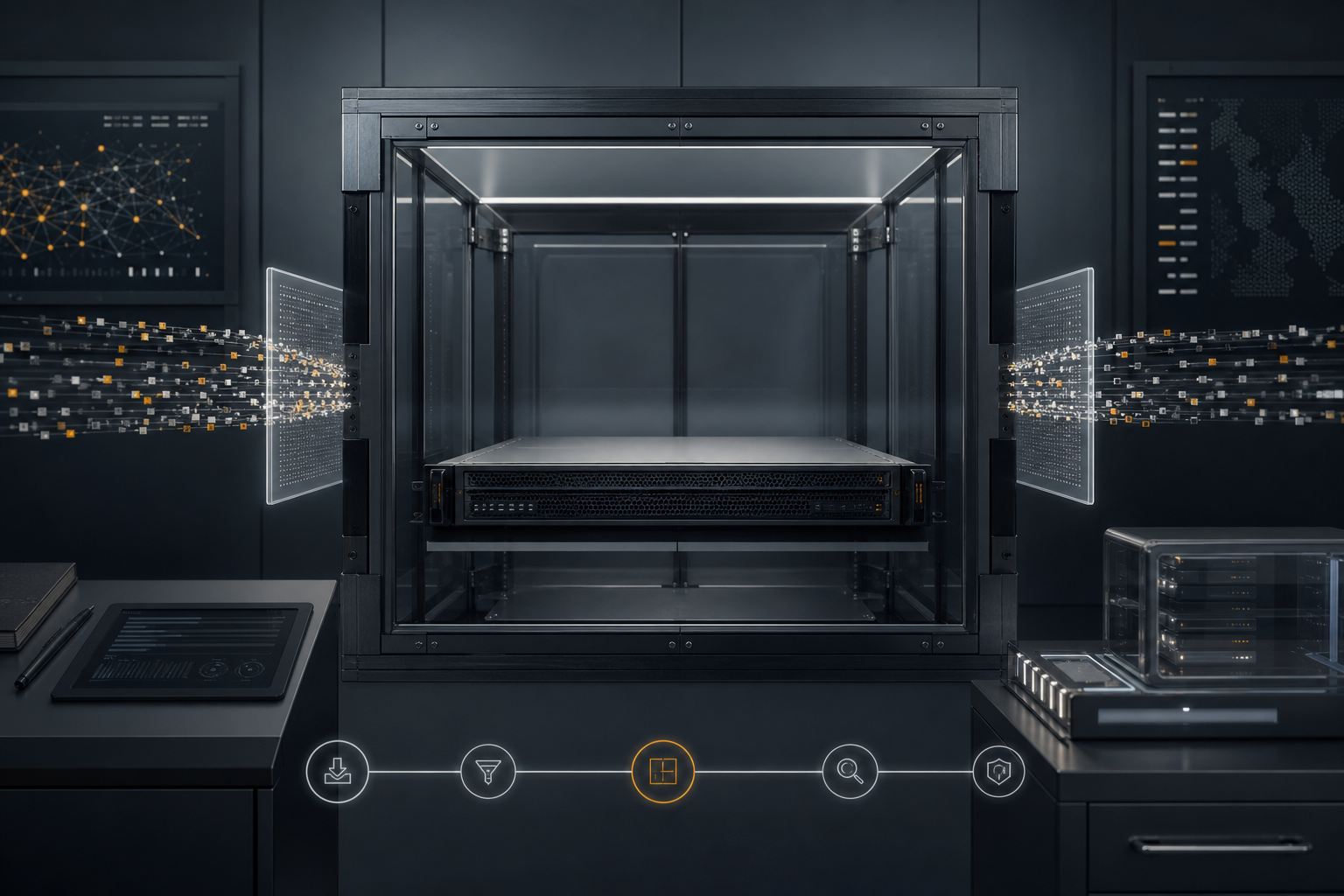
CISA added CVE-2026-25089 and CVE-2026-39808 to its Known Exploited Vulnerabilities catalog on July 16, 2026. Both are unauthenticated OS command-injection flaws in FortiSandbox deployments. The catalog gives covered federal agencies a July 19 deadline and calls for vendor remediation plus the forensic triage required by Binding Operational Directive 26-04.
Fortinet's current advisories still show "Known Exploited: No," so defenders face a source mismatch. CISA's newer exploitation finding should drive the response, while Fortinet's product tables remain the authority for affected releases. Administrators need to identify appliance, cloud, and PaaS instances separately, preserve useful evidence before disruptive work, upgrade every affected node, and prove that connected security controls still operate correctly.
Key Takeaways
- check_circle Treat CISA's July 16 catalog entries as confirmation of exploitation, not as proof that every exposed FortiSandbox instance is compromised.
- check_circle Map CVE-2026-39808 and CVE-2026-25089 separately because their affected versions and deployment models are not identical.
- check_circle Upgrade FortiSandbox 4.4 to 4.4.9 or later and affected 5.0 deployments to 5.0.6 or later, following the current vendor tables.
- check_circle Preserve logs, configuration, exposure details, and integration evidence before patching or rebuilding an appliance under investigation.
- check_circle Validate every cluster member and every connected control after the upgrade; a healthy primary node does not prove the full analysis path is restored.
What CISA Added And What Fortinet Says
CISA's July 16 catalog release added both FortiSandbox flaws with a July 19 due date. The entry for CVE-2026-25089 covers FortiSandbox, FortiSandbox Cloud, and FortiSandbox PaaS. It says a crafted HTTP request can let an unauthenticated attacker execute unauthorized commands. The CVE-2026-39808 entry describes the same outcome through crafted HTTP requests against FortiSandbox. CISA lists ransomware use as unknown for both entries.
The timing is important. Fortinet first published CVE-2026-39808 on April 14 and CVE-2026-25089 on June 9. Each vendor page labels the issue critical, classifies the attack as unauthenticated, and currently says it is not known to be exploited. CISA's catalog is the later public signal and is expressly intended to identify vulnerabilities used in the wild. Defenders should not wait for the vendor metadata field to change before acting on the federal finding.
The mismatch does not establish who exploited the flaws, how many systems were affected, or what an intrusion looks like on disk. It also does not mean every internet-reachable appliance was attacked. Record both source states in the incident timeline: Fortinet supplies the affected-version and fix boundaries, while CISA supplies the current exploitation status and federal response deadline.
Two CVEs, Different Deployment Boundaries
CVE-2026-39808 is the narrower advisory. Fortinet says FortiSandbox 4.4.0 through 4.4.8 is affected and should be upgraded to 4.4.9 or later. FortiSandbox 5.0 is listed as not affected, and the advisory separately says FortiSandbox PaaS 5.0 is not impacted. The vulnerable component is an API endpoint, and the published outcome is execution of unauthorized code or commands through a crafted HTTP request.
CVE-2026-25089 crosses more delivery models. FortiSandbox 4.4.0 through 4.4.8 must reach 4.4.9 or later. FortiSandbox 5.0.0 through 5.0.5 must reach 5.0.6 or later. FortiSandbox Cloud 5.0.4 through 5.0.5 and FortiSandbox PaaS 5.0.4 through 5.0.5 also have a 5.0.6 threshold. Fortinet lists the corresponding 5.2 lines, Cloud 5.2, PaaS 5.2, and PaaS 23.4 as not affected.
That matrix rules out a single fleet-wide version test. An organization may operate an on-premises cluster, a public-cloud appliance, and a service-managed deployment under different owners. Inventory the product type, hosting model, release branch, exact build, management address, exposure, cluster role, and service owner. Do not infer the state of FortiSandbox from a FortiGate or FortiManager software dashboard; they are separate products with separate maintenance evidence.
The Sandbox Is A Security Control And A Data Store
Fortinet describes FortiSandbox as a malware behavior-analysis system that integrates with controls such as FortiGate, FortiMail, FortiClient, FortiWeb, and FortiProxy. Its job is to receive suspicious objects, execute or inspect them in controlled environments, assign ratings, and return results to other parts of the security stack. That makes the appliance more than an isolated scanning utility.
Depending on deployment and policy, a sandbox can hold submitted files, analysis artifacts, job history, network indicators, administrative configuration, certificates, directory settings, and credentials used for connected services. The public advisories do not say which of those assets an attacker accessed. They do show that unauthorized command execution reaches the appliance operating boundary, so responders should scope both the host and the systems that trust its verdicts or administration channel.
Avoid turning architectural possibility into a breach claim. CISA has not named a campaign, published indicators, or described persistence for these CVEs in the catalog. A FortiSandbox administrator should work with the incident-response team and Fortinet support to decide which evidence is reliable for the installed release. If the appliance shows unexplained configuration changes, accounts, processes, outbound traffic, or missing logs, isolate it according to the organization's response plan rather than treating an upgrade as the only action.
Preserve Evidence Before Disruptive Work
CISA's catalog entries point covered agencies to the BOD 26-04 forensic triage requirements as well as the vendor fixes. That ordering matters because firmware upgrades, failover, reboots, log rotation, and restoration can change the evidence available to investigators. Before making those changes, record the current time, build, uptime, cluster state, management exposure, recent administrative activity, log destinations, connected products, and any alerts that triggered the review.
Export the logs and configuration that the response team has approved, and preserve relevant upstream firewall, reverse-proxy, identity, DNS, endpoint, and network records. Do not destroy a suspected appliance image or configuration merely to reach the patched version faster. If high-confidence compromise evidence exists, the team may need a replacement or rebuild path instead of an in-place upgrade. The public advisories do not provide a universal clean-up procedure, so that decision requires environment-specific evidence and vendor guidance.
Credential rotation should follow the same discipline. Identify administrative accounts, API credentials, directory bindings, certificates, and integration secrets the appliance could access. Rotate or revoke what the investigation shows may be exposed, while retaining the records needed to understand prior use. A mass rotation with no inventory can break analysis flows and erase useful attribution without proving the affected system is clean.
Upgrade Clusters In A Controlled Sequence
Fortinet's upgrade documentation says to back up the FortiSandbox configuration before a firmware change and warns that downgrading to an earlier firmware version is not supported. It also describes a cluster order: workers first, then the secondary node, then the primary node, allowing each device to boot fully before the next change. Upgrading the primary causes failover, so the maintenance plan needs a known-good cluster address and an owner watching service state.
Use the vendor-supported upgrade path for the installed model and branch, not only the minimum fixed number copied from a bulletin. Major-release transitions can change features, supported hardware, virtual-machine licensing, and cloud behavior. Confirm firmware checksums through the support portal, retain the pre-change backup under the organization's evidence rules, and document which package was applied to which serial number or virtual instance.
After each node returns, verify its reported build and role. Check cluster membership, engine status, storage health, licensing, time synchronization, log forwarding, and the management interface. Submit a controlled benign test object through each important integration and confirm that FortiSandbox produces a result and the connected product receives it. A completed firmware upload or a green primary node is not end-to-end proof.
Close The Known Gaps Without Inventing Answers
The public record does not identify an actor, first exploitation date, exploit chain, targeting pattern, persistence mechanism, or indicators of compromise. CISA marks ransomware use unknown. Fortinet's advisories do not publish a workaround that substitutes for the fixed versions. Those gaps should remain in the incident record as open questions, not be filled with assumptions from unrelated Fortinet campaigns.
Ask Fortinet support whether there are release-specific logs, integrity checks, or private indicators for the appliance under review. Ask the network team whether the management or API surface was reachable from the internet, partner networks, user segments, or only a restricted administration path during the relevant period. Exposure changes priority and hunting scope, but it does not alter the need to fix an affected build now that CISA confirms exploitation.
The durable control is an inventory that treats security appliances as managed servers. Track ownership, release branches, exposure, backup state, log destinations, support contacts, dependencies, and a tested replacement procedure. A product designed to analyze hostile files still has its own web interfaces, parsers, credentials, and update path. It belongs in the same vulnerability and incident-response program as the systems it protects.
Checklist
- Find every FortiSandbox appliance, cloud instance, PaaS tenant, and cluster member.
- Record exact versions and apply the CVE-specific vendor thresholds.
- Preserve approved host, network, identity, and integration evidence before disruptive work.
- Upgrade workers, the secondary, and the primary in the supported sequence.
- Verify builds, cluster health, logging, engines, and controlled sample processing.
- Keep actor, scope, indicators, and compromise status open until evidence resolves them.
Sources
- CISA official KEV data mirror: July 16, 2026 catalog release open_in_new
- Fortinet FG-IR-26-141: CVE-2026-25089 second-order command injection open_in_new
- Fortinet FG-IR-26-100: CVE-2026-39808 API command injection open_in_new
- CISA BOD 26-04 implementation and forensic triage guidance open_in_new
- Fortinet FortiSandbox 5.0.6 upgrade information open_in_new
- NIST NVD: CVE-2026-25089 open_in_new
- NIST NVD: CVE-2026-39808 open_in_new
Continue Reading

Avi Load Balancer Fixes Put The Control Plane First
Broadcom fixed seven Avi Load Balancer flaws, including a critical network authentication bypass. With no workaround, teams need exact version mapping and controlled controller upgrades.
Signal vs. WhatsApp: Privacy Beyond Message Encryption
Signal and WhatsApp both protect personal chats with end-to-end encryption. The larger privacy differences sit in metadata, discovery, backups, linked devices, and business services.
EY Support-Ticket Breach Puts Tax Attachments Under Review
EY says attackers downloaded client documents from a third-party support platform used for tax work. The disclosure makes ticket attachments, retention, and user protection immediate concerns.