Age Assurance Turns Community Safety Into Identity Risk
Age gates, face checks, ID uploads, and age inference can protect minors, but they also create identity-data risk. Community platforms need minimization, vendor review, retention limits, and clear fallback policy.
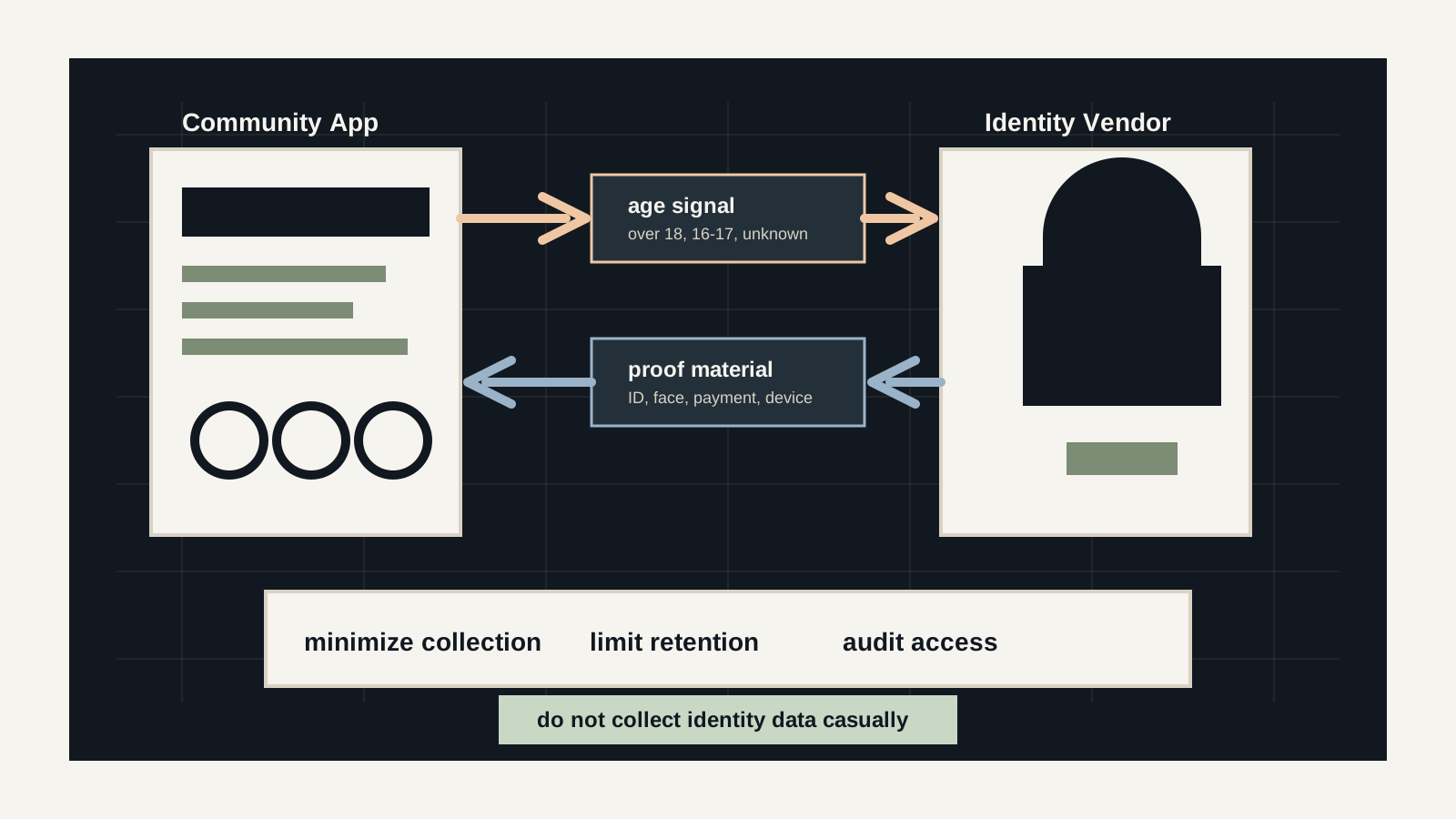
Age assurance is becoming a normal control for social platforms, game communities, adult-content boundaries, dating apps, and teen safety settings. The security question is not whether protecting minors matters. It does. The hard question is what identity data a platform collects to prove age, where that data travels, how long it stays useful, who can access it, and what happens when the vendor or platform is breached.
Community operators should treat age assurance as an identity system, not a moderation toggle. A date of birth field, ID upload, face-based age estimate, payment-card check, device-level age signal, or behavioral age inference each creates a different privacy and security profile. The best implementation proves only what the product needs, keeps raw evidence away from community staff, limits retention, supports appeals, and documents the residual risk for users.
Key Takeaways
- check_circle Age assurance can mean verification, estimation, inference, parental consent, or device-level age signals; these are not equivalent.
- check_circle Collecting government IDs or face imagery for a community app creates a breach impact far beyond ordinary account metadata.
- check_circle The safer design is to receive a narrow age signal rather than store raw identity evidence.
- check_circle Vendor contracts should cover retention, sub-processors, audit logs, breach notice, model review, and deletion proof.
- check_circle False positives and exclusion are security issues because locked-out adults and misclassified minors will seek bypass paths.
- check_circle Communities should design lower-risk defaults for mixed-age spaces instead of forcing every user through high-friction proofing.
Age Assurance Is An Identity Flow
A platform can ask a user to self-declare a birthday, upload a government document, scan a face, use a payment card, get parental consent, rely on an app-store or operating-system age bracket, or infer age from account behavior. These choices are often grouped under age assurance, but they do not carry the same risk. Some are weak but low-data. Others may be stronger but collect information that users would never share with a community moderator.
That makes age assurance an identity flow. The system is resolving an attribute about a person, validating evidence or signals, and deciding what the account can access. NIST's identity proofing guidance is useful even outside government contexts because it separates assurance levels, evidence, validation, verification, privacy, fraud mitigation, and user burden. Community platforms need the same discipline before adding age gates to chat, voice, livestreams, private servers, or paid spaces.
The Data Is More Sensitive Than The Flag
The product decision may only need a small answer: under 13, 13 to 15, 16 to 17, adult, or unknown. The proofing process may touch much more sensitive material: passport images, driver's licenses, selfies, face templates, billing details, phone numbers, device identifiers, IP addresses, behavioral profiles, support tickets, and appeal records. The age flag is small. The evidence trail can be large.
Discord's privacy policy illustrates the shape of a modern community platform even without focusing only on age checks. It describes birthday collection, possible additional age-verification information, device data, activity data, vendors, safety processing, and legal compliance. That does not make Discord unusual. It shows why users and operators should ask precise questions. Who receives raw evidence? Is biometric data created? Is the platform storing the ID or only receiving a result? How long are appeal materials retained?
Safety Rules Can Create Bypass Pressure
A 2026 paper on age assurance technologies argues that effectiveness has to be weighed against side effects such as privacy loss, anonymity loss, bias, exclusion, censorship concerns, and circumvention. That is the right frame for community software. If a check is too invasive or fails too often, users may move to VPNs, borrowed accounts, fake documents, gray-market verification services, or less accountable platforms.
Another 2026 study of UK Online Safety Act discourse found that age-verification milestones were followed by large increases in VPN-related discussion among UK users, with many posts framed around privacy and distrust of intermediaries. That does not prove every user was bypassing rules. It does show a predictable response: if people believe an age gate exposes identity data, some will route around the system. A control that drives users into riskier tooling can change the threat model rather than close it.
Minimization Is The Core Control
The ICO's Age Appropriate Design Code puts high privacy defaults and data minimization near the center of child-focused online service design. That principle also protects adults. If a community only needs to know that an account may enter an adult-labeled channel, it should not keep a permanent copy of the document or face image used to make that decision. The service should store the narrowest useful result, with a timestamp, assurance source, and expiry.
A mature design separates raw proof from community administration. Moderators should not see IDs. Server owners should not receive age documents. Support teams should have limited, logged access to appeals. Product analytics should not reuse proofing data for growth, advertising, or ranking. If a vendor performs the check, the contract should say what data is retained, for how long, by which sub-processors, in which regions, and how deletion is verified.
Mixed-Age Communities Need Product Boundaries
Many communities do not need a high-assurance identity check for every room. They need clear content labels, safe defaults for unknown users, stricter settings for minors, private-room controls, reporting paths, and moderator workflows that do not expose identity evidence. A server with general chat, game coordination, paid content, and adult channels can use different controls for different spaces instead of treating the whole community as one risk class.
That product boundary matters for privacy. If most users can remain in low-risk areas under teen-safe defaults, fewer people need to submit sensitive proof. Higher-friction checks can be reserved for spaces where law, policy, or clear harm risk requires them. The design should also include graceful failure: a user who cannot or will not complete proofing should still understand what they can access, how to appeal, and what information the appeal will require.
What Operators Should Ask Vendors
Age-assurance vendors should be reviewed like identity providers. Ask whether the system uses document verification, face matching, age estimation, liveness checks, payment checks, device signals, database lookups, or behavioral inference. Ask what false-positive and false-negative data exists for age groups, skin tones, disability contexts, document types, countries, and device quality. Ask whether results are explainable enough for an appeal.
Security review should cover encryption, access controls, admin logging, breach history, retention, deletion, sub-processors, model training, test data, abuse monitoring, and incident notice. Legal review should cover jurisdiction, data-transfer mechanisms, child data, consent, processor roles, and audit rights. Product review should cover friction, accessibility, account recovery, and the risk that users move sensitive discussion to weaker channels when the official path feels invasive.
A Better Default
The best age-assurance design does not ask every user for the most sensitive proof by default. It starts with the risk of the feature, applies safer defaults where age is unknown, uses the least intrusive method that meets the requirement, and escalates only when the user requests access to higher-risk content or capabilities. It also treats age data as a short-lived security attribute, not a permanent identity dossier.
For community platforms, the goal should be narrow proof, clear boundaries, and controlled evidence. Protecting minors and protecting privacy are not opposing tasks when the architecture is disciplined. They become opposed when platforms collect broad identity evidence, route it through opaque vendors, retain it without a short reason, and give users no credible explanation of the tradeoff.
Checklist
- Define which spaces or features actually require age assurance before collecting extra data.
- Prefer a narrow age result over storage of IDs, face imagery, or raw proofing evidence.
- Keep age evidence out of moderator and server-owner workflows.
- Set retention limits, expiry rules, access logs, and deletion checks for every age signal.
- Review vendor security, sub-processors, model behavior, breach notice, and audit rights.
- Provide an appeal path that does not expose more data than the risk justifies.
- Use teen-safe defaults for unknown users instead of forcing full identity proofing for low-risk spaces.
Sources
- Discord Privacy Policy open_in_new
- ICO: Age appropriate design code open_in_new
- NIST SP 800-63A: Identity Proofing and Enrollment open_in_new
- arXiv: Assessing Age Assurance Technologies open_in_new
- arXiv: Online Safety Regulation Increases Privacy Risk open_in_new
- UK Online Safety Act 2023 open_in_new
Continue Reading
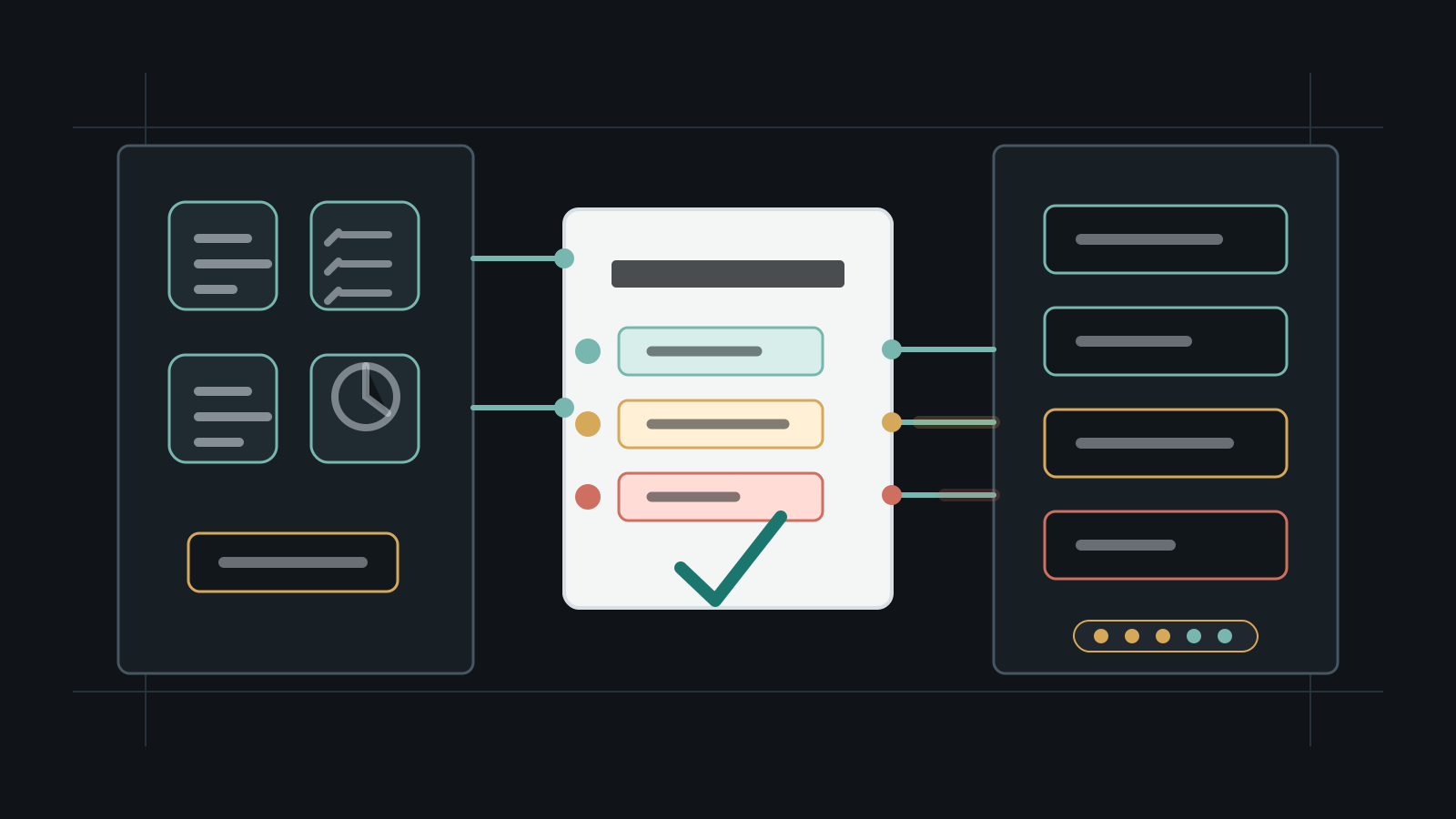
OAuth Consent Turns Community Apps Into Identity Infrastructure
OAuth app installs connect communities to chat, files, calendars, and admin APIs without sharing passwords. That makes consent review, scope limits, token revocation, and app inventory security work.
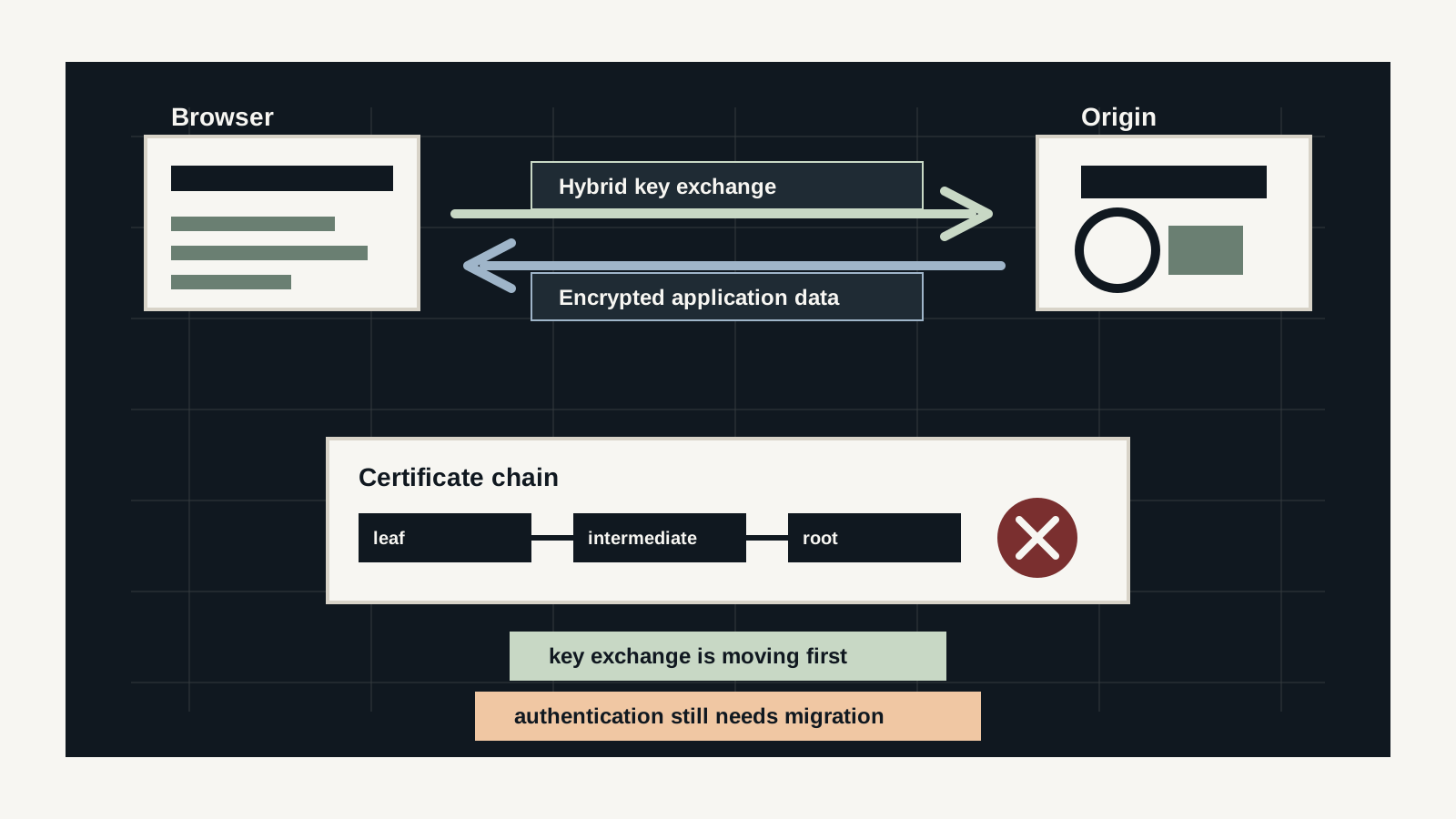
Post-Quantum TLS Has A Certificate Gap
A June 2026 measurement study found broad hybrid post-quantum key exchange signals but no post-quantum certificate adoption in its sample. The migration plan has to cover authentication, not only encrypted handshakes.

INFINITERED Turns Research Apps Into Cloud Mail Risk
Google GTIG says UNC6508 used REDCap compromises, credential harvesting, and Workspace content compliance rules to exfiltrate research email. The response has to join web-app patching with cloud-admin review.