AutoJack Shows Localhost Is An Agent Attack Surface
Microsoft's AutoJack research shows how a browsing AI agent can cross a loopback trust boundary into a local MCP control plane. Agent builders need authentication, isolation, executable allowlists, and sandboxing.
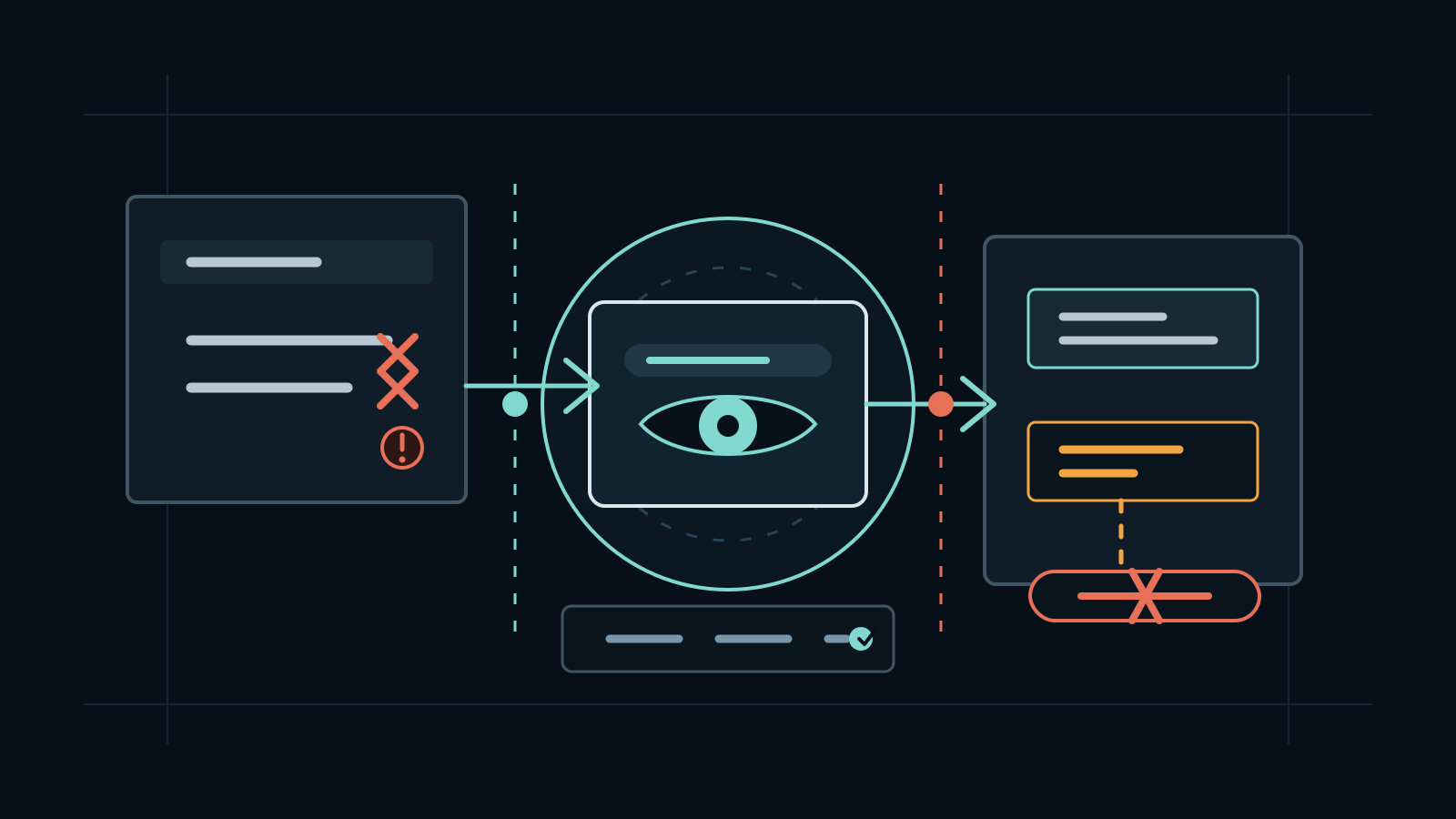
Microsoft's Defender Security Research Team published AutoJack on June 18, describing an exploit chain in AutoGen Studio that let untrusted web content rendered by a browsing AI agent reach a local Model Context Protocol WebSocket and spawn arbitrary processes on the host. Microsoft says the affected MCP WebSocket surface was fixed during development, never shipped in a PyPI release, and is not present for users who install AutoGen Studio from PyPI.
The narrow exposure is good news. The broader lesson is more important: localhost is not a security boundary when an AI agent can browse untrusted pages and also talk to privileged local services. Agent prototypes, MCP control planes, browser tools, code execution tools, and developer workstations need to be designed as one attack surface.
Key Takeaways
- check_circle Microsoft says the AutoJack chain affected a development surface and was fixed before the vulnerable MCP WebSocket route shipped in a PyPI release.
- check_circle The attack combined three weaknesses: origin trust in localhost, missing authentication on MCP paths, and attacker-controlled process parameters.
- check_circle A browsing agent changes the normal threat model because web content can be rendered by a process already running on the developer machine.
- check_circle MCP tools are useful because they can execute actions; that same property makes tool registration and command execution sensitive control-plane work.
- check_circle Prompt-injection defenses help early in the chain, but they do not replace host-level authentication, executable allowlists, and sandboxing.
- check_circle Agent builders should isolate browser identity, tool execution, secrets, and developer accounts before letting agents fetch untrusted content.
What Microsoft Found
AutoJack is a useful case study because the chain is concrete and the limits are clear. Microsoft says ongoing research into AI agent framework security found that untrusted web content rendered by a browsing agent could reach a local MCP WebSocket in AutoGen Studio and spawn arbitrary processes on the host. The affected surface was reported to MSRC and hardened upstream. Microsoft says users who install AutoGen Studio from PyPI are not exposed to this specific chain because the vulnerable MCP WebSocket route was never included in a published package.
The chain had three parts. First, the MCP WebSocket accepted localhost origins, which normally blocks a remote website in a user's browser but does not block JavaScript rendered by a local agent's headless browser. Second, authentication middleware skipped MCP paths on the assumption that those routes would enforce their own checks. Third, the endpoint accepted encoded server parameters from the URL and used them to spawn a process. Together, those pieces turned a page render into a remote-code-execution primitive on the developer host.
Why Localhost Failed As A Boundary
Developers often treat loopback as a private space. That assumption is fragile even for conventional browser applications, and it becomes weaker when a local agent can fetch pages, execute browser JavaScript, call APIs, or run code on behalf of a task. In the AutoJack scenario, the agent's browser was on the same machine as the local service. From the service's point of view, the request was coming from an allowed local context, even though the content steering the browser was untrusted.
The confused-deputy problem is not that the model was evil or that the web page broke cryptography. The problem was authority composition. A page controlled by an attacker could influence a browsing agent. The browsing agent could reach localhost. The localhost service had privileged control-plane behavior. The control plane accepted unauthenticated WebSocket access and attacker-selected command parameters. Each step may look small in isolation, but the combined authority crossed the boundary that developers thought they had.
MCP Makes Tool Control Sensitive
MCP is designed to connect AI applications to context and tools. The MCP architecture documentation describes hosts, clients, and servers, with servers exposing primitives such as tools, resources, and prompts. It also describes transports such as stdio for local process communication and Streamable HTTP for remote communication. That design is useful because it standardizes how an agent can discover and call capabilities across systems.
The security implication is direct: a tool registry is not only metadata. It is an action surface. If a caller can register arbitrary process parameters or choose an executable, the system has moved from tool discovery into process control. AutoJack is not a reason to avoid MCP. It is a reason to require authenticated control planes, server-side parameter binding, executable allowlists, least-privilege process accounts, and clear separation between tools that read data and tools that change the host.
Patch Status And Exposure
Microsoft says the affected AutoGen Studio behavior was identified and remediated during development. The upstream main branch was hardened by moving parameters server side, refusing unknown WebSocket session IDs, and tightening the authentication skip list so MCP routes flow through the normal auth path. Microsoft also says PyPI users were not exposed to the specific MCP WebSocket chain because the published package did not include the vulnerable route.
That should keep the incident from being overstated. There is no claim in Microsoft's report that production users were broadly compromised through AutoJack. The value is in the pattern. Many teams now run agent prototypes on developer laptops, CI workers, internal servers, and sandbox hosts. If those agents browse untrusted content while sharing a machine with local debuggers, MCP servers, notebooks, code runners, cloud CLIs, browser profiles, or credential stores, the same shape can appear under different names.
Hardening Agent Prototypes
The first hardening move is to stop treating a prototype as harmless once it has tools. AutoGen Studio's own documentation says it is meant for rapid prototyping and is not a production-ready app; it encourages developers building production applications to implement authentication, security, and other deployed-app features. That warning should apply to any agent surface that can browse, call tools, read files, or execute code.
A practical agent-development policy should separate browser execution from privileged local services, run agents under low-privilege accounts, use containers or virtual machines for tool execution, bind services narrowly, authenticate every control-plane path including WebSockets, and place high-risk actions behind explicit user approval. Tool parameters reachable from model output should be treated as attacker controlled. If an MCP server needs to launch processes, accepted executables should come from a fixed allowlist controlled by the server, not from a URL, prompt, or remote page.
Detection Has To Cover The Host
Prompt-injection controls are still useful. OWASP's LLM01 guidance describes indirect prompt injection from external sources such as websites or files and lists outcomes that include unauthorized function access and arbitrary command execution in connected systems. Those controls can help detect or constrain early manipulation, especially when a user asks an agent to process untrusted content. But AutoJack also shows why model-layer defenses are not enough: JavaScript execution, WebSocket access, process creation, and host permissions live below the prompt.
Security teams need endpoint and identity visibility for agent hosts. Watch for Python, Node, browser, notebook, or agent processes spawning unusual children; unexpected connections to local control sockets; new or modified MCP servers; secrets read by development tools; and agents running under privileged user accounts. The right mental model is simple: an agent with tools is software running with authority. It needs normal software controls, plus extra skepticism about untrusted content that can steer the model, the browser, or both.
Checklist
- Use AutoGen Studio builds at or after the hardened upstream commit if building from source.
- Do not run browsing agents and privileged local control services in the same unsandboxed user context.
- Authenticate every control-plane path, including WebSocket and localhost-only routes.
- Keep process-launch parameters server side and allowlist approved executable targets.
- Run agent prototypes in containers, virtual machines, or low-privilege accounts separated from daily work profiles.
- Require human approval for high-risk tool calls, file writes, shell commands, credential access, and network changes.
- Monitor agent hosts for unusual child-process creation, local socket access, and new MCP server registrations.
Sources
- Microsoft Security Blog: AutoJack open_in_new
- AutoGen Studio documentation open_in_new
- Model Context Protocol: Architecture overview open_in_new
- OWASP GenAI Security Project: LLM01 Prompt Injection open_in_new
- MITRE CWE-1385: Missing Origin Validation in WebSockets open_in_new
- MITRE CWE-306: Missing Authentication for Critical Function open_in_new
- MITRE CWE-78: OS Command Injection open_in_new
Continue Reading
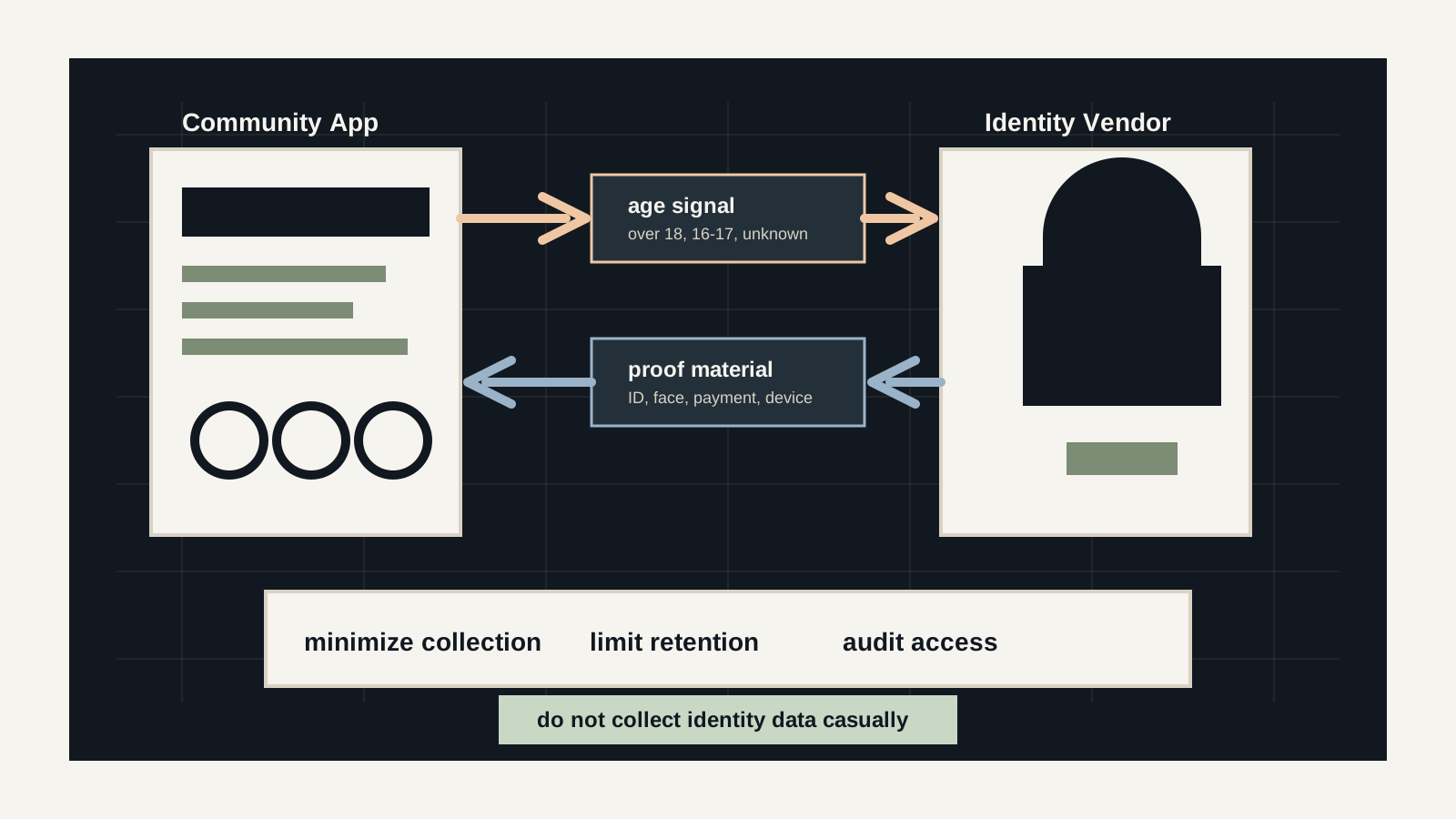
Age Assurance Turns Community Safety Into Identity Risk
Age gates, face checks, ID uploads, and age inference can protect minors, but they also create identity-data risk. Community platforms need minimization, vendor review, retention limits, and clear fallback policy.
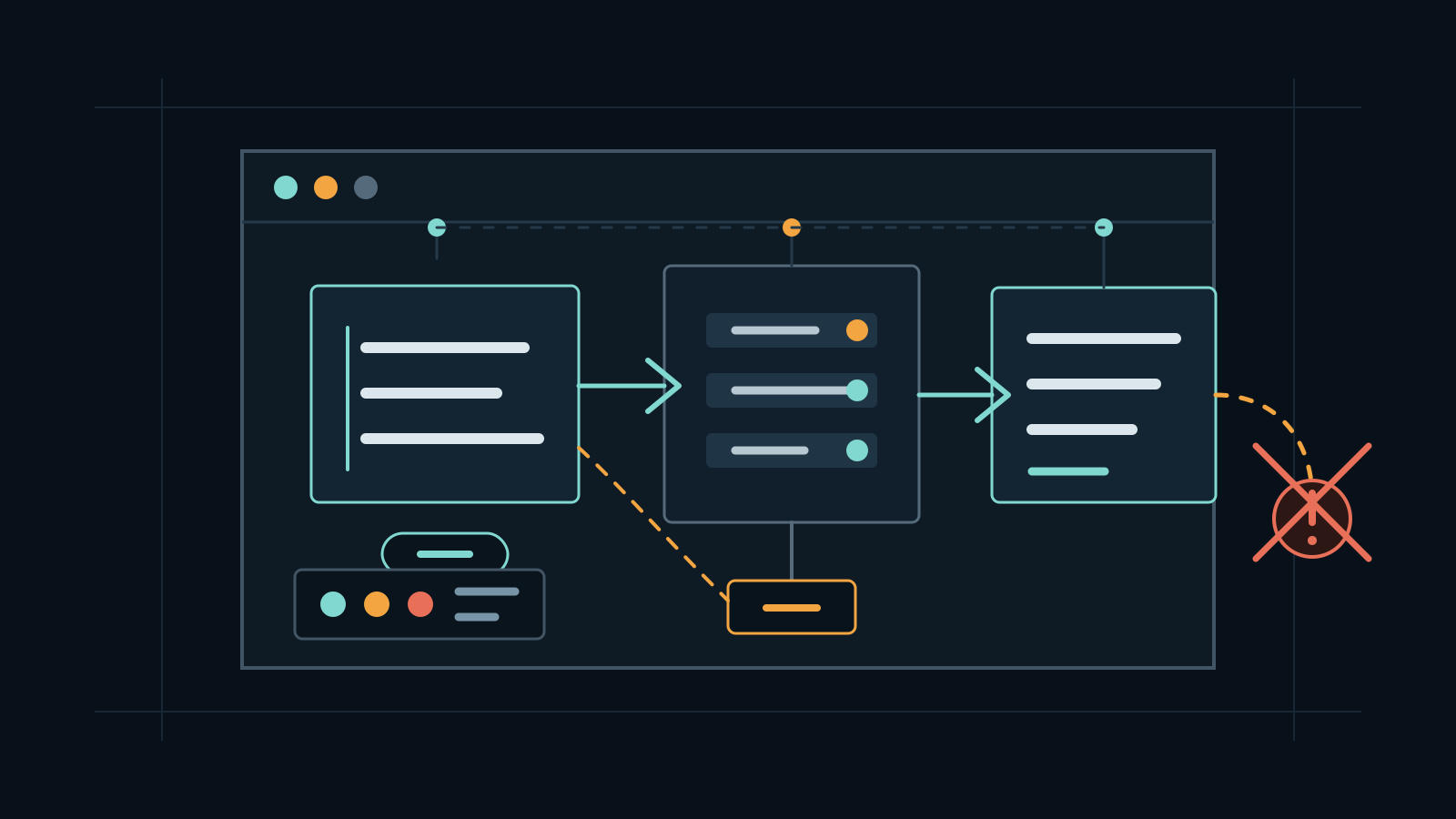
INFINITERED Turns Research Apps Into Cloud Mail Risk
Google GTIG says UNC6508 used REDCap compromises, credential harvesting, and Workspace content compliance rules to exfiltrate research email. The response has to join web-app patching with cloud-admin review.
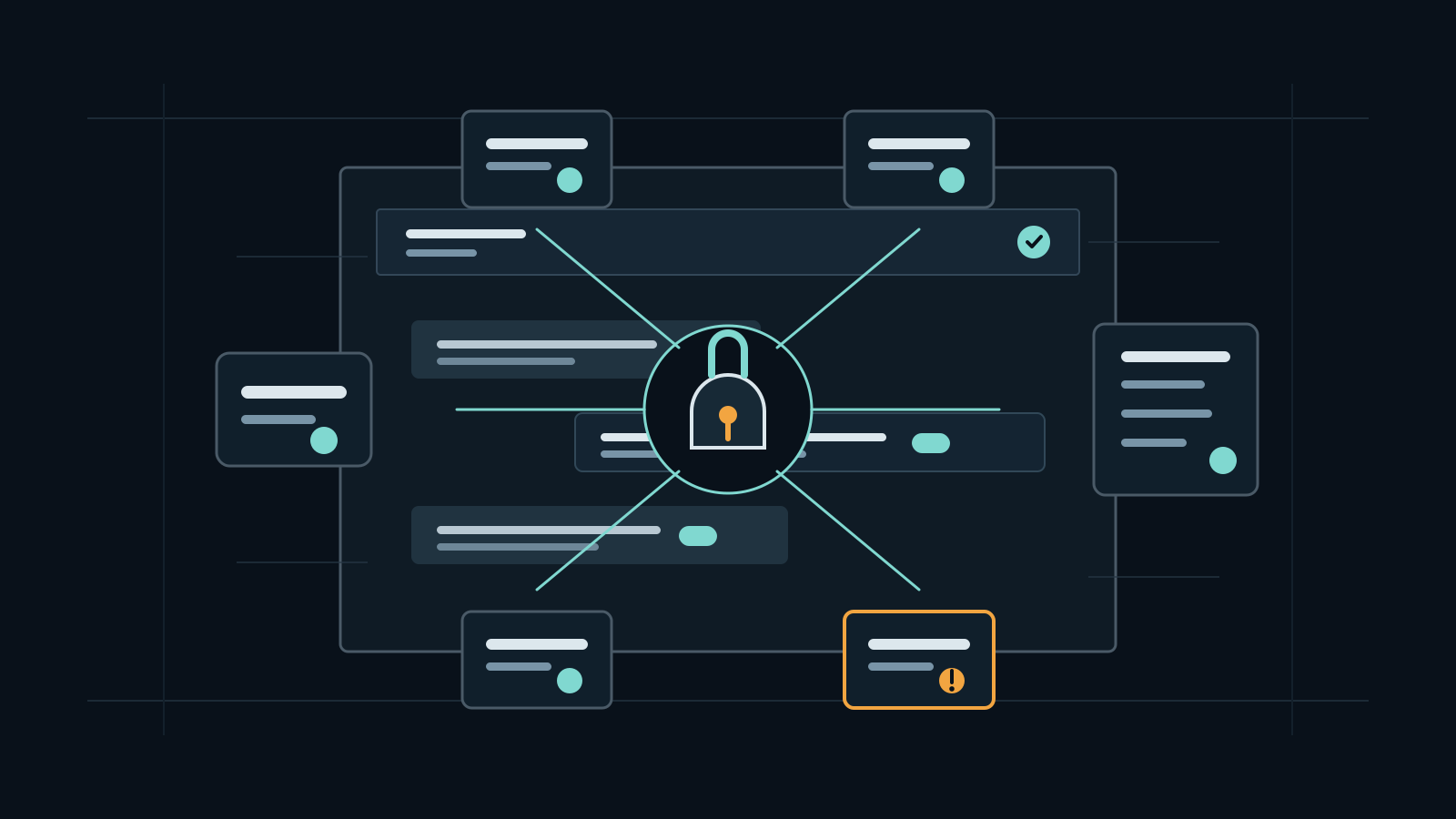
Linked Devices Make Chat Security An Endpoint Problem
Signal, WhatsApp, Telegram, Slack, and other chat tools all extend conversations across devices. That convenience makes the device list part of the security boundary.