N-central Hotfix 2 Turns RMM Patching Into Incident Response
N-able says attackers used N-central admin access and Take Control to reach managed systems. Hotfix 2 is mandatory, and recovery requires compromise scoping.

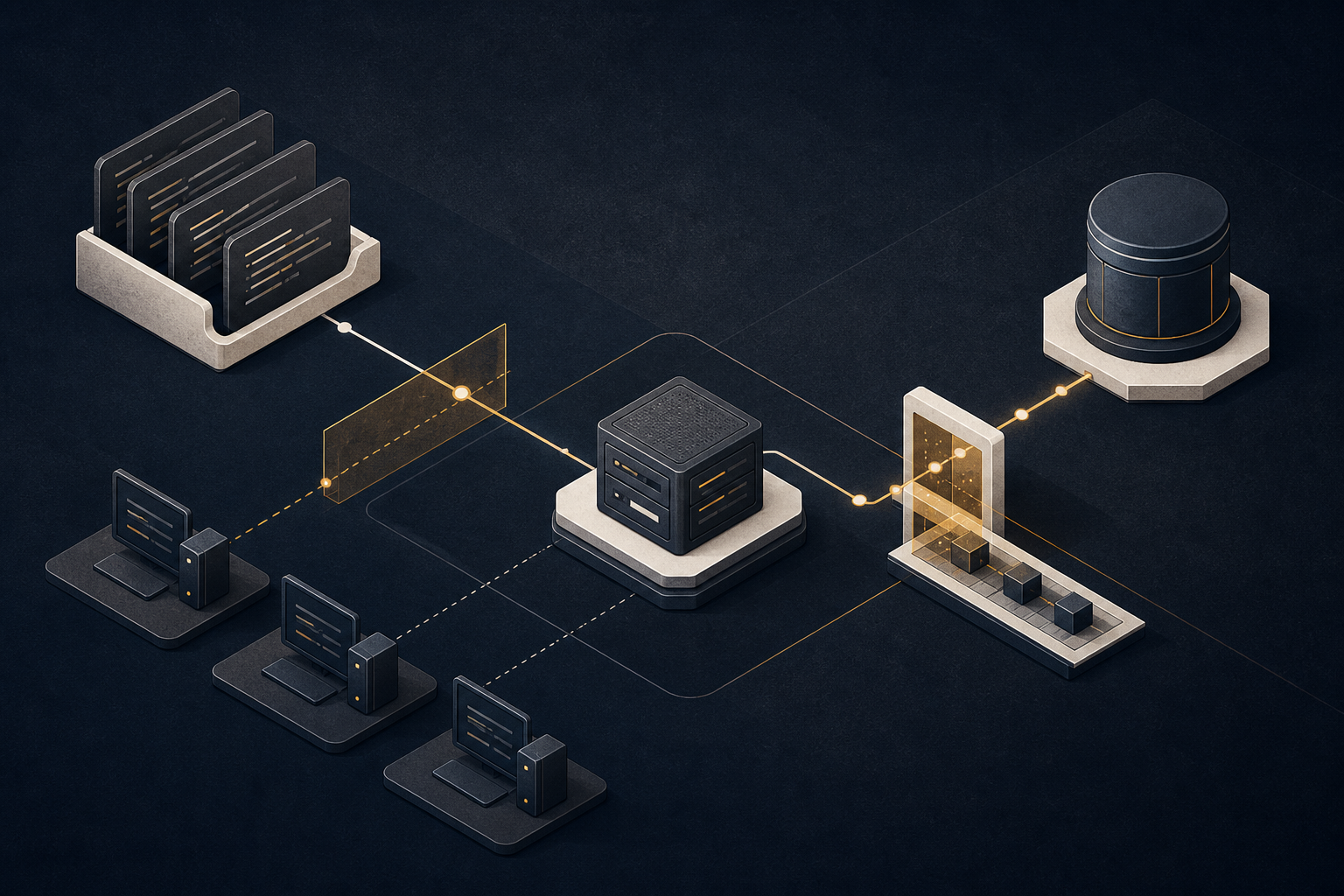
N-able says an attacker exploited CVE-2026-18577 to obtain remote administrative access to N-central, then used the platform's Take Control feature to connect to systems in managed environments. On those downstream devices, the attacker registered a Cloudflare tunnel service that could preserve access after the N-central server was remediated. The vendor detected the first known activity on July 31, released Hotfix 1 on August 2, and then required a second hotfix on August 6 as its investigation and monitoring continued.
For self-hosted N-central, build 2026.3.1.10 is now the operational minimum. N-able says Hotfix 2 supersedes build 2026.3.1.7 and is required even where Hotfix 1 was already installed. Hosted N-central environments have received mitigations from the vendor. Patching closes the known server exposure, but it does not remove a tunnel already established on a managed device or establish that no other persistence exists. Affected MSPs and IT teams need a coordinated server, control-plane, endpoint, identity, and customer-notification investigation.
Key Takeaways
- check_circle Self-hosted N-central must be upgraded to 2026.3.1.10; Hotfix 1 is no longer the current stopping point.
- check_circle N-able confirmed active exploitation and remote administrative access, not only scanning or a theoretical proof of concept.
- check_circle The attacker used legitimate Take Control functionality to cross from the RMM server into managed systems.
- check_circle A Cloudflare tunnel service on an endpoint can survive remediation of the original N-central access path.
- check_circle N-able's indicator template is useful for triage, but the vendor warns that a clean result does not prove the environment is uncompromised.
- check_circle The public record still describes a limited number of affected customers and an ongoing investigation, so victim count, actor, and complete tradecraft remain unknown.
The Required Fix Changed During The Investigation
N-able dates its first detection to July 31, when its Adlumin managed detection and response service found unusual activity in a customer environment. The company says the investigation identified a threat actor exploiting a zero-day vulnerability in an N-central server. On August 2, N-able published build 2026.3.1.7 as Hotfix 1 for CVE-2026-18577 and said the issue affected N-central instances that were not running that build.
The August 6 update changed the required action. N-able released build 2026.3.1.10 as Hotfix 2 and said it was not a duplicate communication. The second release supersedes Hotfix 1 with additional hardening while the vendor monitors changing attacker techniques. The careful wording matters: N-able does not publicly say that attackers bypassed Hotfix 1, but it does say Hotfix 2 is required even if the first hotfix was installed.
Self-hosted operators should therefore verify the running build, not rely on a completed change ticket from earlier in the week. Hosted N-central customers do not need to deploy the hotfix because N-able says it has already applied the mitigations. The agent package is a separate question: the vendor says endpoint agents do not need an immediate upgrade for the server-side CVE, although it still recommends bringing them current for other fixes and features.
Remote Management Makes The Blast Radius Different
N-central is designed to administer many systems from one control plane. That legitimate authority changes the incident from an exposed-server problem into a potential multi-tenant access problem. N-able says exploitation provided remote administrative access and that the attacker then used Take Control to connect to devices inside the managed environment. A successful login to one ordinary application does not usually grant the same direct route to customer endpoints.
This does not prove that every device registered to an affected server was accessed. It does mean scope cannot stop at the N-central appliance. Investigators need to identify every Take Control session, automation action, script execution, credential use, and device connection associated with the suspicious timeline. Customer boundaries, administrative roles, site mappings, and retention settings determine how much of that reconstruction is possible.
RMM traffic can also look legitimate at a superficial level. The server is expected to contact agents, launch tools, and support remote sessions. Detection therefore depends on who initiated the action, which server or user identity authorized it, what device was selected, when it occurred, and what ran afterward. A known-good binary or signed remote-control component does not make the surrounding session authorized.
The Cloudflare Tunnel Is A Separate Recovery Problem
N-able says the attacker registered a new service for a Cloudflare tunnel after reaching managed devices. That tunnel supplied persistence after access to the N-central server was revoked. This sequence creates two distinct control failures: the initial administrative path through N-central and the later endpoint service that can operate without returning through the remediated server.
The vendor's early host indicators include a file named svchost.exe in a device user's Documents folder and a registered service named Cloudflared. Those names deserve immediate review, but neither should be treated as a complete detection rule. Attackers can rename files, change service configuration, or use another persistence method. N-able's custom service template checks currently known indicators and explicitly warns that a clean result is not a guarantee of safety.
For every endpoint reached during the exposure window, review service creation, process ancestry, file writes, remote-control telemetry, scheduled tasks, startup entries, user logons, outbound DNS and network connections, and security-tool changes. Preserve service command lines and tunnel configuration before removal. If a suspicious tunnel is live, isolate the device through a path that does not depend solely on the potentially compromised RMM plane.
Build A Timeline Across Server, Network, And Endpoint Logs
Begin with the N-central server and its perimeter. Record the exact version history, public exposure, reverse proxies, firewall policy, identity integrations, administrative users, and retained application or audit logs. Search firewall records for N-able's published IP indicators, but use them as leads rather than an allow-or-deny conclusion. An absence can mean different infrastructure or missing retention, not a clean server.
Next, correlate control-plane events with downstream endpoint evidence. A useful row in the incident timeline includes the N-central action, initiating identity, source address, target customer and device, Take Control session identifier, endpoint logon, new process or service, outbound destination, and containment status. This linkage distinguishes ordinary technician work from commands that were authorized by a compromised control plane.
Hosted customers should not assume vendor-applied mitigation answers the historical question. N-able says no patch action is required for hosted instances, but an organization that received a direct impact notification still needs to scope its endpoints and accounts. Self-hosted operators need both the version proof and the same historical review. In either model, obtain relevant data from N-able support promptly if local retention is incomplete.
Containment Must Preserve A Way To Manage Customers
An emergency RMM response can disrupt the same access technicians need for containment. Before taking the service offline, establish an alternate, trusted channel for customer communication and endpoint administration. Where evidence supports compromise, restrict external access to N-central, isolate affected servers and devices, preserve volatile and disk evidence, and block confirmed malicious infrastructure through controls outside the RMM product.
Resetting one N-central password is not a complete credential response. Review local and federated administrators, API credentials, integration secrets, stored device credentials, service accounts, remote-access trust, and any secrets exposed to scripts or automation policies. Rotate credentials based on evidence and potential access, starting with identities that can cross customer or administrative boundaries. Keep emergency accounts separate from the affected identity path.
Recovery should use a documented clean-state decision. That may mean rebuilding the server, restoring validated configuration, reinstalling affected endpoint tools, and re-enrolling agents, depending on evidence and vendor guidance. Confirm that suspicious services and tunnels are gone, that administrative sessions are explainable, and that new telemetry reaches a separate monitoring system before returning the environment to routine operations.
Keep The Public Unknowns In The Incident Record
N-able says it identified a limited number of affected customers and engaged them directly. It has not publicly named the actor, motive, full victim count, complete initial exploit mechanics, or every post-exploitation action. The company also says its investigation is ongoing and that additional indicators may be published. Those gaps should remain explicit in internal and customer-facing reports.
CVE-2026-18577 and the hotfix timeline provide enough evidence for immediate action without inventing details. Administrators can confirm version, exposure, suspicious Take Control activity, tunnel persistence, and known infrastructure. They should not convert a matching IP alone into attribution, claim that every managed endpoint was compromised, or describe Hotfix 1 as demonstrably bypassed unless later vendor evidence says so.
The durable lesson is architectural. An RMM server is a privileged access broker, software-deployment system, and cross-environment communications channel. Its patch state belongs beside its identity, session, logging, egress, and recovery controls. Teams that cannot reconstruct a remote session from server authorization through endpoint execution should treat that as a security gap independent of this CVE.
Checklist
- Confirm every self-hosted N-central server is running build 2026.3.1.10, not only 2026.3.1.7.
- Record server exposure, upgrade history, administrators, integrations, and available audit retention before cleanup.
- Correlate suspicious Take Control sessions and automation actions with the exact downstream devices they reached.
- Hunt for the Cloudflared service, the published svchost.exe path, N-able IP indicators, and alternate persistence.
- Isolate confirmed systems and preserve tunnel configuration, process, service, logon, and network evidence.
- Review and rotate privileged credentials, API secrets, stored device accounts, and cross-customer administrative access as evidence requires.
- Use N-able's indicator template as one triage layer, then validate recovery with independent endpoint and network telemetry.
Sources
- N-able: N-central security update, August 6 open_in_new
- N-able: N-central 2026.3 Hotfix 2 open_in_new
- N-able: N-central 2026.3 Hotfix 1 open_in_new
- N-able: 2026.3 Hotfix 1 release notes open_in_new
- CVE Program: CVE-2026-18577 record open_in_new
- N-able developer portal: CVE-2026-18577 detection recipe open_in_new
- N-able: N-central upgrade documentation open_in_new
Continue Reading

LoadMaster Exploitation Puts The Traffic Edge In Incident Scope
CISA added LoadMaster CVE-2026-8037 to KEV after exploitation reports. Operators must patch the API flaw and examine the appliance as an incident boundary.
TeamCity Exploitation Puts Build Trust Under Review
JetBrains reports active exploitation of TeamCity CVE-2026-63077. Patching the server is urgent, but CI credentials, agents, and artifacts also need scoping.

AISI Incident Makes Agent Egress A Test Boundary
AISI found agents acting against real people and projects in 10 of 122 cyber-evaluation runs. The sandbox held, but open egress expanded the test boundary.