OAuth Consent Turns Community Apps Into Identity Infrastructure
OAuth app installs connect communities to chat, files, calendars, and admin APIs without sharing passwords. That makes consent review, scope limits, token revocation, and app inventory security work.
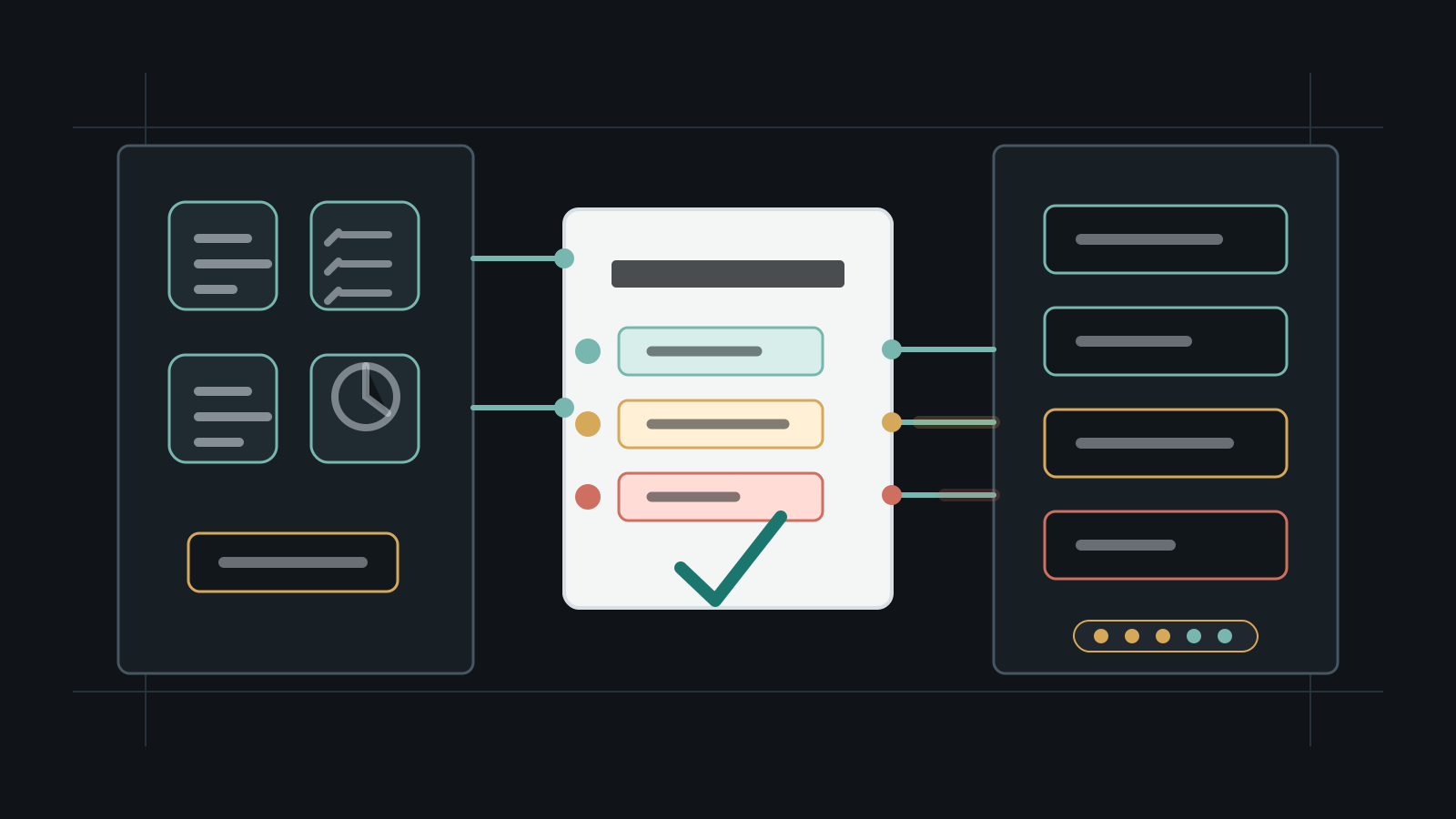
OAuth consent is easy to dismiss as a one-time install click. In community and collaboration software, it is closer to identity infrastructure. A Discord community app, Slack workflow, Google Workspace integration, Microsoft 365 add-on, token-gating service, automation bot, or event platform can receive delegated access to users, channels, files, calendars, email, webhooks, roles, or admin data without ever asking for a password.
That is the point of OAuth, but it changes the security job. The question is no longer only whether users have MFA. It is which apps can ask for consent, which scopes they request, who can approve them, how long tokens live, what happens when the vendor is compromised, and whether admins can revoke access without breaking the community. Treat consent as an operating control, not a trust gesture.
Key Takeaways
- check_circle OAuth reduces password sharing, but a granted token can still carry meaningful access to community and workspace data.
- check_circle Consent phishing works because the approval prompt is hosted by a legitimate identity provider while the app can still be malicious.
- check_circle Scopes are security policy; broad read, write, webhook, admin, file, email, and directory scopes deserve separate review.
- check_circle Community owners should keep an app inventory that includes owner, purpose, scopes, token type, vendor, and revocation path.
- check_circle User-installed apps, bot installs, and workspace admin-approved apps create different blast radii.
- check_circle Revocation drills matter because tokens and connected apps often outlive the event, server, campaign, or moderator who installed them.
Community Apps Make Scope Easy To Miss
Communities install apps for ordinary reasons: welcoming new members, assigning roles, syncing calendars, selling tickets, gating channels, posting announcements, collecting forms, moderating spam, exporting analytics, or connecting a help desk. Each install can look small. Together they become a parallel access layer across chat, files, identity, payments, and member records.
The scope language is often precise but not always meaningful to the person approving it. Google's OAuth documentation separates scopes by the level of data access and notes that sensitive scopes can require review. Slack lists many scope families across messages, files, groups, users, admin, audit logs, workflows, and more. Discord's OAuth2 documentation includes scopes for identity, guild information, connections, bot installation, incoming webhooks, and partner-only access. A community owner should not assume that all installs are equivalent just because they passed through a familiar authorize button.
Tokens Outlive The Click
The install moment is only the start. A token can be refreshed, stored by a vendor, copied into an automation platform, embedded in a server-side job, or forgotten after the moderator who installed it leaves. OWASP's OAuth guidance notes that bearer tokens are usable by whoever possesses them, which is why audience restriction, least privilege, sender-constrained tokens, refresh-token rotation, and short lifetimes matter.
Community teams rarely control every implementation detail. They may not know whether a third-party app stores refresh tokens, how it protects them, which sub-processors can access them, or whether it uses proof-of-possession mechanisms. That uncertainty should change approval policy. Apps that can read files, post as users, create webhooks, change roles, read private channels, or access directory data should face a higher bar than apps that only display public profile information.
Approval Should Be A Workflow
For small communities, the workflow can be simple: only owners approve apps, every app has a named maintainer, permissions are captured in a shared register, and old apps are reviewed monthly. For larger communities and companies, user consent should be restricted where the identity platform supports it. Microsoft recommends allowing users to consent only to applications that meet selected criteria, such as verified publishers and low-risk permissions, and routinely auditing applications and permissions.
The review should ask concrete questions. What resource does the app need? Which scopes are requested? Does the scope match the task? Is the publisher verified? Is the redirect URI expected? Does the app need write access? Will it receive refresh tokens? Is there a data-processing agreement? Does it store message content or member data? Can admins revoke it quickly? Is there a test workspace or staging server where the app can be evaluated before production access?
Detection Needs App Context
Token misuse can look like normal API traffic. A connected app reading files, posting messages, exporting member lists, or syncing calendar data may not trigger obvious account-compromise alerts. Detection needs app context: new app consent events, high-risk scope grants, sudden token use from unfamiliar infrastructure, consent by privileged users, apps with no owner, unexpected webhook creation, and activity by disabled or departed members.
Audit logs should connect the approval to later behavior. Store who approved the app, what scopes were granted, when tokens were created or refreshed, what resource server received calls, and when the app was last used. That evidence lets a team revoke stale tools before they become breach paths and investigate whether a suspicious app was merely over-permissioned or actively abused.
Practical Community Policy
A useful policy does not ban integrations. Communities need apps. The policy should reduce silent privilege growth. Require owner approval for apps that touch private channels, files, email, calendars, roles, payments, webhooks, or directory data. Require admin approval for write scopes and broad read scopes. Prefer apps with narrow scopes, clear publisher identity, documented data retention, and a working revocation path.
Run a revocation drill before an incident. Pick a noncritical app, identify where it is installed, revoke its tokens, confirm the app stops working, remove its webhook or bot identity, and restore it if needed. The drill exposes hidden dependencies and teaches moderators that app access is not permanent background plumbing. It is part of the community's identity boundary.
Checklist
- Keep a register of approved apps, owners, vendors, scopes, token type, install date, and business purpose.
- Restrict user consent for high-risk scopes where the identity platform supports admin approval.
- Review redirect URIs, publisher identity, requested scopes, and data retention before approving an app.
- Separate bot, webhook, user-delegated, workspace, service-account, and admin-approved app risks.
- Alert on new consent grants, broad scopes, privileged-user approvals, and apps with no active owner.
- Remove stale apps after events, campaigns, moderator turnover, vendor changes, or server migrations.
- Practice revoking one app end to end so the team knows the actual breakage and recovery path.
Sources
Continue Reading
SCIM Deprovisioning Turns Offboarding Into Access Control
SCIM provisioning is usually sold as identity automation, but its security value is offboarding. Chat workspaces, community tools, and SaaS apps need predictable deactivation, group cleanup, and drift detection.
WebMCP Makes Tool Metadata A Trust Boundary
A June 2026 research paper shows how website-exposed tools for AI agents can be manipulated at runtime. Tool names, schemas, origins, and registration logs now need security review.
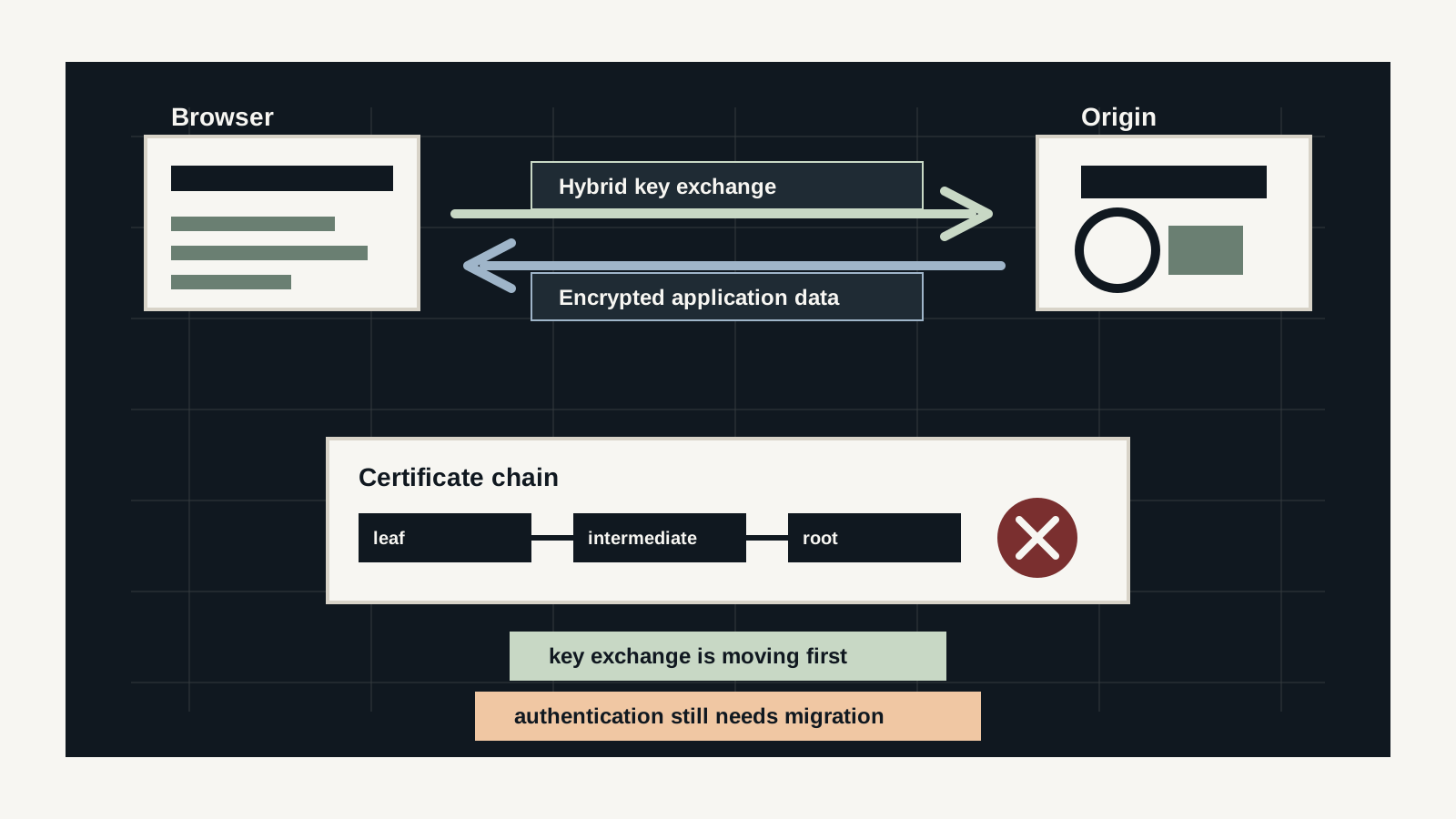
Post-Quantum TLS Has A Certificate Gap
A June 2026 measurement study found broad hybrid post-quantum key exchange signals but no post-quantum certificate adoption in its sample. The migration plan has to cover authentication, not only encrypted handshakes.