Chat Bridges Turn Private Rooms Into Shared Trust Boundaries
Matrix, Discord, Slack, Telegram, WhatsApp, and other bridges can make communities easier to operate, but they also move messages through bot identities, tokens, and bridge hosts. Treat a bridge as a production data path.
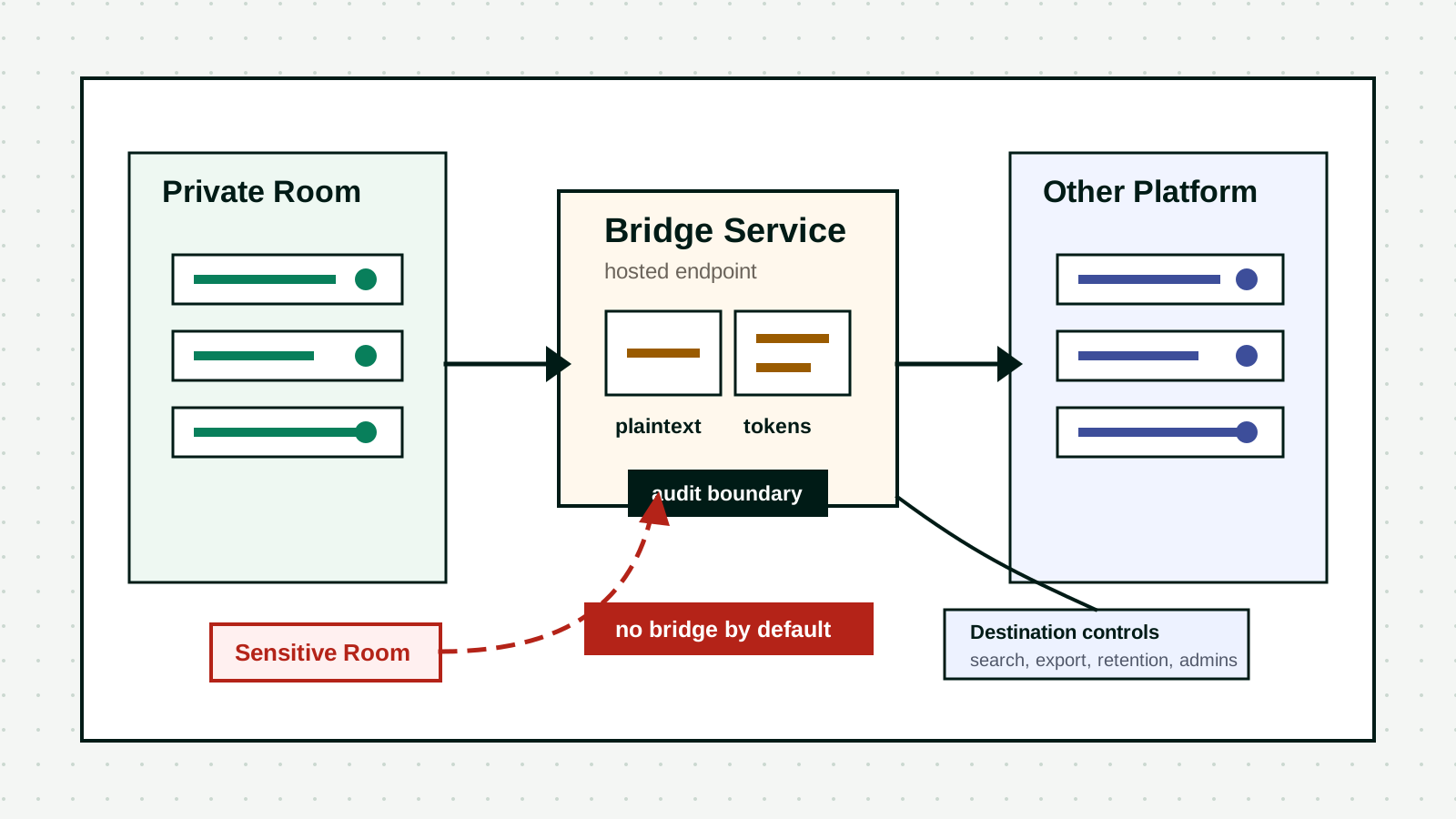
A chat bridge looks helpful: connect a Matrix room to Discord, mirror Slack alerts into a community server, or keep Telegram and WhatsApp users in the same discussion during a migration. Underneath that convenience is a service that reads events, holds tokens, creates or impersonates users, rewrites message metadata, and posts content into another trust domain.
That does not make bridges inherently unsafe. It does mean bridge approval is a security decision. An encrypted room bridged into a non-encrypted workspace does not keep the same confidentiality model. A bridge host becomes an endpoint. A bot token becomes platform authority. A public support channel and a private incident room need different rules.
Key Takeaways
- check_circle A bridge is a data-processing system, not just a chat feature.
- check_circle When content crosses platforms, the destination platform's encryption, retention, moderation, search, and admin model become part of the room's risk.
- check_circle Matrix appservices can create ghost users, puppet users, and control rooms, so namespace limits and hosting trust matter.
- check_circle Slack, Discord, and Telegram integrations depend on tokens, scopes, roles, and bot privacy settings that set the real blast radius.
- check_circle Sensitive rooms should default to no bridge unless the bridge host, logs, tokens, and destination retention are approved.
- check_circle Incident response must include bridge shutdown, token revocation, room review, audit-log preservation, and user notification when needed.
What A Bridge Actually Does
Matrix's own ecosystem page describes bridges as a way to connect Matrix to a third-party platform and interact across that boundary. Its conceptual documentation is more explicit about the mechanics: an appservice bridge can create users and rooms automatically, represent third-party users as Matrix ghosts, and represent Matrix users on the other platform as puppets. That is a powerful integration pattern, not a simple message forwarder.
The bridge may be hosted by the community, by a vendor, by a volunteer, or by an unmanaged server that nobody has reviewed since setup. It may store access tokens, room mappings, media caches, display-name mappings, retry queues, and logs. It may need admin-level permissions on one side and bot permissions on the other. The first security question is therefore not which platforms are bridged. It is who operates the service that sees the traffic between them.
Encryption Stops At The Endpoint
End-to-end encryption protects messages between participating clients and devices. Matrix's encryption guide describes device keys, one-time keys, room encryption state, Megolm group sessions, and sender verification. The important consequence is that a bridge that needs to post readable content into Slack, Discord, Telegram, or another destination must receive readable content somewhere. If the destination platform does not preserve the same E2EE model, the original room's confidentiality has changed.
That statement is an inference from the source models, not a claim about one bridge implementation. A bridge can be designed with less storage, better isolation, and clear device verification. It still becomes a participant in the data path. For high-trust rooms, treat the bridge like a managed client with special privileges. If that bridge is not allowed to read the room, it should not be in the room.
Room Classes Need Bridge Policy
Not every room deserves the same rule. Public announcement mirrors, open-source support rooms, migration help channels, and low-risk social spaces may be good bridge candidates. Incident response, legal, finance, HR, executive, paid alpha, wallet-support, vulnerability-coordination, and moderation rooms have different confidentiality and retention requirements. A single global setting is too blunt for a mixed community.
Write the policy by room class. For each class, decide whether bridging is allowed, who can approve it, which platforms are allowed as destinations, whether media is mirrored, whether edits and deletions are mirrored, how invite-only status is preserved, and whether the bridge may join encrypted rooms. Make the bridge visible to members so nobody mistakes a mirrored room for a closed conversation.
Retention And Search Move Too
When a message crosses a bridge, it can land in another search index, export system, data-retention policy, moderation queue, app ecosystem, backup process, or legal-hold workflow. Deleting a message on the source side may not delete every mirrored copy. Editing a message may create two histories. Media files may be cached independently. Reactions, replies, threads, and display names may lose context, which can make audits and harassment reports harder to reconstruct.
That is why bridge reviews should cover data lifecycle, not only permissions. Ask where messages and media are stored, whether logs include plaintext, how long retry queues persist, who can export destination data, and whether the bridge writes operational logs to a third-party observability service. OWASP's secrets-management guidance is relevant because bridge tokens and webhook credentials need owners, access control, rotation, revocation, and incident records.
Incident Response Has To Cross Platforms
A compromised bridge is not fixed by removing one bot from one channel. Response should start with containment: disable the bridge, revoke platform tokens, remove the bridge account from sensitive rooms, rotate related webhooks, and stop scheduled jobs that can re-add the integration. Preserve audit logs from both platforms and the bridge host before rebuilding anything.
Scoping comes next. Identify which rooms were connected, which messages and media crossed the bridge, which users or ghost accounts were created, whether permissions changed, and whether the bridge posted links, files, or commands. If sensitive content crossed into a less trusted destination, notify the room owners and affected users with concrete dates and platforms rather than vague language about an integration issue.
When A Bridge Is Still Worth It
Bridges solve real community problems. They reduce migration friction, help open communities meet users where they already are, keep support teams from checking five clients, and let projects gradually move from one platform to another. The safest use cases are usually public or low-confidentiality rooms with clear labels, narrow tokens, hosted bridge infrastructure, and an owner who can answer operational questions.
The wrong use case is a high-trust room bridged because a few participants prefer another app. In that case the bridge changes the security promise for everyone else. A better pattern is to keep sensitive work on one approved platform, post sanitized summaries to broader channels, and use bridges only where the destination's trust model is already acceptable.
Checklist
- Inventory every bridge, mirrored room, ghost user, puppet user, bot token, webhook, and bridge host.
- Classify rooms before allowing bridging: public, support, moderation, incident, legal, finance, leadership, or other.
- Block bridges from encrypted or sensitive rooms unless the bridge endpoint, host, logs, and destination retention are approved.
- Use the narrowest platform scopes, bot roles, channel access, and token lifetimes available.
- Document whether edits, deletes, media, replies, threads, reactions, and membership changes are mirrored.
- Store bridge credentials in a managed secret store and rotate them when maintainers leave or hosts change.
- Test bridge shutdown and token revocation before an incident makes the workflow urgent.
Sources
- Matrix Ecosystem: Bridges open_in_new
- Matrix Concepts: AppService, bridges, and bots open_in_new
- Matrix End-to-End Encryption implementation guide open_in_new
- Slack Developer Docs: Tokens open_in_new
- Discord Developer Docs: Permissions open_in_new
- Telegram Bot Features: Privacy mode open_in_new
- OWASP Cheat Sheet Series: Secrets Management open_in_new
Continue Reading
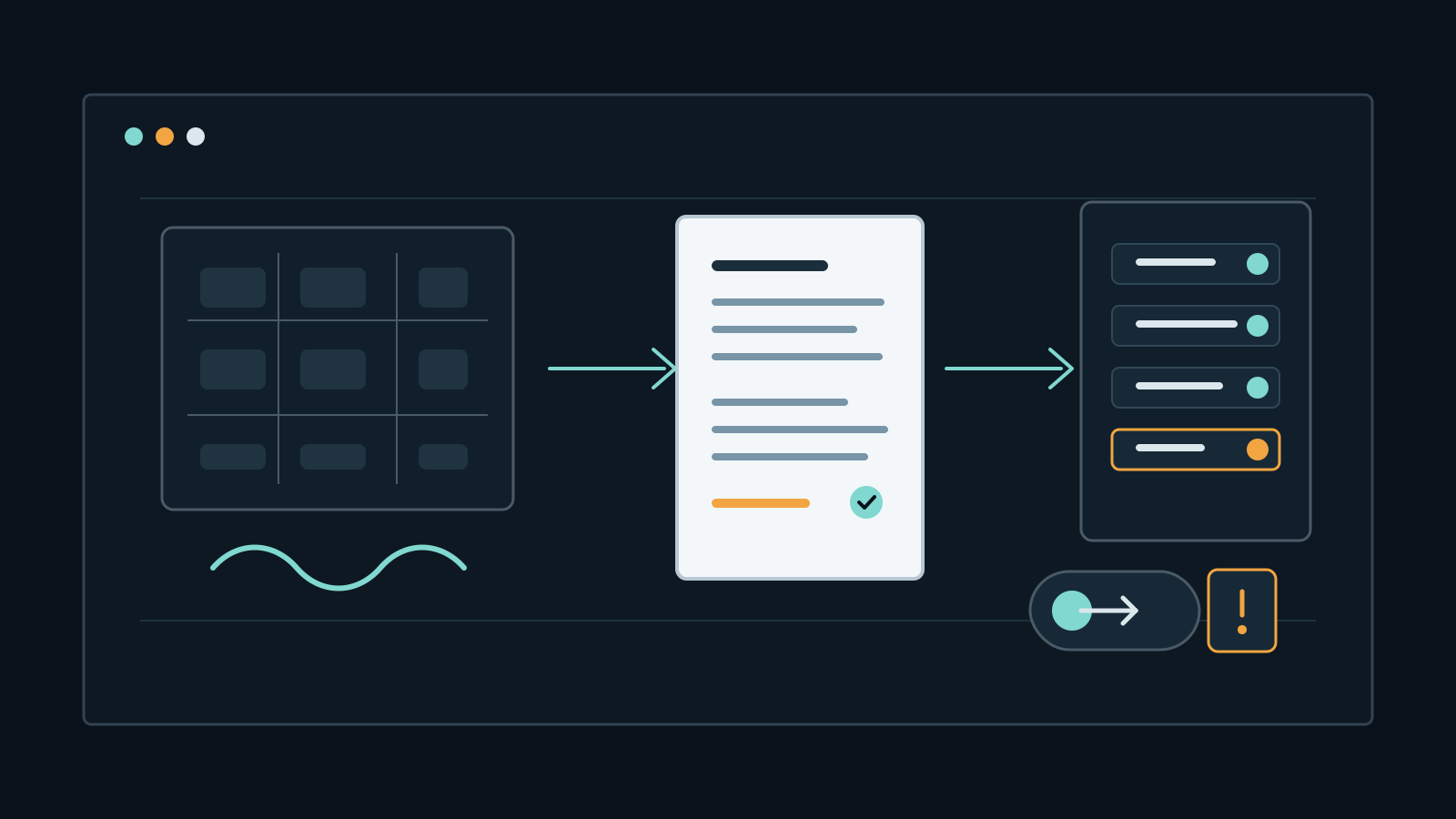
Meeting Transcripts Turn Calls Into Searchable Records
Teams, Google Meet, Slack huddles, and AI note tools make meeting capture easy. Security policy has to treat recordings and transcripts as durable collaboration data.
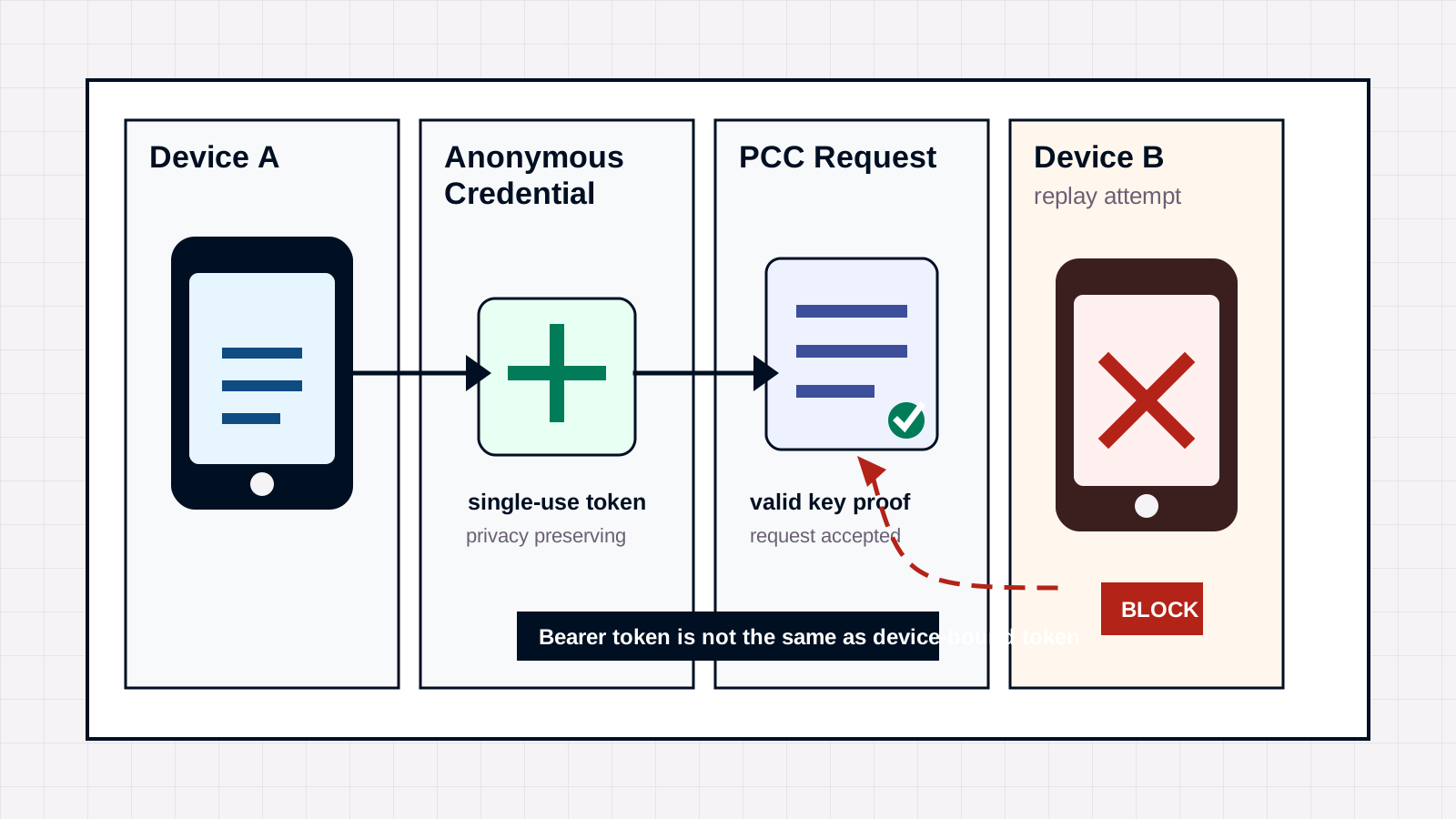
Apple Intelligence Tokens Show Privacy Needs Device Binding
A new academic paper says Apple confirmed a cross-device token replay issue in Apple Intelligence. The practical lesson is that anonymous AI access tokens still need proof-of-possession, device binding, and careful telemetry.
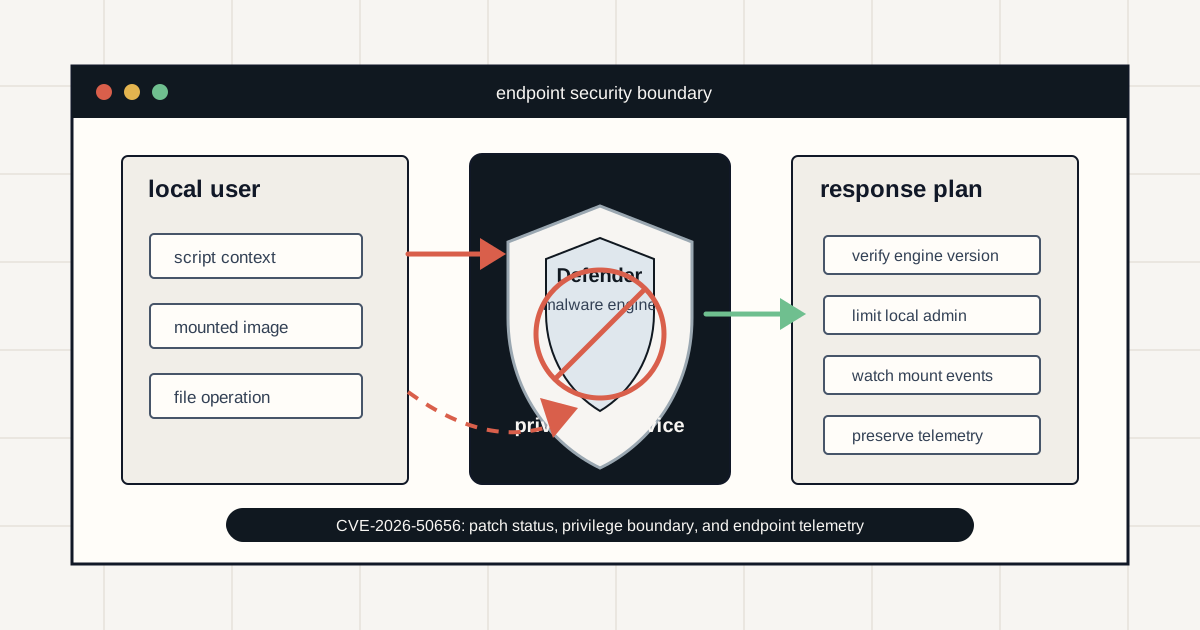
RoguePlanet Shows Defender Is Part Of The Attack Surface
Microsoft and NVD track CVE-2026-50656 as a Microsoft Defender Malware Protection Engine elevation-of-privilege issue. The practical response is patch readiness, local privilege control, and endpoint telemetry.