RoguePlanet Shows Defender Is Part Of The Attack Surface
Microsoft and NVD track CVE-2026-50656 as a Microsoft Defender Malware Protection Engine elevation-of-privilege issue. The practical response is patch readiness, local privilege control, and endpoint telemetry.
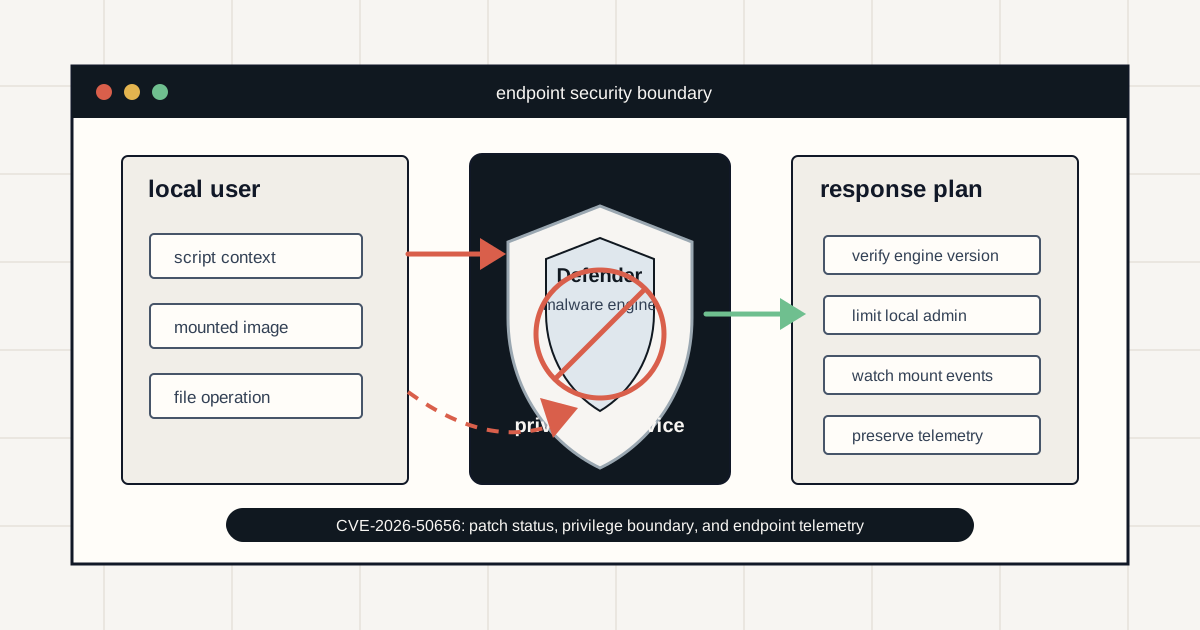
NVD's record for CVE-2026-50656 says Microsoft is aware of an elevation-of-privilege issue in the Microsoft Malware Protection Engine in Microsoft Defender, publicly referred to as RoguePlanet. The same record points to Microsoft's Security Update Guide entry and lists Microsoft as the CVE source. At publication time, the public Microsoft text said a security update was being prepared.
That makes this a narrow but important endpoint-security story. Defender is not just a scanner beside the operating system. It is privileged code that reads untrusted files, archives, mounted images, scripts, and user-controlled paths at scale. When the protection layer has a local privilege boundary bug, admins need a response plan that is more precise than telling users to wait for Windows Update.
Key Takeaways
- check_circle The confirmed record is CVE-2026-50656, an elevation-of-privilege vulnerability affecting Microsoft Malware Protection Engine.
- check_circle NVD published the CVE on June 16, 2026, and lists the Microsoft CNA score as 7.8 High with local attack vector and low privileges required.
- check_circle CISA-ADP metadata in the NVD change history describes public proof-of-concept availability, but the public primary sources do not confirm active exploitation.
- check_circle A local EOP in an endpoint security engine matters because the engine routinely handles adversary-controlled files with elevated trust.
- check_circle Before a final fix is broadly deployed, admins should verify Defender platform and engine update channels, reduce local-admin exposure, and preserve endpoint telemetry.
- check_circle Do not respond by disabling Defender. That trades a bounded privilege-escalation concern for broader malware and script execution risk.
What Is Confirmed
The strongest public source is NVD's CVE-2026-50656 page. It says the issue is an elevation of privilege in Microsoft Malware Protection Engine in Microsoft Defender and uses the public name RoguePlanet. NVD also lists Microsoft Corporation as the source and links to Microsoft's Security Update Guide. The Microsoft page itself requires client-side application rendering, but the NVD record captures the key advisory text and references it as the vendor advisory.
The severity data should be read carefully. NVD shows a 7.0 High score from NVD analysis and a 7.8 High score from Microsoft as the CNA. Both vectors are local, both require low privileges, and neither requires user interaction. The weakness mapping is CWE-59, improper link resolution before file access. That mapping is consistent with a class of bugs where a product follows a link, shortcut, junction, or similar file reference to a resource it did not intend to access.
What Is Not Confirmed
The public primary record does not prove widespread exploitation. NVD's change history includes CISA-ADP SSVC metadata with exploitation marked as proof-of-concept, automatable marked as no, and technical impact marked as total. That is materially different from CISA adding a vulnerability to the Known Exploited Vulnerabilities catalog or Microsoft saying attacks are in the wild.
Secondary reporting adds useful timeline context around a public disclosure and says Microsoft was working on a fix, but it should not be treated as a complete incident report. The safe conclusion is narrower: a public proof-of-concept exists, Microsoft has assigned and acknowledged the CVE, and defenders should assume that capable local attackers will study the technique while the patch path matures.
Why A Defender EOP Is Different
Many local privilege-escalation bugs require a foothold first. That can make them sound secondary. In real intrusions, they are often the step that turns a phishing click, malicious package, stolen developer token, or unprivileged shell into durable control. A local EOP is especially relevant on shared workstations, build machines, help-desk laptops, developer endpoints, jump boxes, and devices where users can execute scripts but should not be administrators.
The Defender angle matters because antimalware engines are designed to inspect hostile content. They open files that users download, archives that attackers craft, disk images, scripts, installers, email attachments, and directories with unusual metadata. That is necessary work, but it means the engine lives near a stream of adversary-supplied inputs. A bug in that layer is not the same as a bug in a rarely used desktop utility.
Patch Readiness Starts Now
Microsoft's Defender documentation says engine updates are included with security intelligence updates and that Defender also requires monthly platform updates. Organizations should verify how those updates reach endpoints: Windows Update, WSUS, Configuration Manager, Intune, a file share, or another managed path. The response question is not only whether updates are enabled. It is whether the fleet can prove current engine and platform versions quickly after Microsoft ships the fix.
Teams that freeze Defender platform updates for compatibility reasons should review those exceptions. Microsoft notes that platform updates can roll out in phases and that older platform and engine versions eventually fall into reduced support. If endpoint DLP, device control, or maintenance windows delay update rollout, document the exception and decide who can release it during a high-risk window.
Controls Before A Final Fix
The most useful temporary control is least privilege. A local EOP still needs local access. Removing unnecessary local administrator rights, tightening software execution policy, and protecting developer workstations reduce the number of places where a low-privilege foothold can become a full endpoint compromise. For managed Windows fleets, this is also a reason to review who can mount disk images, run unsigned scripts, write to shared tool directories, and install helper utilities.
Tamper protection remains relevant, but it is not a RoguePlanet patch. Microsoft describes tamper protection as a way to prevent certain Defender security settings from being disabled or changed. That helps stop malware from weakening the sensor after compromise. It does not mean the engine itself is immune to a parsing, link-following, or file-handling flaw. Treat it as one layer in the response, not as proof that the vulnerability cannot matter.
Detection And Response Work
Security teams should preserve the telemetry that would matter if an endpoint later looks suspicious. That includes Defender operational events, EDR process trees, script execution logs, PowerShell logs, mount events for ISO and virtual disk images, unusual file-system link creation, archive extraction paths, and attempts to stage payloads under user-writable directories. The article's point is not that those events uniquely identify RoguePlanet. It is that a local EOP investigation fails quickly if the endpoint has no useful timeline.
Avoid publishing internal reproduction steps or running untrusted proof-of-concept code on production endpoints. If validation is necessary, isolate it in a lab network with disposable images and no tenant credentials. For production, prioritize update readiness, privilege review, and hunt queries around suspicious local execution chains. When a Microsoft update arrives, measure deployment rather than assuming automatic update policy equals completion.
The Larger Lesson
Endpoint protection is infrastructure. It deserves the same threat modeling as VPN appliances, identity providers, browser sandboxes, collaboration servers, and package registries. The code runs everywhere, sees sensitive data, touches untrusted inputs, and often operates with elevated privileges. That makes reliability and rapid update delivery part of the security model.
RoguePlanet should not trigger panic. It should trigger discipline. Keep Defender current, preserve the evidence needed to investigate local privilege chains, reduce the number of users who can turn a foothold into administrator control, and be ready to deploy Microsoft's fix as soon as it is available through the normal channel.
Checklist
- Track CVE-2026-50656 in the Microsoft Security Update Guide and NVD until the fix is available and deployed.
- Inventory Defender engine, platform, and security-intelligence versions across managed endpoints.
- Confirm that WSUS, Configuration Manager, Intune, or Windows Update policies can deliver an urgent Defender update quickly.
- Review local administrator membership, script execution rights, and disk-image mounting exposure on high-value workstations.
- Keep tamper protection enabled, while recognizing that it is not a substitute for the eventual engine fix.
- Preserve Defender, EDR, PowerShell, and file-system telemetry needed to investigate a local privilege-escalation chain.
- Do not run public proof-of-concept code on production devices or disable Defender as a workaround.
Sources
- NVD: CVE-2026-50656 open_in_new
- Microsoft Security Update Guide: CVE-2026-50656 open_in_new
- Microsoft Learn: Defender Antivirus security intelligence and product updates open_in_new
- Microsoft Learn: Protect security settings with tamper protection open_in_new
- MITRE CWE-59: Improper Link Resolution Before File Access open_in_new
- TechRadar: Microsoft working on RoguePlanet patch open_in_new
Continue Reading
Apple Intelligence Tokens Show Privacy Needs Device Binding
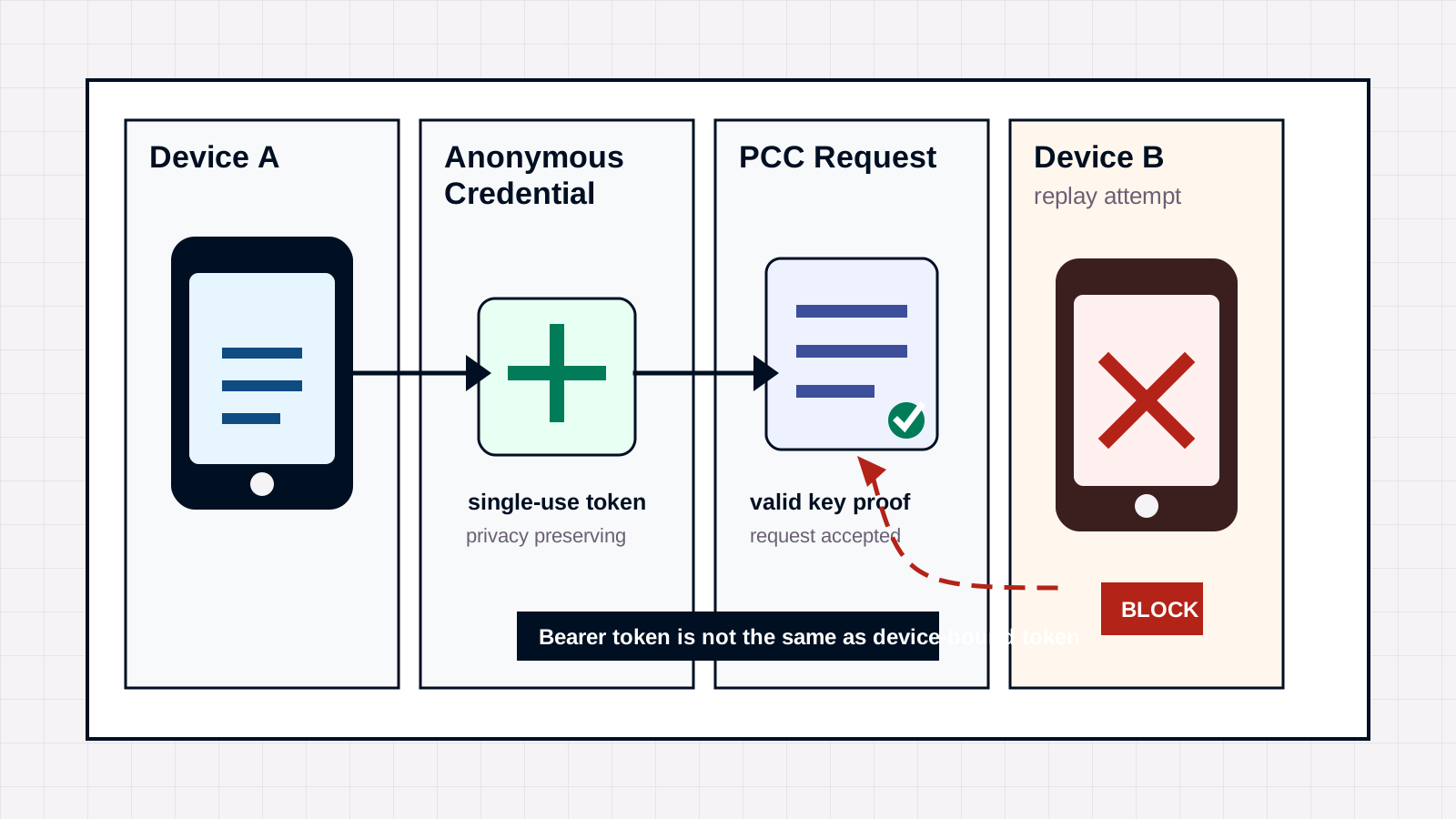
A new academic paper says Apple confirmed a cross-device token replay issue in Apple Intelligence. The practical lesson is that anonymous AI access tokens still need proof-of-possession, device binding, and careful telemetry.
Chat Bridges Turn Private Rooms Into Shared Trust Boundaries
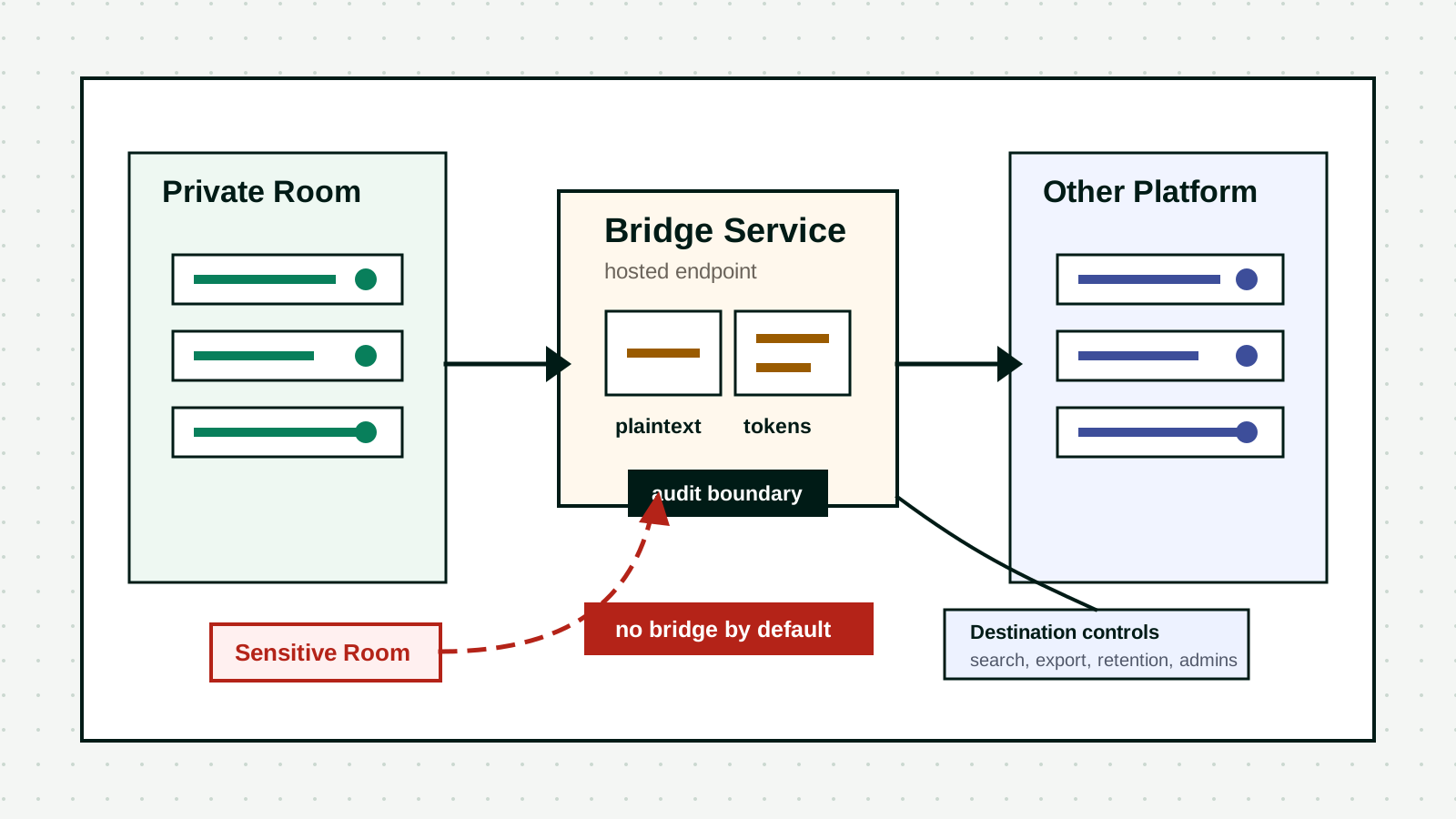
Matrix, Discord, Slack, Telegram, WhatsApp, and other bridges can make communities easier to operate, but they also move messages through bot identities, tokens, and bridge hosts. Treat a bridge as a production data path.
Link Previews Turn Chat Into A Fetch Surface
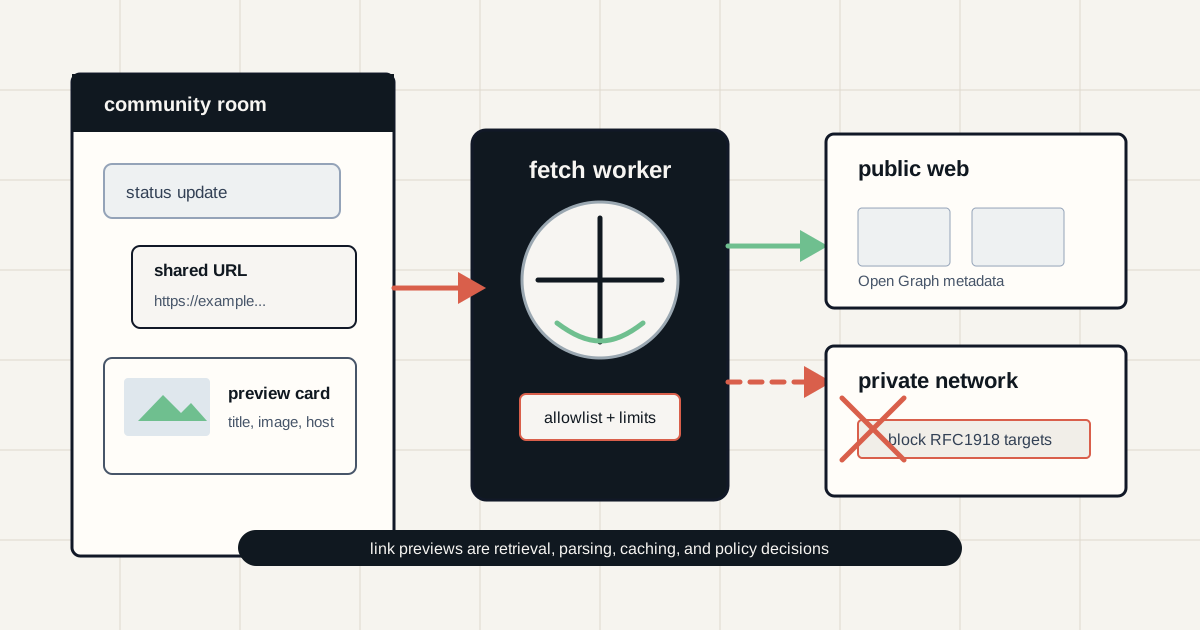
URL previews in chat tools are not passive decoration. They fetch, parse, cache, and sometimes notify apps about links. Secure rooms need a preview policy as much as a message policy.