Cisco SD-WAN Manager Exploitation Hits The Control Plane
Mandiant says an attacker used CVE-2026-20245 to turn Cisco Catalyst SD-WAN Manager admin access into root-level control. Patch, hunt, and verify edge-device configuration changes.
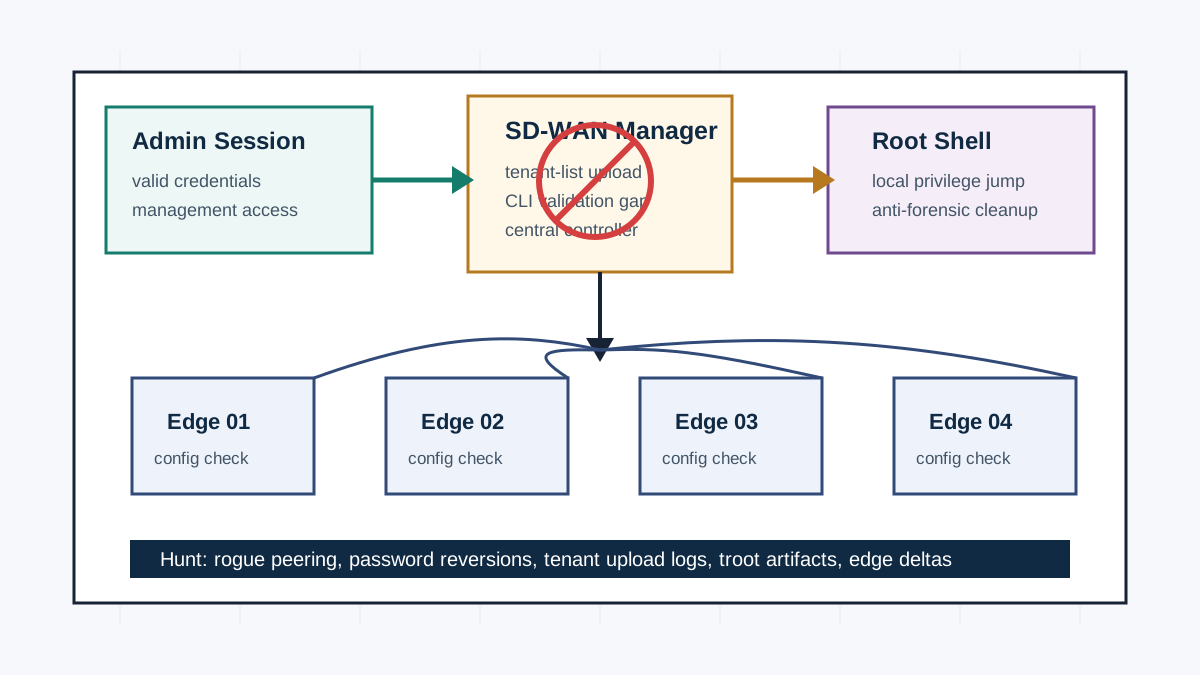
Google Cloud's Mandiant team published a June 24, 2026 report describing exploitation of CVE-2026-20245 in Cisco Catalyst SD-WAN Manager during an intrusion at a service provider. The attacker did not start with public remote code execution against the management interface. Mandiant says the actor first obtained administrative access through rogue peering and credential manipulation, then used the vulnerability to move from SD-WAN administrative control to root-level access through a crafted tenant-list upload.
The practical risk is the control plane. SD-WAN Manager is not just another appliance with a patch window. It holds topology, certificates, device inventory, templates, and the authority to push configuration across edge devices. Cisco and NVD records show CVE-2026-20245 is in CISA's Known Exploited Vulnerabilities catalog, and Mandiant documented anti-forensic cleanup. Teams running affected Cisco Catalyst SD-WAN components need to patch, collect admin-tech evidence, hunt for root-account artifacts, and verify that edge-device configuration did not inherit a malicious change.
Key Takeaways
- check_circle CVE-2026-20245 is an authenticated local command-injection issue, but Mandiant observed it after earlier control-plane access, so credential and peering review matter as much as the patch.
- check_circle NVD lists the vulnerability in CISA's KEV catalog with a June 23, 2026 remediation due date for federal agencies.
- check_circle Mandiant says the attacker used a malicious CSV upload to create a root-privileged account and later deleted or restored files to reduce the forensic footprint.
- check_circle Cisco's NVD entry says limited exploitation resulted in configuration changes pushed to edge devices, so remediation should include edge verification.
- check_circle SD-WAN managers should be treated as tier-zero network infrastructure: restrict admin paths, log controller actions, and monitor peer relationships.
- check_circle Incident response should preserve controller evidence before cleanup, because the actor behavior described by Mandiant includes deliberate anti-forensic steps.
What Was Confirmed
Mandiant says it identified an attacker targeting SD-WAN infrastructure at a service provider in early 2026. The actor gained initial access, established unauthorized peering connections, manipulated default account passwords, authenticated to the SD-WAN Manager web interface, and extracted configuration data. In April 2026, Mandiant observed the attacker exploit CVE-2026-20245 by uploading a crafted tenant-list file through the Cisco Catalyst SD-WAN command-line path.
NVD describes CVE-2026-20245 as a vulnerability in the CLI of Cisco Catalyst SD-WAN Controller, SD-WAN Manager, and SD-WAN Validator that can allow an authenticated local attacker to execute commands as root by supplying a crafted file. The CVSS 3.1 score contributed by Cisco is 7.8 high. NVD also records CISA KEV status, with the vulnerability added on June 9, 2026. Those facts do not prove every exposed controller is compromised, but they do put the issue in the active-exploitation category rather than routine patch backlog.
Why The Control Plane Matters
A traditional branch router compromise is serious because it can expose traffic, routes, credentials, and local network state. A centralized SD-WAN controller compromise can be broader. The manager coordinates devices, templates, peering relationships, certificates, software state, and administrative workflows. If an attacker can manipulate the control plane, the blast radius can include downstream edge devices that appear healthy when viewed one by one.
That is why the response cannot stop at upgrading the manager. Cisco's NVD entry says Cisco observed limited cases where exploitation resulted in a configuration change pushed to edge devices and recommends customers both upgrade and verify edge-device configuration. This is the key operational point for defenders: a fixed controller may still have distributed a bad state before the fix landed.
The Attack Chain Was Not One Bug
The Mandiant report ties CVE-2026-20245 to a larger chain. Before the malicious tenant-list upload, the actor used rogue peering behavior and administrative access. Mandiant notes that earlier unauthorized peering may have involved two separate Cisco SD-WAN controller vulnerabilities, CVE-2026-20127 and CVE-2026-20182, but also says Cisco confirmed later March peering did not use those two paths and may have used stolen certificate material from a prior compromise.
That uncertainty is important. The article is not evidence that all activity came from one exploit or one actor. It is evidence that SD-WAN incidents can combine certificates, default accounts, controller APIs, local privilege paths, and configuration pushes. A good review therefore has to join identity, certificates, peering, logs, file artifacts, and device templates instead of treating the CVE as a standalone patch ticket.
What To Hunt
Mandiant recommends collecting logs and diagnostic data by running the admin-tech command across control-plane components, then hunting for the tactics described in the report. The most direct signals include unexpected SSH connections to the vmanage-admin user, suspicious changes to the admin account password that are quickly reverted, evidence of a switch-user action into an unauthorized root account, and script log entries tied to tenant-list upload behavior.
The actor's cleanup creates a second class of signal. Mandiant reported file names such as evil_tenant.csv and backup copies of passwd and shadow material, but also noted the attacker deleted created files and restored modified configuration files. Defenders should look for remnants, not only live files. Rollback files, authentication logs, script logs, shell history, file creation timestamps, and mismatched edge templates may matter more than a neat list of present indicators.
Patch Priority And Exposure
Mandiant lists fixed Cisco Catalyst SD-WAN Manager releases and tells organizations to prioritize immediate patching and upgrades. NVD's affected-version records are extensive, spanning multiple Catalyst SD-WAN Manager, vSmart, and vBond naming generations. The safest administrative move is to compare deployed versions against Cisco's advisory, not rely on memory of the product name. Cisco renamed several Viptela-era components, and an inventory that mixes old and new names can miss affected systems.
Exposure review should be narrow and practical. Management interfaces should not be reachable from broad internet ranges. SSH should be restricted to controlled administrative sources. Peering should be monitored and reconciled against expected devices. Default or shared administrative accounts should be minimized, and certificate material tied to old controllers or suspected compromise should be investigated. If a controller was exposed during the affected period, assume the question is not only whether it was patched, but whether it was touched.
What To Do After Upgrading
After fixed software is installed, verify the state that the controller previously managed. Review attached templates, device inventory, routes, policy objects, certificate trust, local accounts, and edge-device configuration deltas. Look for changes made during the time window in which the controller may have been exposed. If logs are thin, prioritize high-value branches, service-provider handoff points, payment or healthcare networks, and locations that carry privileged management traffic.
For future control-plane incidents, define a runbook before the next urgent advisory. The runbook should say who can preserve controller evidence, how to collect admin-tech output, where logs are retained, how to isolate management access without taking down the WAN, how to compare intended and running edge configuration, and when Cisco TAC or an incident response team should be engaged. SD-WAN promises central management; security needs central evidence.
Checklist
- Confirm whether Cisco Catalyst SD-WAN Manager, Controller, or Validator versions match affected ranges in Cisco's advisory and NVD records.
- Upgrade to fixed software and keep evidence collection separate from routine cleanup.
- Collect admin-tech and controller logs, then hunt for rogue peering, unexpected SSH, tenant-list upload execution, password reversion, and su activity.
- Verify edge-device configuration, templates, routes, and local accounts for changes made during the exposure window.
- Restrict management access paths, remove unnecessary default-account use, and monitor control-plane certificate relationships.
- Document an SD-WAN incident runbook that covers controller isolation, evidence preservation, vendor escalation, and edge-state validation.
Sources
- Google Cloud Mandiant: Zero-Day Exploitation of CVE-2026-20245 in Cisco Catalyst SD-WAN Manager open_in_new
- NVD: CVE-2026-20245 open_in_new
- Cisco Security Advisory: Cisco Catalyst SD-WAN privilege escalation open_in_new
- CISA Known Exploited Vulnerabilities Catalog: CVE-2026-20245 open_in_new
- Cisco Catalyst SD-WAN Hardening Guide open_in_new
Continue Reading
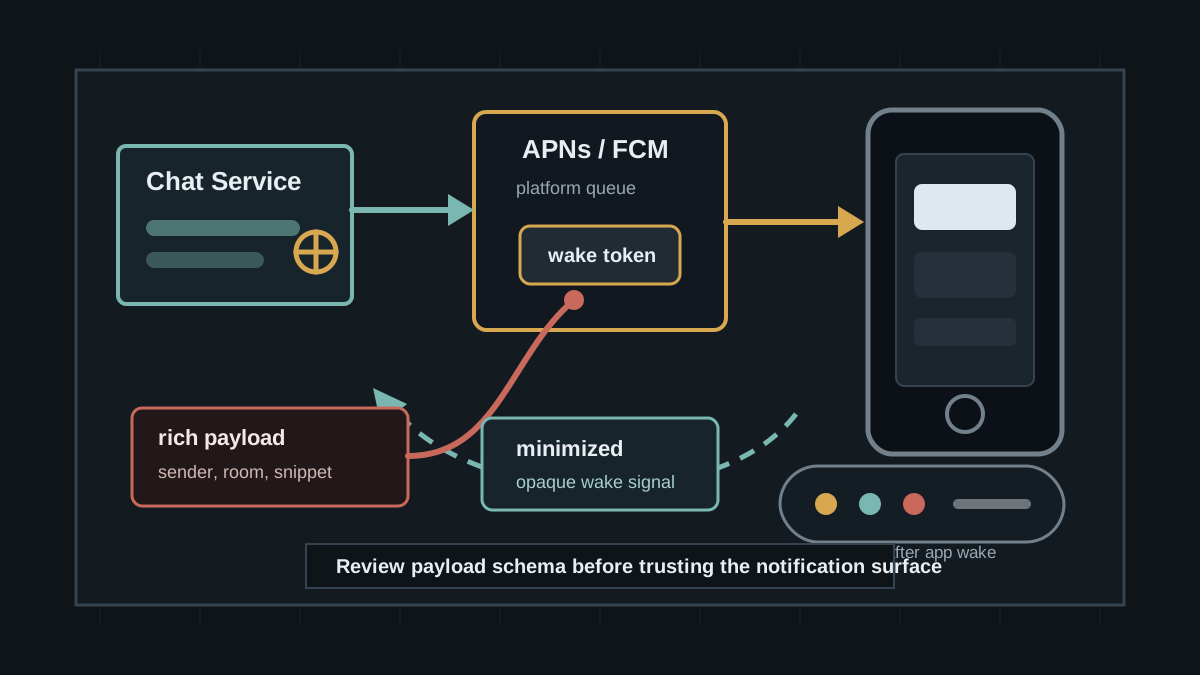
Push Notifications Make Secure Chat A Platform Boundary
End-to-end encrypted chat still depends on APNs, Firebase Cloud Messaging, lock-screen settings, and app payload choices. Review notification payloads as privacy infrastructure.
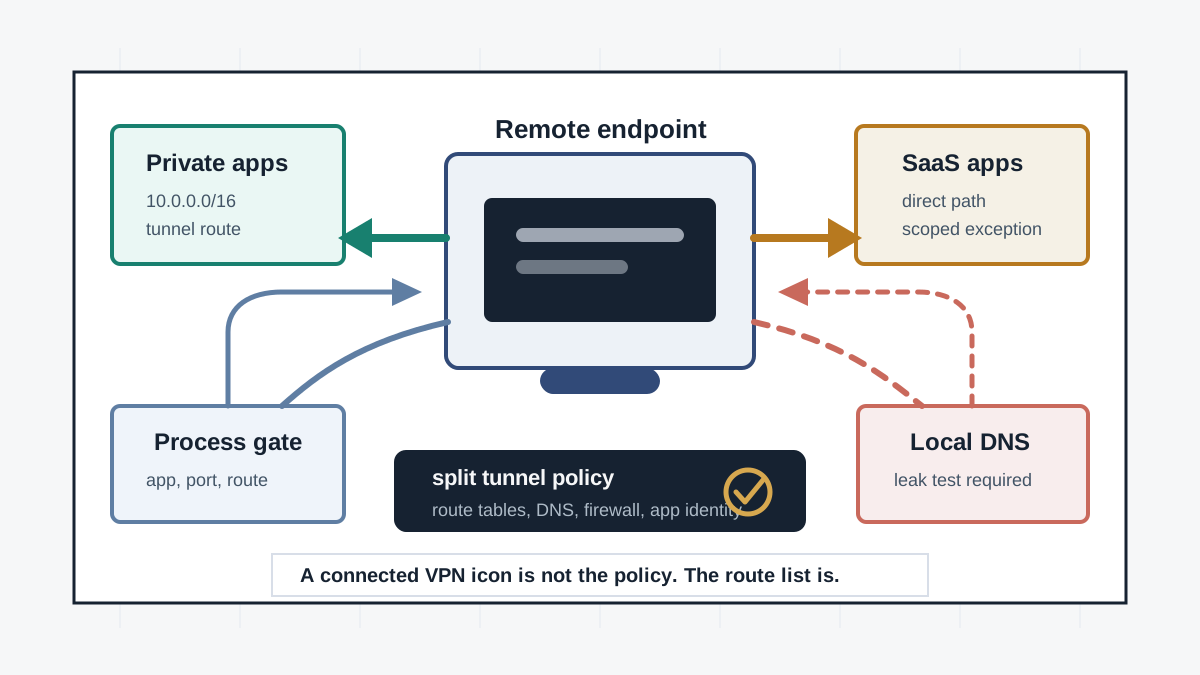
Split Tunnels Turn VPN Privacy Into Routing Policy
Split tunneling can save capacity and improve SaaS performance, but it changes the VPN from a blanket privacy control into a routing and access-control decision.
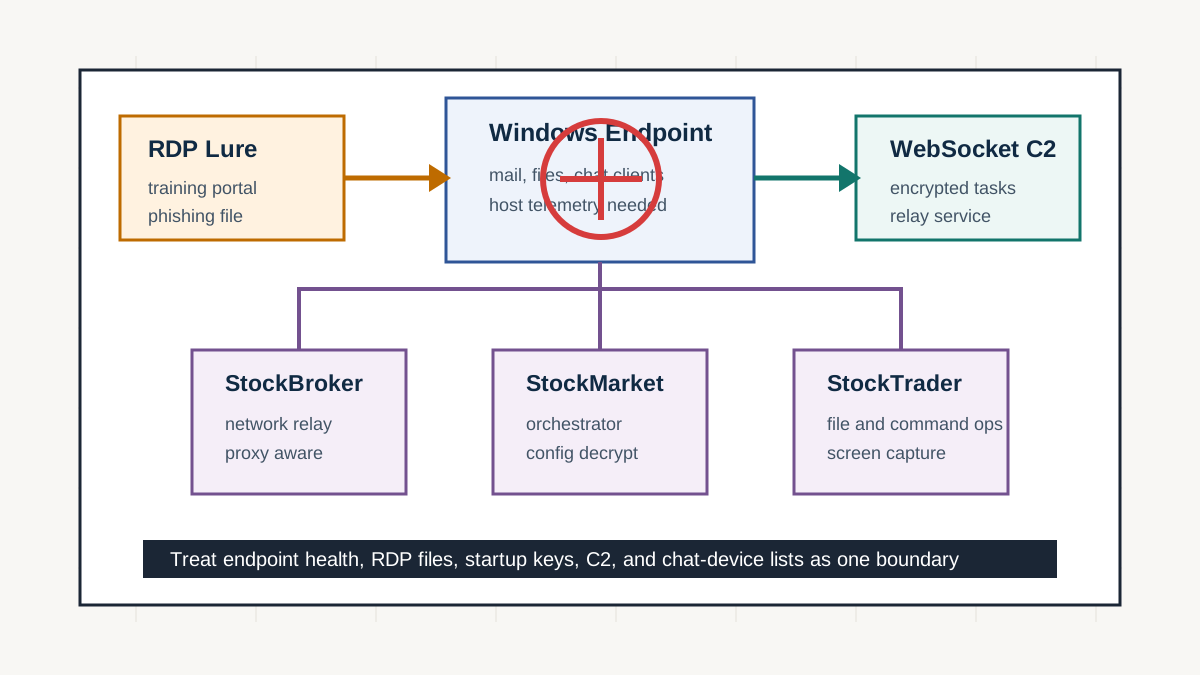
STOCKSTAY Shows Secure Messaging Still Ends At The Endpoint
Google Threat Intelligence Group says Turla has developed and deployed a .NET backdoor since at least 2022. Sensitive teams need endpoint containment, lure control, and telemetry around communication devices.