Mobile App Logs Can Become Private Chat Data
Debug logs, crash reports, and support bundles can capture identifiers, tokens, message snippets, and device context. Chat apps need logging policy before troubleshooting becomes data exposure.
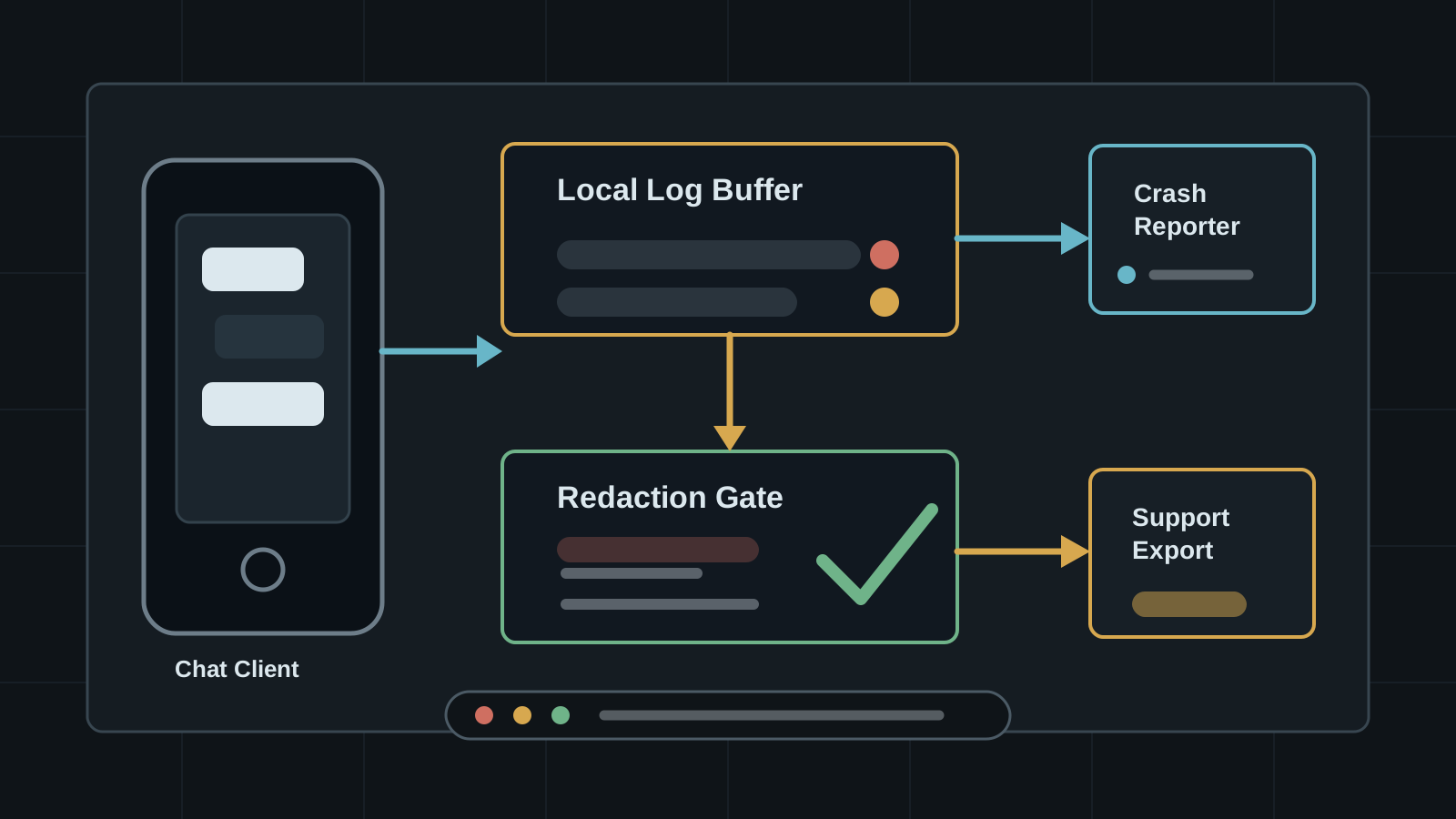
A secure chat app can encrypt message transport and still leak sensitive context through the records it creates while trying to debug itself. Local logs, crash reports, analytics events, support bundles, server traces, and third-party observability tools can capture user IDs, phone numbers, room names, invite links, message previews, file paths, device tokens, stack traces, and OAuth tokens if engineers do not design the logging path deliberately.
The practical standard is not zero logging. Security teams need enough telemetry to detect abuse, investigate outages, and support users. The standard is purposeful logging: decide what each log exists to prove, strip secrets before data leaves the device, separate debug builds from production, protect access to stored logs, and delete diagnostic detail when its operational purpose expires.
Key Takeaways
- check_circle Logs are data stores. They need data classification, access control, retention, and deletion rules just like message databases.
- check_circle Mobile apps add extra risk because local debug output, operating-system logs, crash reporters, and support exports can all carry user context outside the main encrypted channel.
- check_circle Sensitive values such as access tokens, session IDs, recovery keys, phone numbers, invite links, and message text should be removed, masked, hashed, or kept out of logs entirely.
- check_circle A release build should not behave like a developer build. Verbose network traces, raw payload dumps, and full exception context need explicit production gates.
- check_circle Privacy policies and data maps should mention logging behavior accurately when logs collect personal data or device identifiers.
- check_circle Incident response has to include log scoping. After a leak, teams need to know which diagnostic systems received the sensitive value and how long they kept it.
What Counts As A Log
For a chat or community app, logging is broader than a text file named log.txt. It includes application debug statements, server request traces, mobile OS logs, crash reports, analytics events, moderation telemetry, support attachments, webhook delivery records, API gateway logs, CDN logs, database audit trails, and security alerts. NIST SP 800-92 frames log management as a lifecycle: generating, transmitting, storing, analyzing, and disposing of log data. That lifecycle matters because every copy becomes another place where sensitive records can persist.
The OWASP logging guidance makes the same point from an application-security angle. It treats client software, embedded instrumentation, operating systems, web servers, application firewalls, databases, and related systems as possible event-data sources. It also warns that log data from another trust zone should be treated as untrusted because it may be missing, modified, forged, replayed, or malicious. In other words, logs are not just passive evidence. They are inputs, storage systems, and sometimes attack surfaces.
Why Chat Apps Are Exposed
Messaging products create sensitive context even when message bodies are encrypted. A failed send can reveal a room identifier. A notification error can reveal a sender name. An attachment upload failure can expose a local file path or object key. A group invite trace can capture a bearer-style invitation URL. A contact-discovery bug can leave phone numbers or hashed identifiers in diagnostics. A bot integration failure can print OAuth scopes or webhook URLs. None of those records has to be the message body to create a privacy problem.
Recent Android logging research gives the issue a measurable shape. One 2026 arXiv paper studied Android app logs and found that developer unawareness is a common source of privacy leakage. A related 2026 study compared privacy policies with observed logs across 1,000 Android apps and found widespread gaps between what policies said and what logs actually contained. The point for Protocol Report readers is not that every app in those samples is a messaging product. The point is that mobile logging behavior often drifts away from the promises made at the product layer.
Debug Builds And Release Builds Need A Wall
Developer builds need detail. Engineers may have to inspect request timing, database migrations, failed decryptions, malformed payloads, sync state, and error paths. Production builds need discipline. A verbose logger that helped diagnose a staging bug can become a production data leak if it prints authorization headers, message payloads, registration codes, push tokens, or raw server responses after release.
The safest pattern is to make logging levels part of release engineering rather than developer preference. Production builds should use structured event names and safe fields by default. Debug detail should be compiled out, feature-flagged for short windows, or restricted to test accounts and isolated environments. If elevated diagnostics are enabled for a real user, the support flow should require a time limit, a reason, user notice where appropriate, and automatic return to the normal level.
Crash Reports Are Data Exports
Crash reporting is useful because it turns rare failures into fixable evidence. It is also a data export path. Stack traces can include function arguments, URLs, file names, database keys, room identifiers, request headers, and snippets of exception messages. Breadcrumbs can reconstruct what a user did before the crash. Attachments can include screenshots, logs, device state, or cached payloads. If those records leave the device and land in a third-party dashboard, the vendor becomes part of the privacy boundary.
Support bundles need the same review. Many teams ask users to send diagnostics after failed login, message delivery problems, payment disputes, or moderation appeals. That can be reasonable, but the bundle should be generated by a redaction pipeline, not by asking the user to zip an app directory. Strip tokens, remove message content unless explicitly needed, truncate identifiers, hash session references where correlation is enough, and show the user what categories will be sent.
Log Policy Has To Match Product Claims
A product that markets end-to-end encryption, disappearing messages, anonymous communities, or minimal data collection should be especially careful with diagnostics. The claim may be true for the primary data path and false for the support path if the app logs room names, device identifiers, report text, or message previews. That does not automatically make the product malicious. It does make the privacy claim incomplete.
CWE-532 captures the core engineering failure as insertion of sensitive information into a log file. OWASP's data-to-exclude guidance is more operational: do not directly record session identifiers, access tokens, sensitive personal data, passwords, database connection strings, encryption keys, payment data, or information that the logging system is not allowed to store. For a chat app, add recovery keys, invite links, moderation evidence, bot tokens, webhook URLs, and unredacted message text to that list unless there is a documented, narrow reason.
Access And Retention Decide The Damage
Good redaction reduces the chance of exposure, but it does not remove the need to protect the logs that remain. Diagnostic repositories should have narrower access than ordinary product dashboards when they contain user identifiers, support conversations, security events, or abuse evidence. Reading logs should itself be logged. Bulk export should require a reason. Third-party processors should be listed in the data map, reviewed for access controls, and covered by deletion commitments.
Retention should be tied to purpose. High-level reliability metrics may be useful for months. Raw crash breadcrumbs may only need days. Security events may need a longer window because account takeover investigations often start late. Support attachments should not become permanent archives by accident. If logs are copied into tickets, warehouses, backups, or incident workspaces, the deletion story has to cover those copies too.
What To Change First
Start with a sensitive-field inventory. List the values that must never appear in logs: message bodies, recovery keys, verification codes, session cookies, access tokens, refresh tokens, webhook URLs, bot tokens, invite links, private room names, phone numbers, government identifiers, payment references, and raw file paths. Then enforce the inventory in code through centralized logging helpers, type-safe redaction wrappers, lint rules, test fixtures, and CI scans over generated logs.
Next, run a production-like logging review. Create a test account, trigger login failure, message failure, attachment failure, invite creation, bot command failure, report submission, crash flow, and support export. Inspect local device logs, backend logs, crash dashboards, support tickets, data warehouse events, and security alerts. The question is simple: could a person with access to diagnostics reconstruct a private conversation, impersonate a user, join a private room, or reuse a credential? If yes, fix the log before the next incident.
Checklist
- Create a denylist of values that must never be logged, including tokens, codes, keys, invite links, and message text.
- Route all production logging through a centralized helper that redacts before data leaves the process.
- Disable verbose network, database, and cryptographic traces in production builds unless a time-limited support flag is approved.
- Review crash reporters, analytics tools, SIEM pipelines, support tickets, warehouses, and backups as log destinations.
- Give diagnostic repositories role-based access, access logging, export review, and retention limits.
- Test real app flows and inspect every resulting log surface before claiming sensitive data is not collected.
Sources
- arXiv: Is Your Private Information Logged? An Empirical Study on Android App Logs open_in_new
- arXiv: Do Privacy Policies Match with the Logs? open_in_new
- MITRE CWE-532: Insertion of Sensitive Information into Log File open_in_new
- OWASP Logging Cheat Sheet open_in_new
- NIST SP 800-92: Guide to Computer Security Log Management open_in_new
- Android Developers: Log API reference open_in_new
- Apple Developer Documentation: Logging open_in_new
Continue Reading
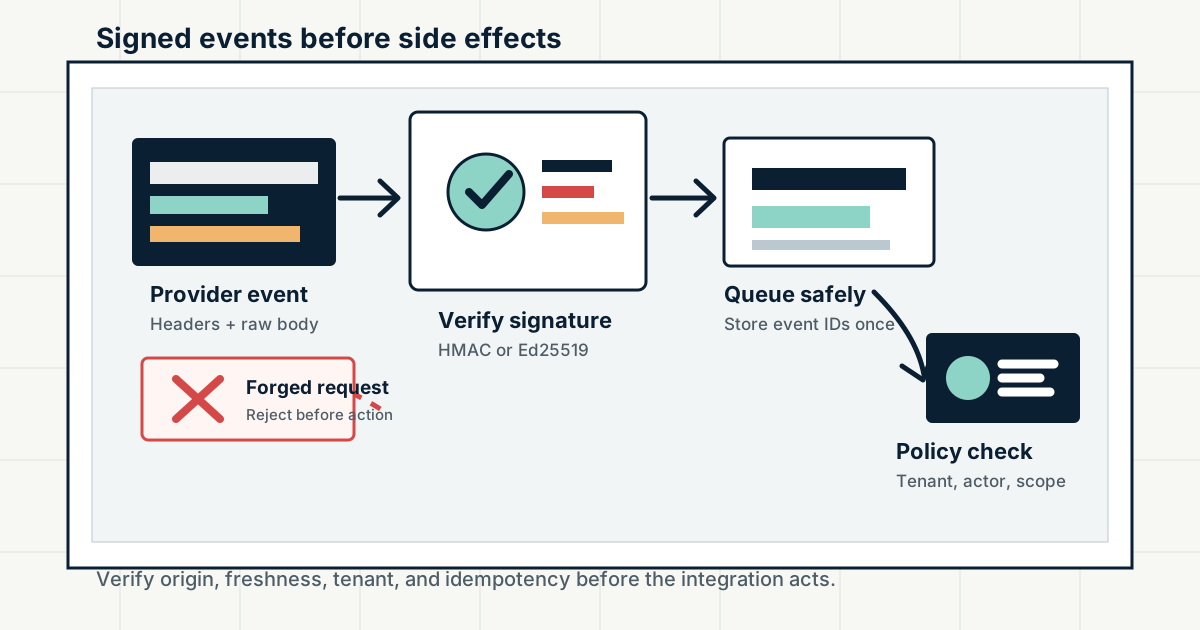
Inbound Webhooks Need Signature Checks
Slack, GitHub, Discord, Stripe, and other platforms send high-trust events to public endpoints. Signature verification, replay windows, raw-body handling, and idempotency decide whether a webhook is evidence or attacker input.
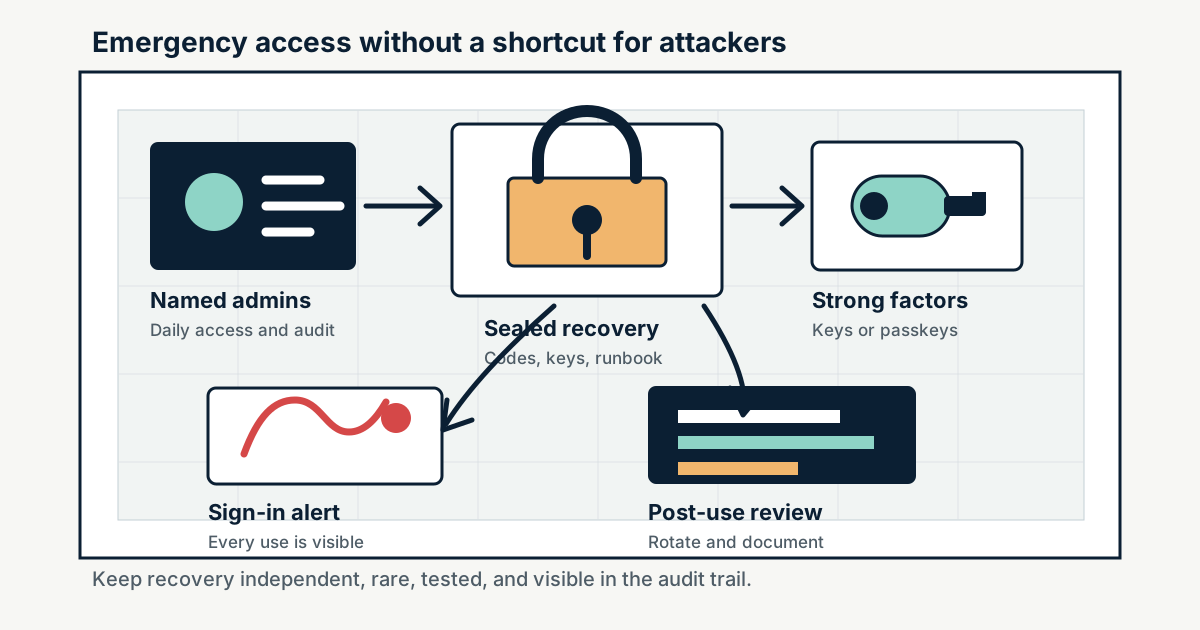
Break-Glass Admin Accounts Need A Runbook
Community platforms and SaaS workspaces need emergency admin access that works during lockouts, outages, founder turnover, and MFA failures. The hard part is keeping that access usable without making it an attacker shortcut.
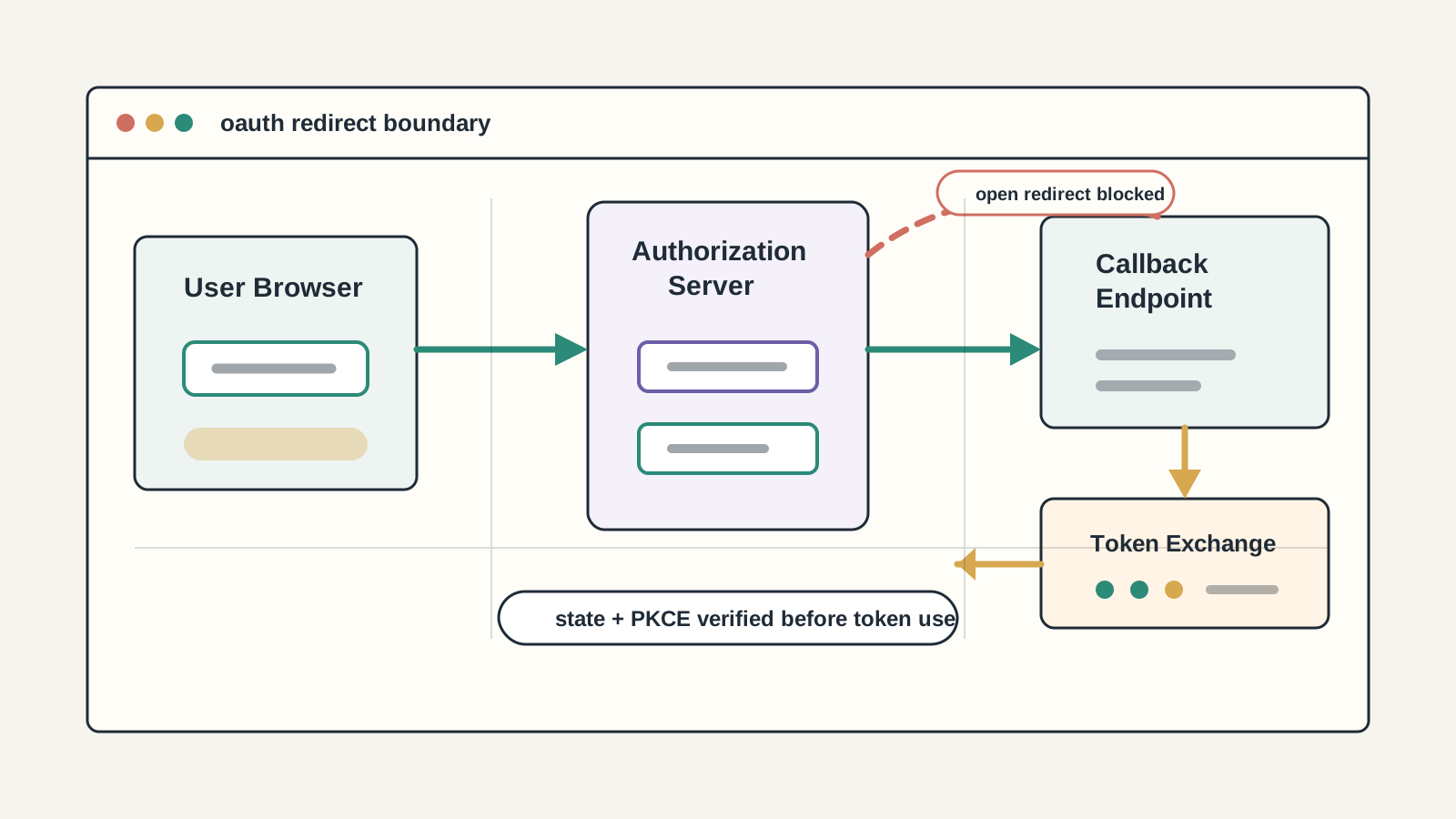
Redirect URIs Are OAuth Trust Boundaries
Community apps for Slack, Discord, GitHub, and identity providers often fail at the callback layer. Exact redirect matching, state, PKCE, and callback ownership decide where tokens land.