Russian Messaging Phishing Turns Backup Keys Into Account Access
FBI, CISA, and State Department updates on UNC5792 and UNC4221 show how Signal and WhatsApp account phishing is moving from linked devices to backup recovery keys.
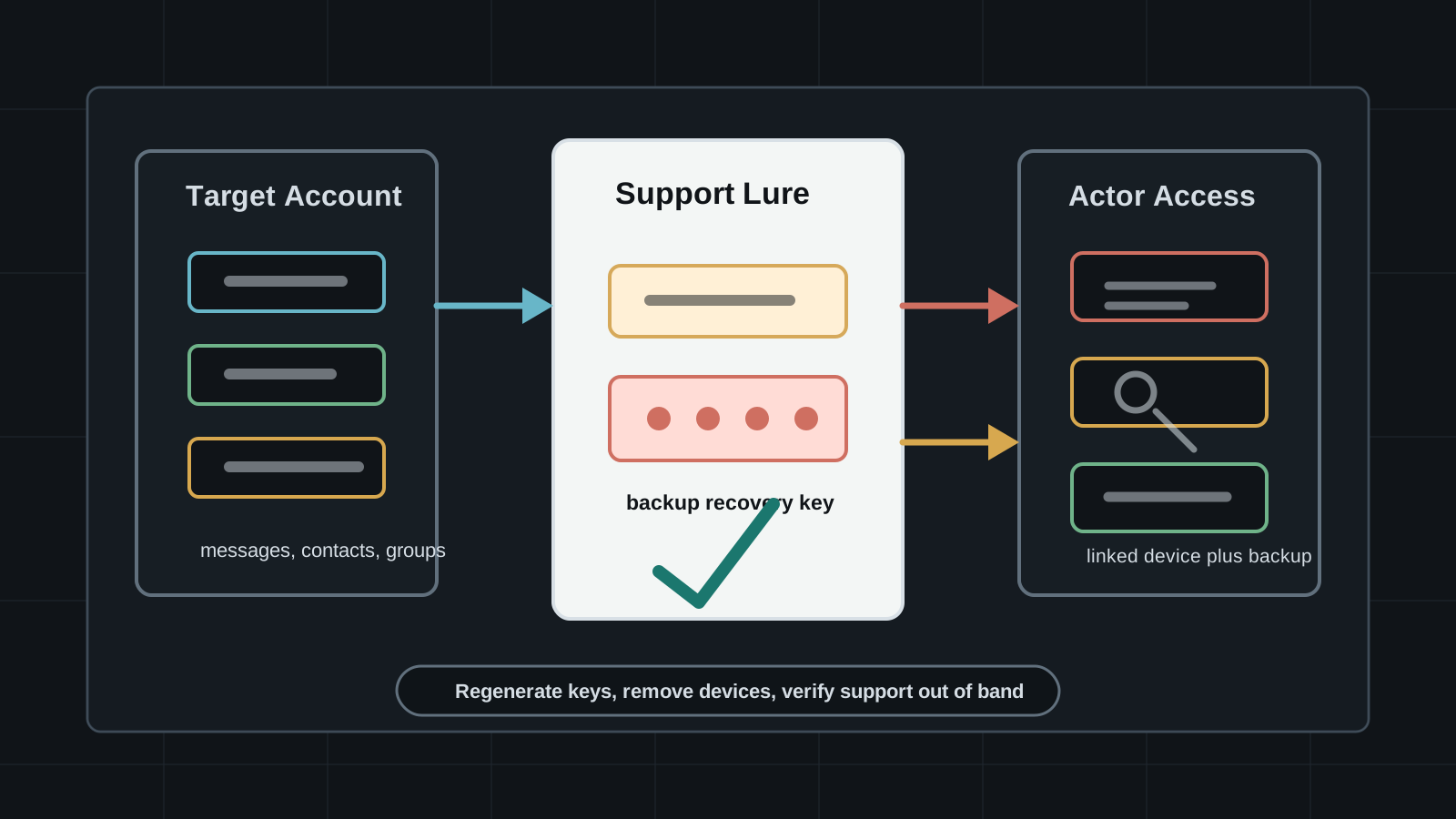
The FBI and CISA updated their commercial messaging application warning on June 26, 2026, saying Russian Intelligence Services actors tracked publicly as UNC5792 and UNC4221 continue to target high-value users of secure messaging apps. The agencies emphasize a narrow but important point: the campaign compromises individual accounts through phishing and social engineering, not by breaking Signal, WhatsApp, or the encryption protocols themselves.
The most important update is the backup recovery key angle. The agencies say actors are now trying to trick targets into sharing backup recovery keys. If a target follows the lure, the actor may be able to view historical messages, private and group messages, and take over the account. Rewards for Justice separately announced a reward of up to $10 million for information on UNC5792 and related actors, tying the same activity to targeting of U.S., allied, diplomatic, defense, journalist, NGO, and Ukraine-support communities.
Key Takeaways
- check_circle The confirmed public record describes account and recovery abuse, not a cryptographic break in secure messaging protocols.
- check_circle A backup recovery key should be treated like an account credential because it can expose past message history if the product's backup design allows restore access.
- check_circle Linked-device phishing remains important because a malicious QR code or fake invite can attach an actor-controlled client to a victim's account.
- check_circle High-risk users should audit linked devices, regenerate exposed recovery keys, enable registration lock or two-step verification, and avoid sharing sensitive work over unmanaged personal accounts.
- check_circle Community operators should publish support-contact rules before a scam starts. Legitimate support should not ask members to paste verification codes, PINs, or recovery keys into a chat.
- check_circle Incident response should cover both current access and historical backup exposure. Removing a device does not undo messages already restored or copied.
What Is Confirmed
IC3 alert I-062626-PSA, dated June 26, 2026, updates a March 20 FBI and CISA public service announcement about Russian Intelligence Services targeting commercial messaging applications. The public tracking names are UNC5792 and UNC4221. The agencies say the actors target individuals of high intelligence value, including current and former U.S. and international government officials, military personnel, political figures, journalists, and key officials in Ukraine.
The agencies are careful about scope. They say the actors compromised individual commercial messaging accounts, not the encryption or the applications themselves. That distinction matters for Protocol Report readers. End-to-end encryption can still be doing its job while an attacker gets invited into the account through a fake support message, a malicious link, a QR code, a verification-code request, or a recovery-key lure.
Why The Backup Key Update Matters
The June update adds a sharper recovery risk than the earlier linked-device warnings. The agencies say actors have evolved their tactics to elicit backup recovery keys while continuing to ask for verification codes and account PINs. If the victim provides a backup recovery key, the actor can potentially view historical messages and use the account. The advisory also says the same key may remain valid if the victim creates a new account using the same phone number, unless the user generates a new backup recovery key.
That turns a recovery key into more than a restore convenience. In a sensitive messaging workflow, it is a credential with possible access to past conversations. A password reset usually changes future login access. A backup recovery key may also make old content accessible if that content was already captured in an encrypted backup. The first response after exposure is therefore not only to remove the attacker. It is also to regenerate the recovery key, assume some historical content may be out, and decide who needs to know.
Linked Devices Still Carry The First Hit
The March FBI and CISA warning described two common account paths: abuse of linked-device features and full account takeover through PIN or two-factor code theft. Google Threat Intelligence Group reported a related Signal-focused pattern in February 2025, including modified Signal group invite pages that replaced the expected group join behavior with a Signal device-linking URI. That does not require a protocol exploit. It relies on the user trusting the wrong page or QR code.
The device-linking model is particularly dangerous because it can look like a normal setup action. A person scans a code, expects to join a group or verify a security notice, and instead authorizes an additional client. New messages can then reach the actor-controlled device until the victim notices and removes it. For high-risk users, linked-device review has to become routine, especially after travel, account warnings, unexpected group invitations, or contact from someone claiming to be support.
The State Department Reward Changes The Audience
Rewards for Justice is now offering up to $10 million for information that helps identify or locate people tied to UNC5792 activity under the relevant malicious cyber activity reward authority. The reward page says UNC5792 is associated with the Russian Federal Security Service Border Guards and that UNC4221 works on behalf of Russian military services. It also repeats that the actors used social engineering and legitimate linked-device features to access communications, contacts, and group conversations.
That move does not prove every technical detail in every third-party report. It does show that U.S. authorities view the activity as serious enough to seek information on identities, infrastructure, tools, contractors, domains, hosting, funding, cryptocurrency wallets, and money flows. The practical audience is broader than government phones. Journalists covering Russia and Ukraine, NGOs supporting Ukraine, researchers, defense partners, policy advisers, and community operators connected to those groups should treat secure messaging accounts as high-value targets.
What High-Risk Users Should Do
The minimum personal checklist is short and repetitive because the attacks rely on urgency. Never send verification codes, PINs, or backup recovery keys inside the messaging app. Do not scan QR codes from unexpected support messages, group invites, or security alerts. Review linked devices in the app settings. Enable registration lock, two-step verification, passkeys, or the strongest account-protection option the app supports. Keep the operating system and the app current.
The NCSC alert adds an organizational boundary: where work-sensitive communication exists, use corporately provided messaging services and devices when available, and follow the organization's retention and security policy. Disappearing messages can reduce the amount of history an attacker sees after access, but they are not a substitute for account protection, device management, and clear rules about what information should not be placed in a personal messaging account.
What Community Operators Should Change
Private communities should not wait for a member to be targeted before defining support behavior. Publish a short support-contact policy that says moderators, admins, bot maintainers, and platform support will never ask members to paste account codes, PINs, recovery keys, seed phrases, or backup keys in chat. Pin it in onboarding, support channels, payment channels, and any group where impersonation would have high value.
Incident response should include an account-specific playbook. Preserve the suspicious message, remove unknown linked devices, regenerate recovery keys if exposed, change account PINs, review recent group additions, warn affected rooms through a known-good channel, and scope what historical messages or files might have been restored. If the victim is a journalist, official, researcher, or staff member with privileged community access, also rotate adjacent credentials and review admin actions made during the exposure window.
What Remains Unknown
The public advisories do not identify every victim, every platform-specific backup behavior, or every actor-controlled domain currently in use. They also do not prove that any secure messaging provider can read ordinary message content in transit. The confirmed risk is more practical: a legitimate feature can become an access path when the user is tricked into authorizing it or giving away the key needed to restore protected history.
That should keep the response disciplined. Do not tell users that encryption is broken if the public evidence says account access was phished. Do tell users that encryption does not save a conversation after an attacker is added as a device, receives a recovery key, controls the endpoint, or persuades a target to move secrets into the wrong chat.
Checklist
- Audit linked devices on Signal, WhatsApp, Telegram, and other sensitive messaging accounts.
- Regenerate any backup recovery key that may have been shown, copied, pasted, photographed, or stored in an unsafe place.
- Enable registration lock, two-step verification, passkeys, or the strongest supported account protection.
- Ban support flows that ask for verification codes, PINs, backup keys, seed phrases, or recovery keys in chat.
- Verify unexpected group invites and QR codes through a separate channel before scanning or opening them.
- After compromise, remove devices, preserve lures, scope restored history, and notify affected groups from a known-good account.
Sources
- IC3: Russian Intelligence Services continue to target commercial messaging applications open_in_new
- IC3: Russian Intelligence Services target commercial messaging application accounts open_in_new
- Rewards for Justice: UNC5792 reward offer open_in_new
- NCSC: Messaging app targeting alert open_in_new
- Google Cloud GTIG: Russia-aligned threat actors targeting Signal Messenger open_in_new
- NCSC: Guidance for high-risk individuals open_in_new
- Microsoft Security Blog: WhatsApp malware campaign delivers VBScript and MSI backdoors open_in_new
Continue Reading
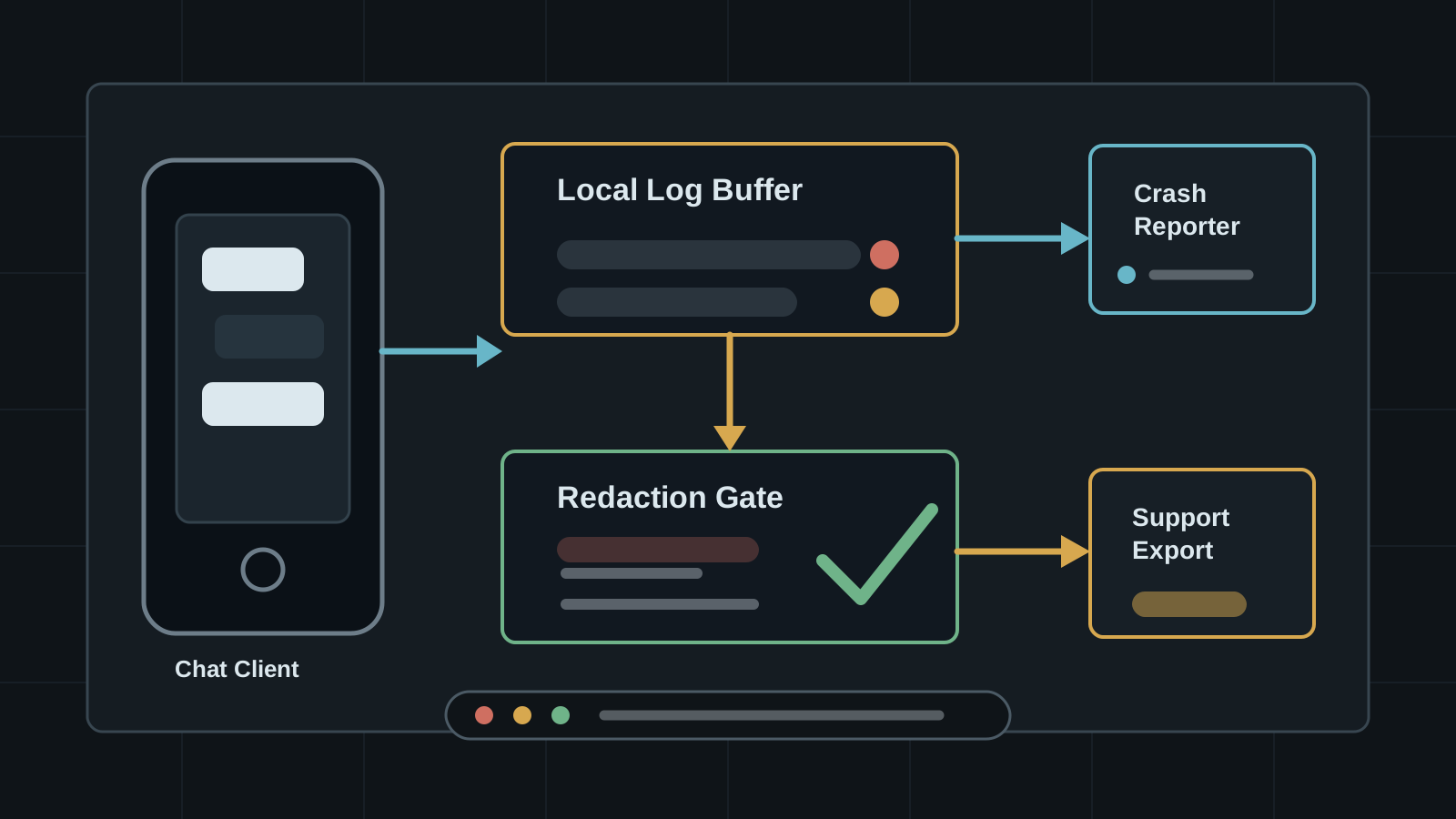
Mobile App Logs Can Become Private Chat Data
Debug logs, crash reports, and support bundles can capture identifiers, tokens, message snippets, and device context. Chat apps need logging policy before troubleshooting becomes data exposure.
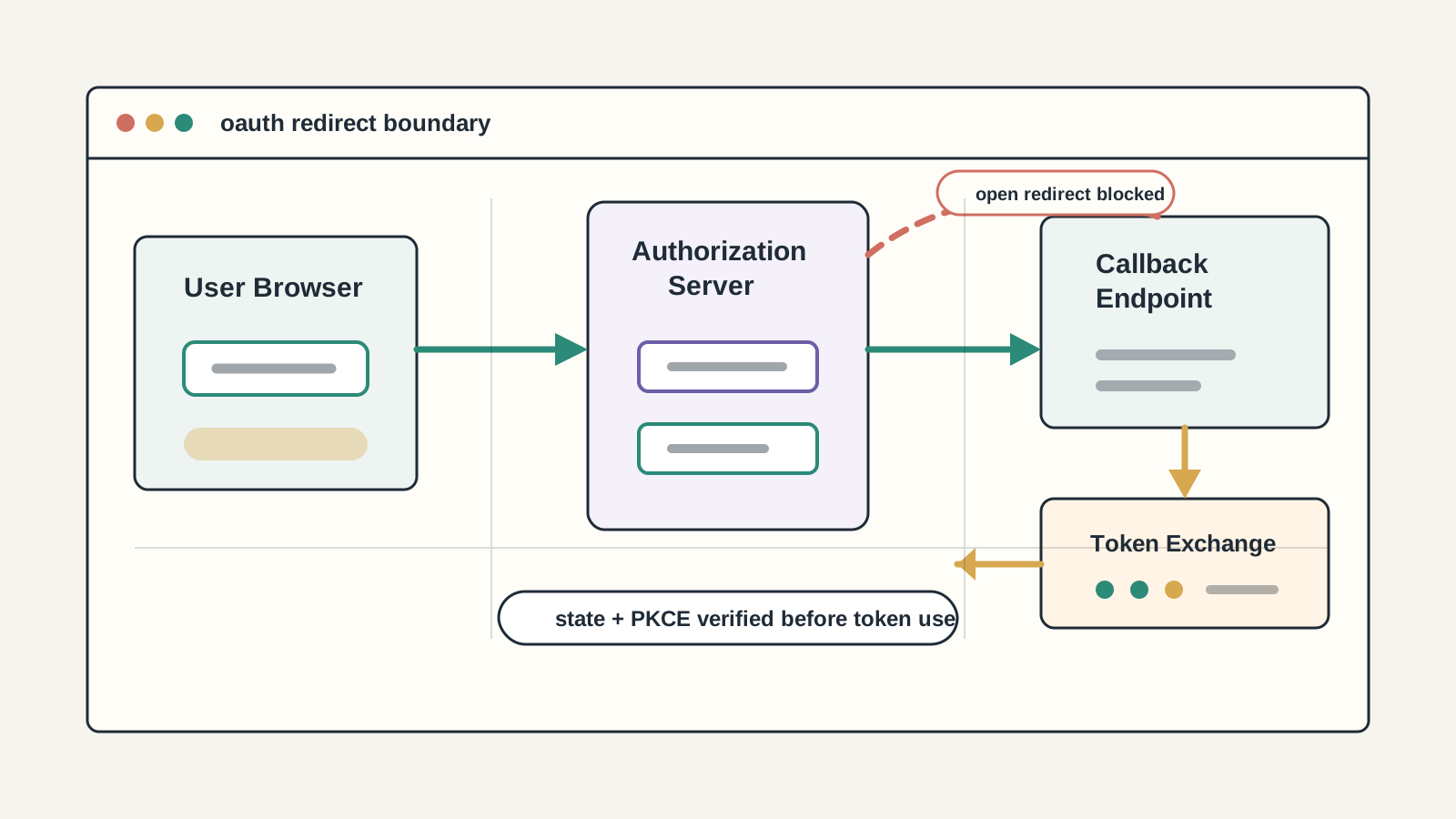
Redirect URIs Are OAuth Trust Boundaries
Community apps for Slack, Discord, GitHub, and identity providers often fail at the callback layer. Exact redirect matching, state, PKCE, and callback ownership decide where tokens land.
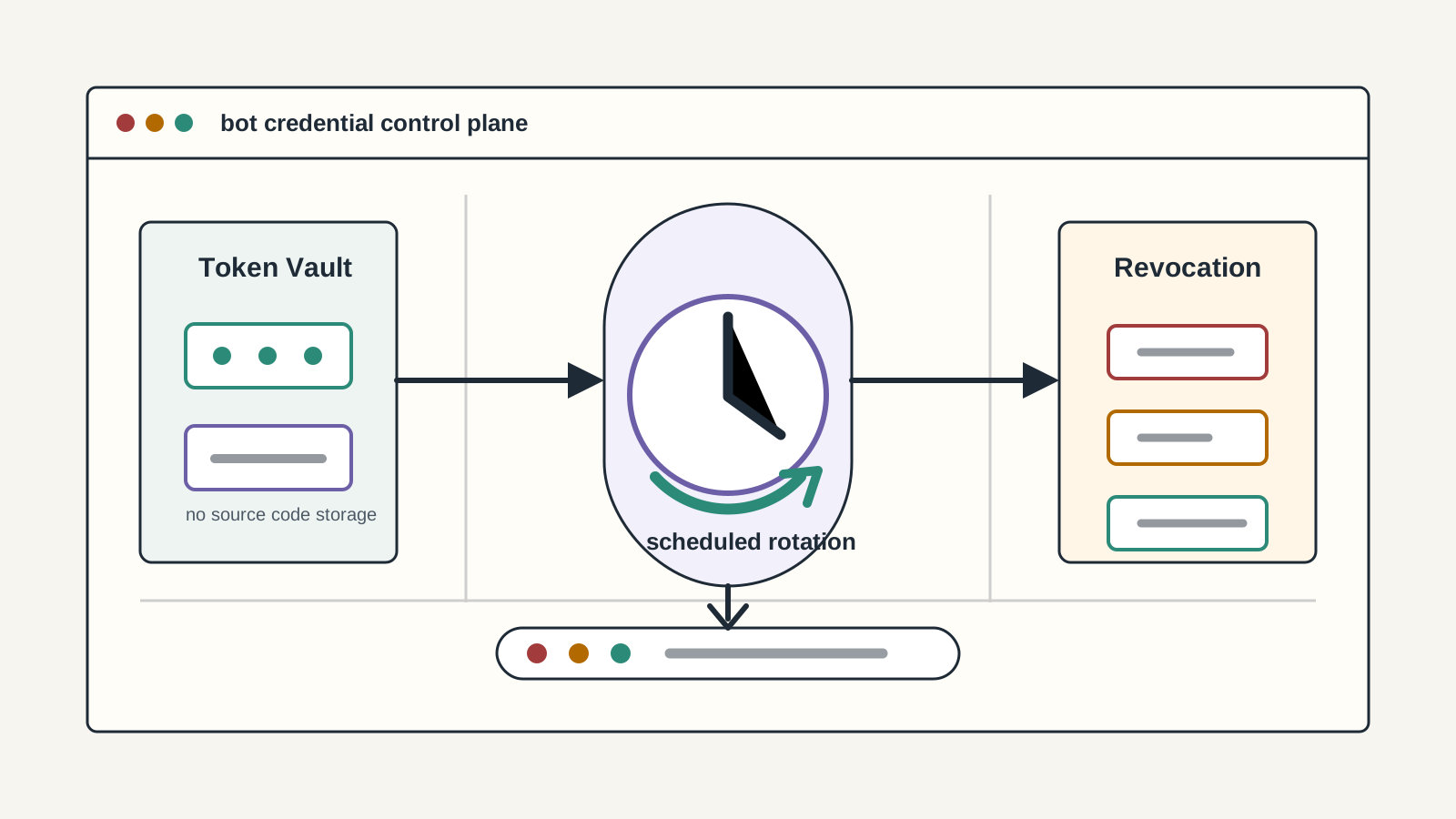
Bot Tokens Need Rotation Before The Leak
Discord, Slack, Telegram, and GitHub automation tokens are production credentials. Communities need ownership, storage, rotation, revocation, and leak-response policy before a bot becomes the breach path.