Bot Tokens Need Rotation Before The Leak
Discord, Slack, Telegram, and GitHub automation tokens are production credentials. Communities need ownership, storage, rotation, revocation, and leak-response policy before a bot becomes the breach path.
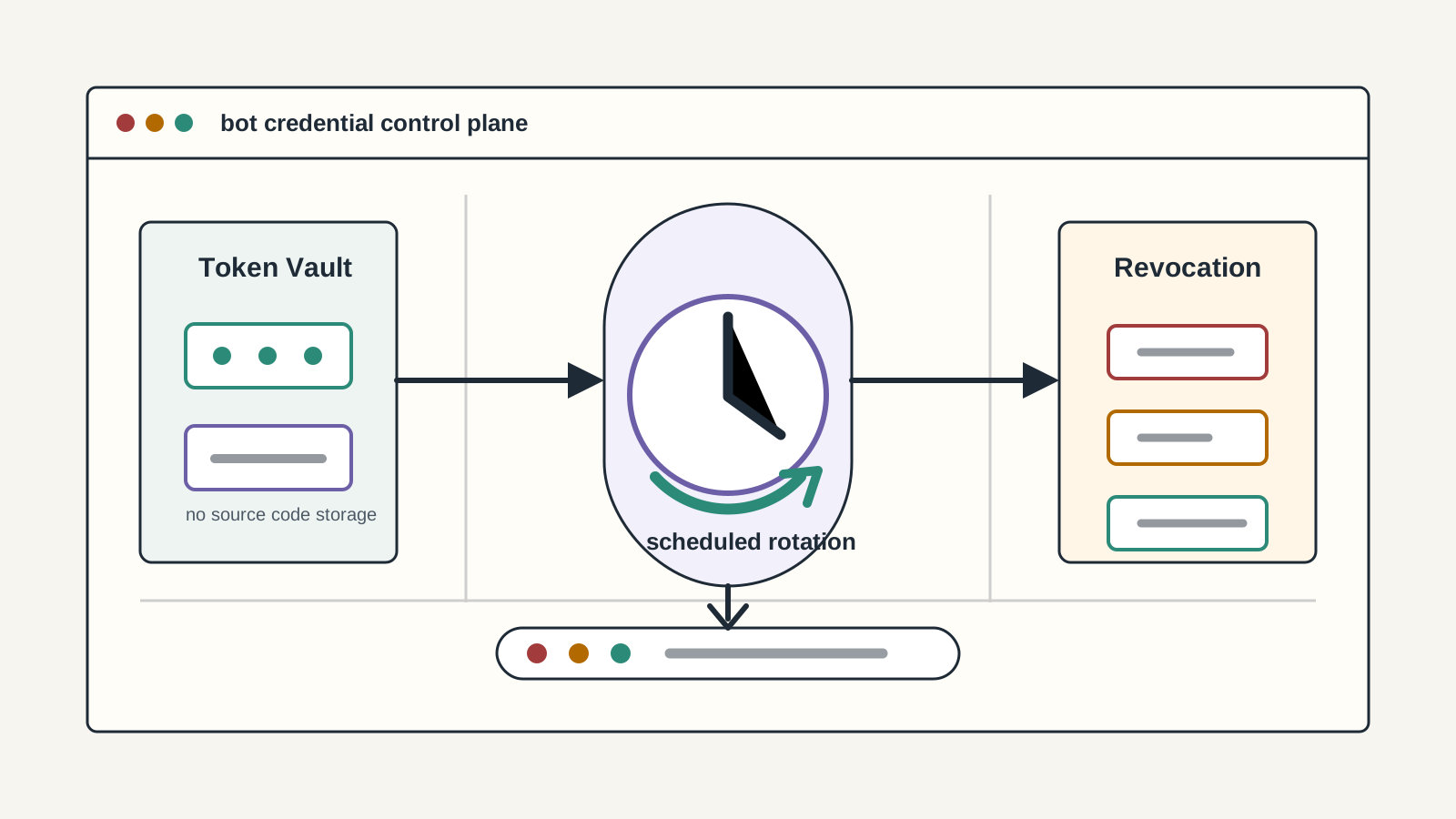
A community bot token is not a setup string. It is a production credential that can read events, send messages, manage roles, trigger workflows, call APIs, or connect to other systems depending on the platform and granted scopes. If it sits in a maintainer's laptop, a shared spreadsheet, a copied environment file, a CI log, or a forgotten test server, the community has an access path that often outlives the person who created it.
The practical fix is lifecycle management. Inventory every bot, store secrets centrally, use short-lived or rotatable tokens where the platform supports them, separate development from production, restrict scopes, monitor token use, and rehearse revocation. The best time to design rotation is before a leak. During an incident, teams should be executing a checklist, not discovering which volunteer still controls the bot account.
Key Takeaways
- check_circle Bot tokens, refresh tokens, webhook URLs, and app client secrets should be handled as credentials, not configuration trivia.
- check_circle Slack supports token rotation for granular bot and user tokens, while Discord, Telegram, and other platforms require different revocation and regeneration procedures.
- check_circle A rotation plan must identify owners, storage location, dependent services, deployment steps, rollback behavior, and audit evidence.
- check_circle Least privilege matters because a leaked token with message-write access is a nuisance, while a leaked token with admin or member-management access can become a takeover path.
- check_circle Secret scanning is detection, not cleanup. After exposure, revoke or regenerate the credential and inspect what it could access during the exposure window.
- check_circle Communities should rotate bot credentials after maintainer departures, repository exposure, endpoint compromise, vendor incidents, and unexplained bot behavior.
Start With An Inventory
Most community automation grows in layers. One bot welcomes new members, another handles payments, another verifies token ownership, another syncs roles, another posts release notes, and several webhooks feed announcements. The access model becomes hard to reason about because each piece was added for a narrow job. Before rotation is possible, the team needs a credential inventory: bot name, platform, owner, purpose, scopes, storage location, deployment target, linked repository, and emergency contact.
The inventory should also include non-obvious credentials. Discord OAuth clients use client IDs and secrets, bot tokens, refreshable user tokens, and webhooks depending on the flow. Slack apps can have bot tokens, user tokens, refresh tokens, signing secrets, app-level tokens, and incoming webhooks. Telegram bots get BotFather-issued tokens that can control the bot. GitHub automation may add GitHub App keys, installation tokens, deploy keys, Actions secrets, and personal access tokens. Treat the whole set as a system, not as isolated strings.
Rotation And Revocation Are Different
Rotation means moving from one credential to another while preserving intended service. Revocation means invalidating a credential so it stops working. In normal operations, rotation should be planned, tested, and quiet. In an incident, revocation may have to be immediate even if the bot goes down. Teams need both paths because the right action depends on whether the credential is merely aging, possibly exposed, or confirmed stolen.
Slack's token rotation documentation is a useful model because it gives granular bot and user tokens a short access-token lifetime and a refresh-token flow. Discord documents OAuth token revocation and bot authentication, while Telegram tells developers to generate a new token through BotFather if a token is compromised or lost. These products do not all behave the same way, so a community that spans several platforms should write platform-specific steps rather than a generic rotate the bot note.
Storage Is Part Of The Control
A token stored in code is already on the wrong path. A token stored in a local dotenv file copied between laptops is only slightly better. OWASP's secrets management guidance emphasizes centralization, access control, automation, auditing, rotation, revocation, and expiration because unmanaged secrets create repeated incident patterns. The operational goal is boring: only the runtime and a small set of maintainers should be able to retrieve production bot credentials, and every retrieval should leave evidence.
For small communities, that may mean a password manager with vault access, ownership transfer, and recovery rules. For teams with infrastructure, it may mean a cloud secret manager, CI secret store, or deployment platform secret store with environment separation. Avoid pasting tokens into chat, storing them in issue comments, embedding them in screenshots, printing them in logs, or giving every developer read access. A person who can restart the bot should not automatically be able to exfiltrate every production credential.
Permissions Decide Blast Radius
Rotation reduces time at risk, but permissions determine what the leaked credential can do while it is valid. A Discord bot added with broad administrator permission can change roles, channels, moderation settings, and server behavior if its token is abused. A Slack app with message, user, admin, or file scopes may expose data far beyond the command it was originally installed for. A Telegram bot token can let anyone who has the token control bot behavior through the Bot API.
Least privilege is not only a design virtue. It is an incident response accelerator. If the token can only post to one announcement channel, the response is narrower. If it can read private messages, manage roles, access payment workflows, or call a backend admin API, the response has to include data exposure, privilege escalation, and adjacent system compromise. Keep production bots split by duty where possible, and remove scopes that are convenient but not necessary.
Detection Must Lead To Action
Secret scanning helps catch tokens that land in repositories, issue bodies, logs, or pull requests, but it is not the final control. GitHub secret scanning can detect many supported token patterns and help prevent pushes with known secret formats. That is valuable because accidental leaks are common. The cleanup still belongs to the team that owns the credential. A detected token should be treated as exposed unless there is strong evidence that the pushed value was fake and never valid.
Detection should cover more than public Git repositories. Search build logs, crash reports, support tickets, moderation exports, paste tools, documentation, container images, package tarballs, and AI coding transcripts if those systems can receive code or environment output. For bots, also watch runtime behavior: new channels created, unexpected role changes, odd command bursts, outbound calls from unusual hosts, token use after a maintainer leaves, or a production bot connecting from a development machine.
The Incident Playbook
When a bot token is exposed, revoke or regenerate first if the credential can perform meaningful actions. Then deploy the replacement through the normal secret store, verify the bot starts with the new credential, and confirm the old credential fails. Record the exposure window, where the token appeared, who could have accessed it, what scopes it had, and what logs are available. If the bot can touch external systems, rotate those downstream credentials too.
The audit should follow authority, not only platform boundaries. A Discord role-sync bot may also have database credentials, a wallet verification API key, a GitHub token for issues, and a Stripe webhook secret. A Slack support bot may have customer records, ticketing access, calendar scopes, or AI connector credentials. If a bot token leak implies access to a host, repository, or deployment pipeline, rotate local environment secrets and inspect recent code, workflow, and release changes.
A Minimum Rotation Policy
A practical policy can fit on one page. List every bot credential, name a primary and backup owner, store it in the approved vault, prohibit code and chat storage, require separate development and production tokens, review scopes quarterly, rotate after maintainer departure or suspected exposure, and test recovery before major community events. The policy should also say who can approve emergency revocation when the usual owner is offline.
Do not rotate blindly on a calendar if nobody understands the dependency path. Calendar rotation can create outages and encourage maintainers to keep unsafe copies. Instead, combine event-driven rotation with scheduled verification. Confirm that each token is still owned, needed, scoped, stored correctly, monitored, and replaceable. The outcome should be confidence that a leak is containable, not merely a newer secret with the same weak process.
Checklist
- Create an inventory of bots, app clients, webhooks, tokens, owners, scopes, storage locations, and dependent services.
- Move production credentials into an approved secret store and remove copies from code, chat, docs, screenshots, and local shared files.
- Use platform token rotation where supported, and document platform-specific revoke or regenerate steps where it is not.
- Separate development and production bots so a test leak does not become production access.
- Review bot scopes and permissions before adding a bot to high-trust channels or admin workflows.
- Treat secret-scanning hits as exposure events until the token is revoked or proven fake.
- Run a credential rotation drill before events, launches, migrations, or moderator turnover.
Sources
- Slack Developer Docs: Using token rotation open_in_new
- Discord Developer Docs: OAuth2 and bot users open_in_new
- Telegram Bot Features: BotFather and token generation open_in_new
- GitHub Docs: Secret scanning open_in_new
- OWASP Cheat Sheet Series: Secrets Management open_in_new
- RFC 7009: OAuth 2.0 Token Revocation open_in_new
- NIST SP 800-57 Part 1 Rev. 5: Recommendation for Key Management open_in_new
Continue Reading
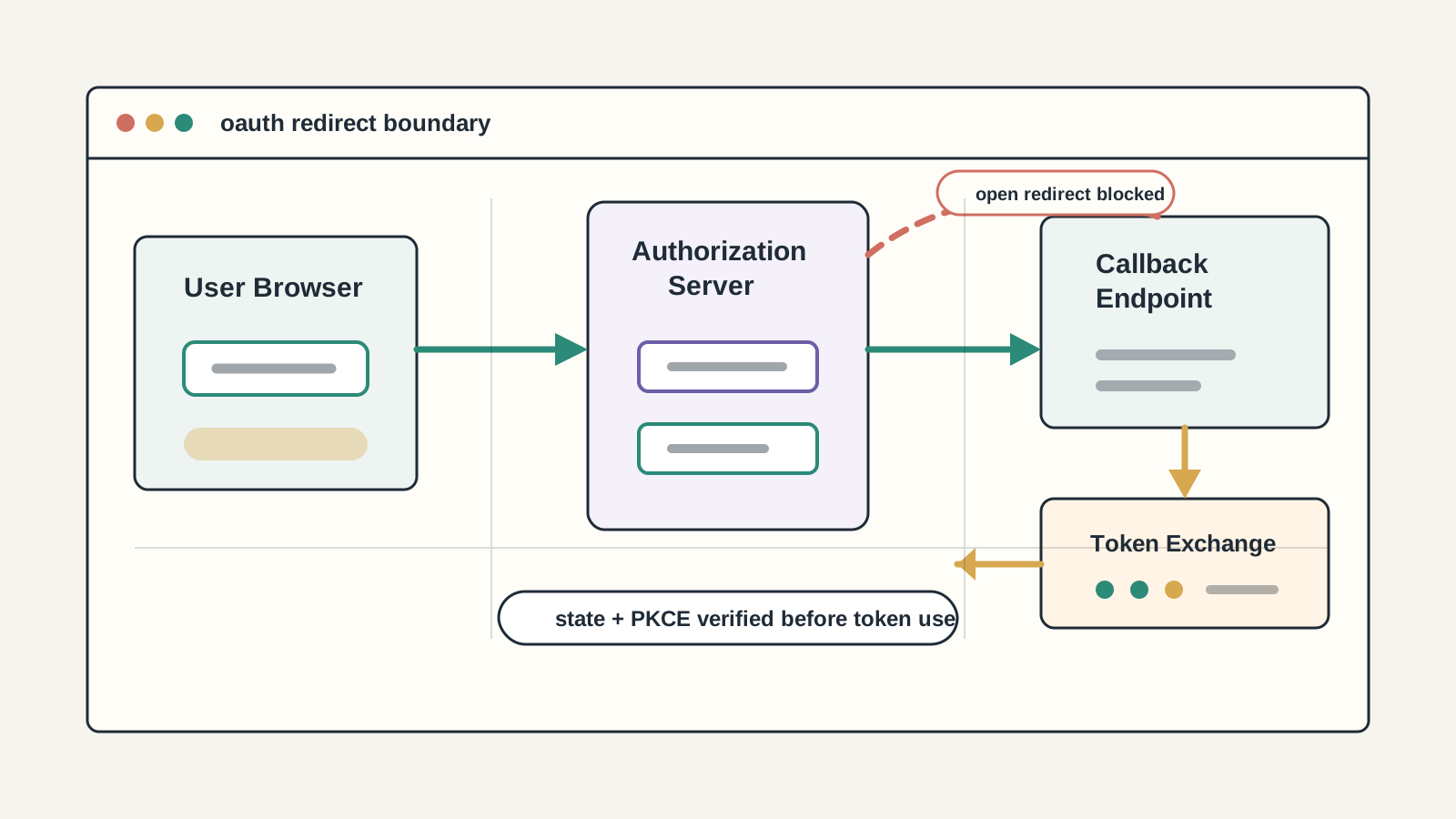
Redirect URIs Are OAuth Trust Boundaries
Community apps for Slack, Discord, GitHub, and identity providers often fail at the callback layer. Exact redirect matching, state, PKCE, and callback ownership decide where tokens land.
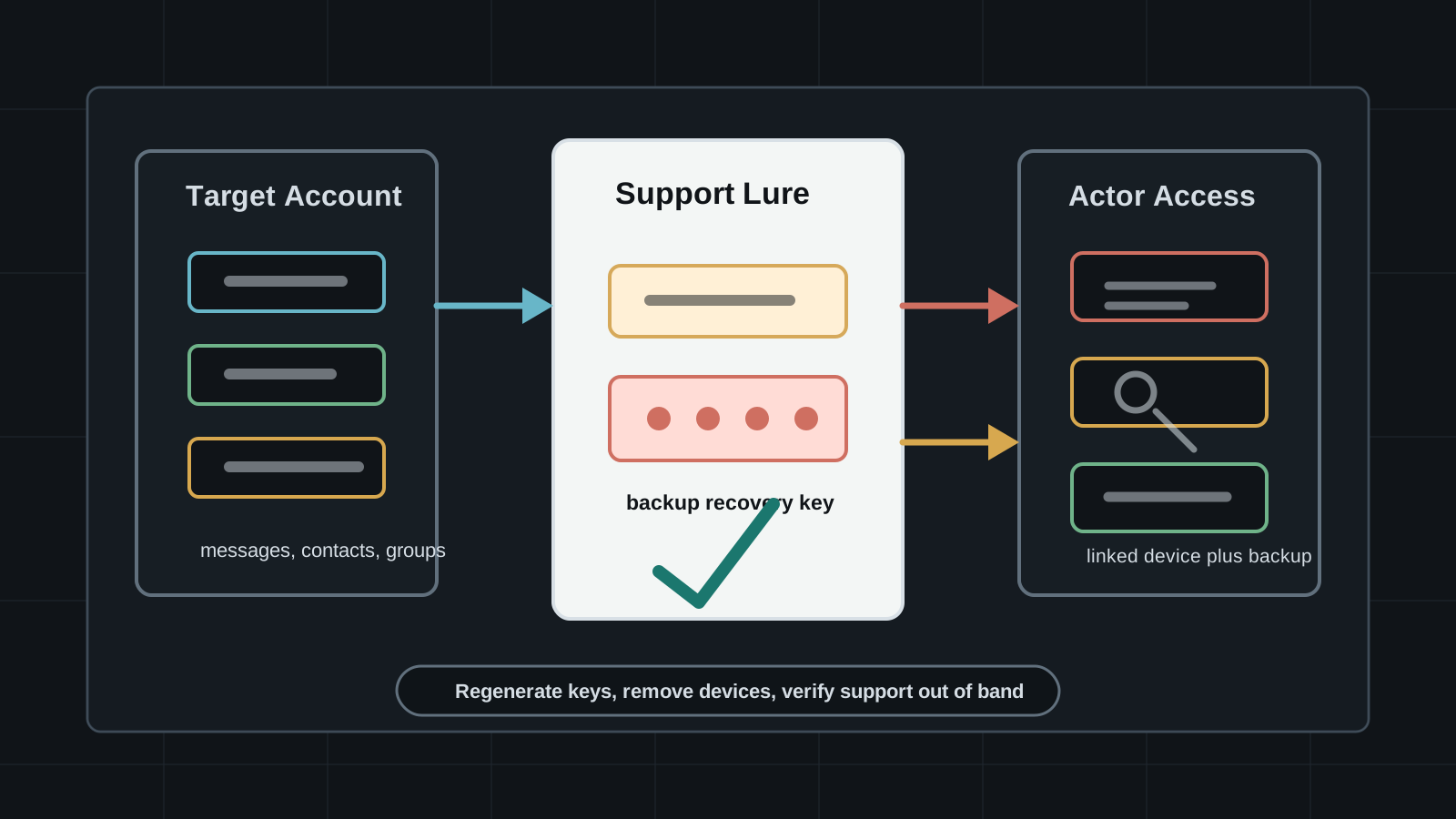
Russian Messaging Phishing Turns Backup Keys Into Account Access
FBI, CISA, and State Department updates on UNC5792 and UNC4221 show how Signal and WhatsApp account phishing is moving from linked devices to backup recovery keys.
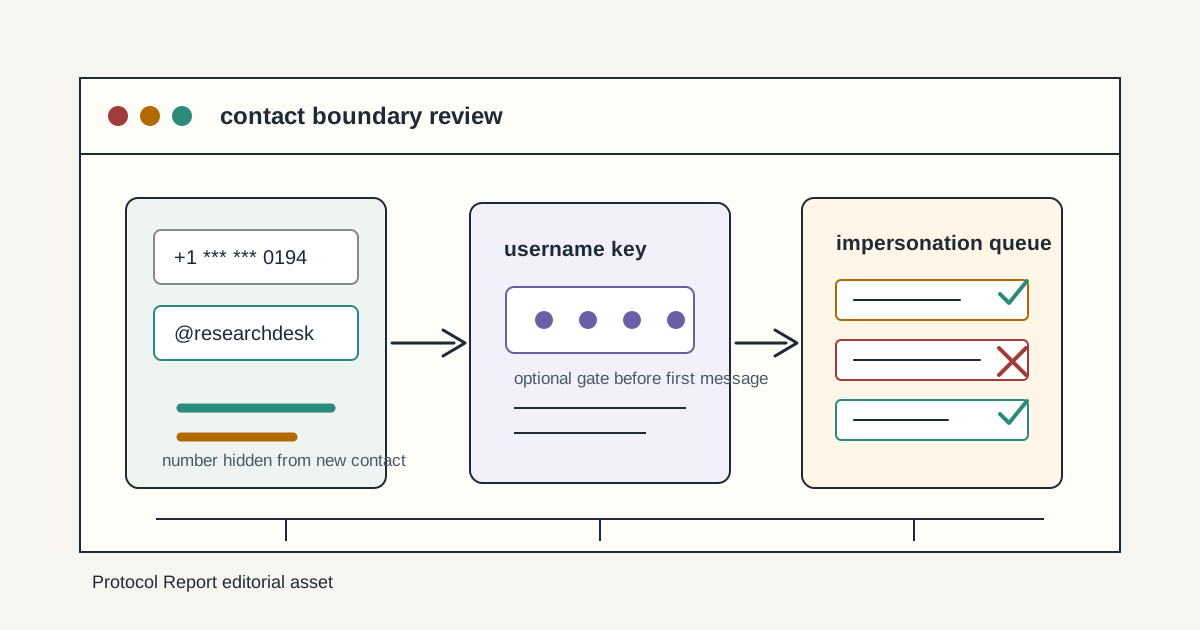
WhatsApp Usernames Move Contact Risk Away From Phone Numbers
WhatsApp's username reservation plan can reduce phone-number exposure, but it also adds impersonation, discovery, and abuse-reporting decisions that communities should treat as contact policy.