WhatsApp Usernames Move Contact Risk Away From Phone Numbers
WhatsApp's username reservation plan can reduce phone-number exposure, but it also adds impersonation, discovery, and abuse-reporting decisions that communities should treat as contact policy.
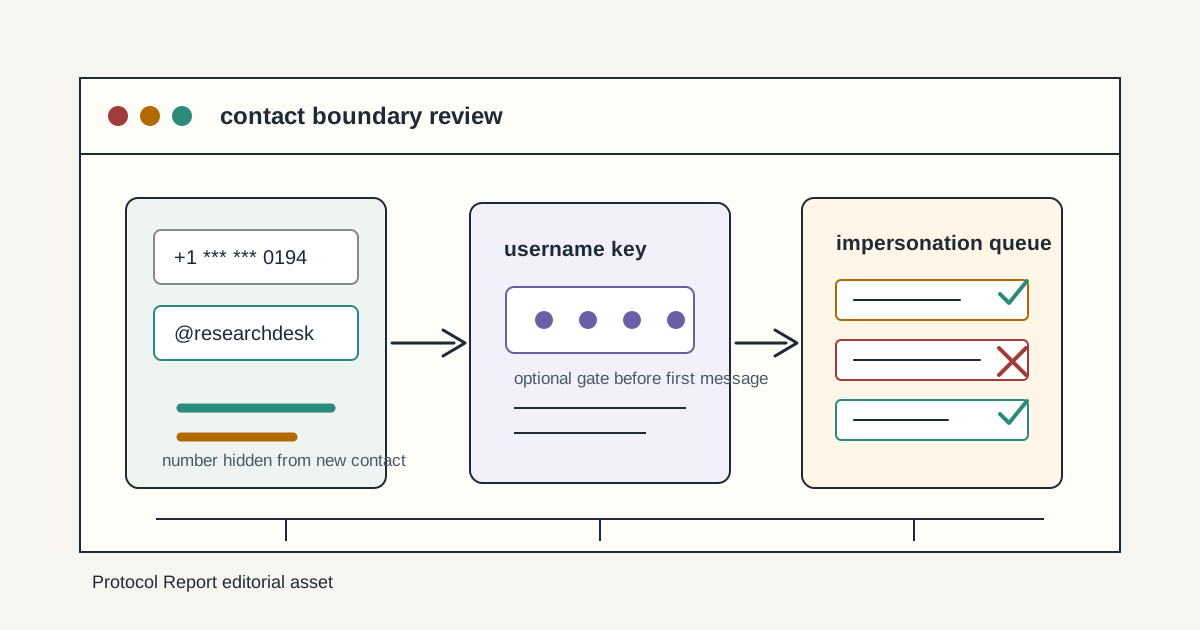
WhatsApp is moving toward usernames as a way to let people start chats without exposing phone numbers to new contacts. The June 2026 reservation rollout, reported by The Verge, is narrower than a public social handle system: users still need a phone number to register, existing contacts and group members may still know numbers they already have, usernames are not meant to be publicly browsable, and an optional username key can add friction before a first message.
The practical security question is not whether usernames are good or bad. They move risk. Phone numbers are durable identifiers that support contact discovery, SIM-swap targeting, scraping, and off-platform harassment. Usernames reduce some of that exposure, but they create a visible naming surface where impersonation, squatting, lookalike handles, and fake support accounts need product controls and community policy.
Key Takeaways
- check_circle A username can protect a phone number during a new contact, but it does not remove the phone number from account registration or from people who already know it.
- check_circle No public username search and an optional username key are meaningful anti-abuse design choices, if they are enforced consistently at launch.
- check_circle India's reported scrutiny of WhatsApp, Telegram, and Signal shows that username systems are also becoming a regulatory and fraud-prevention question.
- check_circle Communities should reserve official handles early, publish contact rules, and teach members how staff will and will not initiate private messages.
- check_circle Phone-number enumeration research remains relevant because usernames do not automatically fix contact discovery, address-book upload, or account lookup abuse.
- check_circle Sensitive groups should keep identity verification separate from a chat handle. A matching username is not proof that the person or organization is genuine.
What Is Confirmed
The Verge reported on June 29, 2026 that WhatsApp is letting users reserve usernames before a broader launch later in the year. The reported flow is intentionally constrained: users reserve a unique name in account settings, organizations and individuals may be able to claim names they already use on Instagram or Facebook if available, and public figures have some reservation protections. The important privacy claim is that a new contact may be able to reach a user without receiving the user's phone number.
The same reporting says username contacts are not designed as a public directory. A person must know the exact username, and WhatsApp is adding an optional username key that someone must also know before sending a first message. Those details matter because they distinguish a private contact token from a social network handle. The risk model changes again if any client, API, or discovery feature later makes names searchable, guessable, or easier to enumerate at scale.
The Phone Number Problem Does Not Disappear
Phone numbers are convenient because people already have them, carriers can route verification messages, and address books can bootstrap social graphs. They are also poor long-term identifiers. Numbers are recycled, exposed in breaches, used for spam targeting, tied to real-world identity, and vulnerable to account recovery attacks when services rely on SMS. A chat app that exposes numbers by default can make a private community feel less private even when message content is end-to-end encrypted.
Usernames can reduce the need to publish a number in a creator bio, event flyer, mutual-aid group, school community, or support workflow. That is a genuine privacy improvement for new relationships. It is not a full identity redesign. Users still need to understand whether the service uses a phone number for registration, recovery, address-book matching, abuse investigation, and device transfer. Hiding a number from a new contact does not mean the platform no longer processes it.
Why Regulators Are Paying Attention
Times of India reported that India's Ministry of Electronics and Information Technology expanded scrutiny from WhatsApp to Telegram and Signal after concerns about username-based contact features, asking how platforms prevent fraud and impersonation. That reporting should be treated as regulatory timeline context, not as a technical finding that any specific feature is unsafe. The concern is predictable: when names replace numbers at the first-contact layer, bad actors may try to impersonate banks, public officials, creators, support desks, or community admins.
The public safety problem is not unique to WhatsApp. Telegram's FAQ says public usernames can make a person findable in global search and includes an impersonation reporting route. Signal's username design takes a different path by making usernames a way to initiate contact, not a profile handle, and by avoiding a searchable username directory. These design differences are useful for policymakers and product teams because they show that username systems can be built with very different discovery defaults.
Anti-Impersonation Is Product Design
A username namespace becomes a trust boundary as soon as people use it to decide who is real. The platform must decide how it handles famous names, brand names, reserved names, inactive names, renamed accounts, typo-squatting, Unicode lookalikes, paid claims, appeals, and abuse reports. A first-come name policy may be simple, but it can be hostile to victims of impersonation. A heavily curated name policy may reduce scams, but it raises fairness, governance, and political pressure issues.
WhatsApp's reported choices point in the right direction if implemented tightly: early reservations, reserved famous-figure names, no browsing by username, and an optional key for first contact. None of those controls proves that users will be safe. They only reduce the obvious failure modes. The next questions are operational: how fast impersonation reports are handled, whether official accounts get clear verification, how names are recovered after account compromise, and whether abusive first-contact attempts are rate limited.
Communities Need Their Own Policy
Community operators should not wait for the rollout to decide how usernames will work. Reserve the official project, brand, support, and moderator names as soon as the platform allows it. Publish a short contact policy that says whether staff initiate direct messages, which accounts can collect payments, which accounts can provide support, and what members should do if someone claims to be an admin. The best anti-phishing control is often boring repetition before the scam starts.
For paid groups, wallet communities, advocacy networks, schools, health support groups, and local mutual-aid projects, the username should be treated like an invite link or support email. It is a distribution surface. Rotate contact channels after abuse, keep screenshots and message links for evidence, and never make a username the only proof of authority. High-risk actions should require a second channel, an admin-only announcement, or a cryptographic or account-level verification method when the platform supports it.
What To Watch During Rollout
The rollout should be judged by measurable abuse outcomes, not by the privacy promise alone. Watch whether users can easily report impersonation, whether blocked users can retry through name variations, whether username keys are optional but discoverable, whether organizations can recover names after compromise, and whether name changes leave enough audit trail for abuse teams without exposing ordinary users to stalking. The safer product is the one that makes unwanted contact harder while preserving a clear path for real people to find each other.
Researchers should also keep testing phone-number enumeration and contact discovery. A 2025 academic paper on WhatsApp enumeration argued that account lookup at scale can expose metadata even when message content remains encrypted. If usernames reduce the need to share numbers, that is useful. If phone-number lookup remains broad, address-book uploads remain overpowered, or new username lookup APIs can be scraped, the privacy improvement will be partial. Communities should adopt usernames cautiously and keep pressure on the underlying discovery controls.
Checklist
- Reserve official community, support, payment, and moderator usernames early.
- Publish a policy for whether staff will ever initiate direct messages.
- Require a second verification path for payments, recovery, moderation orders, and wallet actions.
- Teach members that a matching username is not proof of identity.
- Monitor impersonation reports, lookalike names, first-contact spam, and blocked-user retries.
- Review phone-number visibility, address-book upload, and account discovery settings after the feature launches.
Sources
- The Verge: WhatsApp is launching usernames open_in_new
- Times of India: Telegram, Signal under Centre's scanner over username feature after WhatsApp open_in_new
- Signal: Keep your phone number private with Signal usernames open_in_new
- Telegram FAQ: Usernames and t.me open_in_new
- Meta Engineering: Deploying key transparency at WhatsApp open_in_new
- arXiv: Hey there! You are using WhatsApp open_in_new
Continue Reading
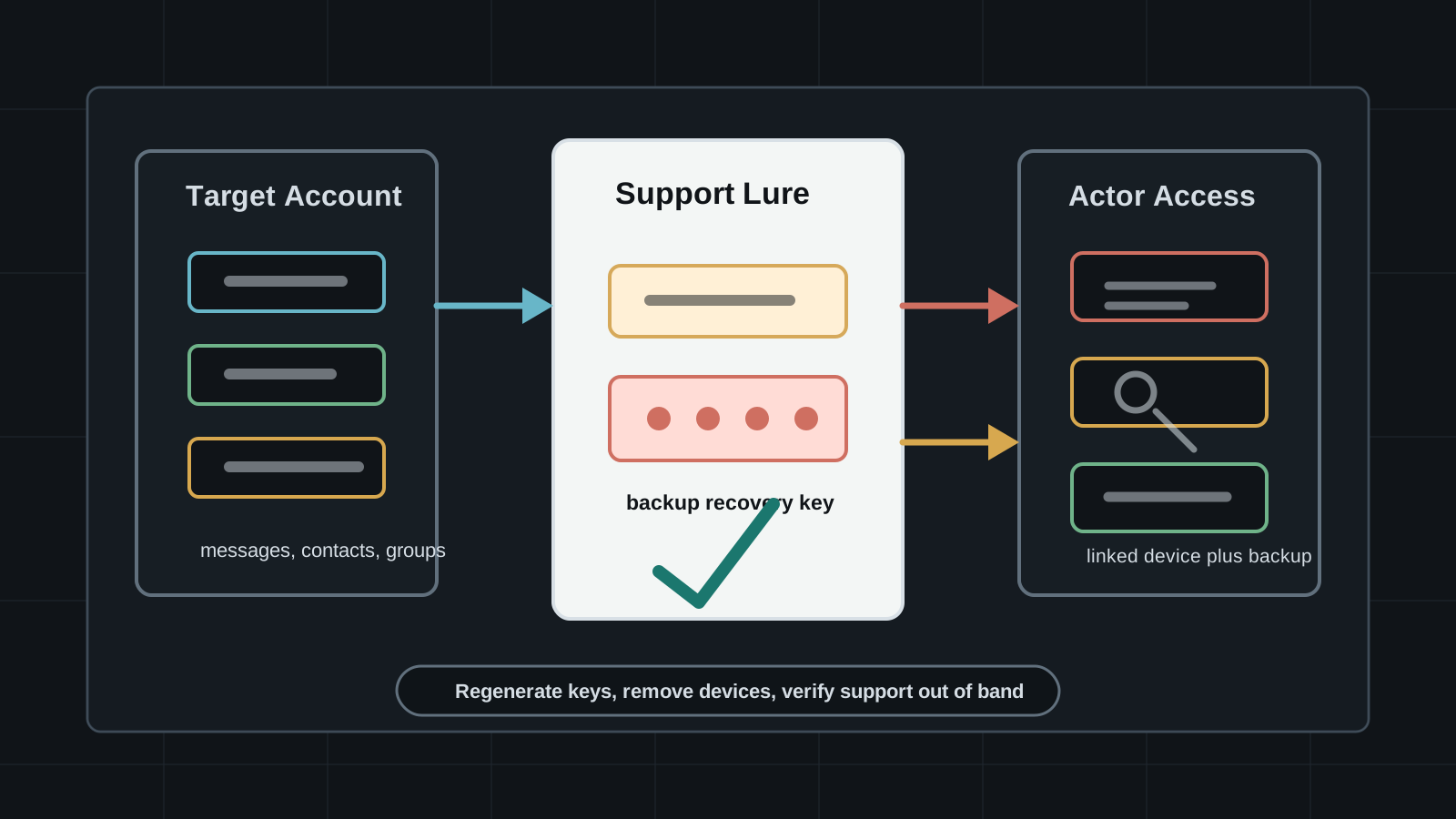
Russian Messaging Phishing Turns Backup Keys Into Account Access
FBI, CISA, and State Department updates on UNC5792 and UNC4221 show how Signal and WhatsApp account phishing is moving from linked devices to backup recovery keys.
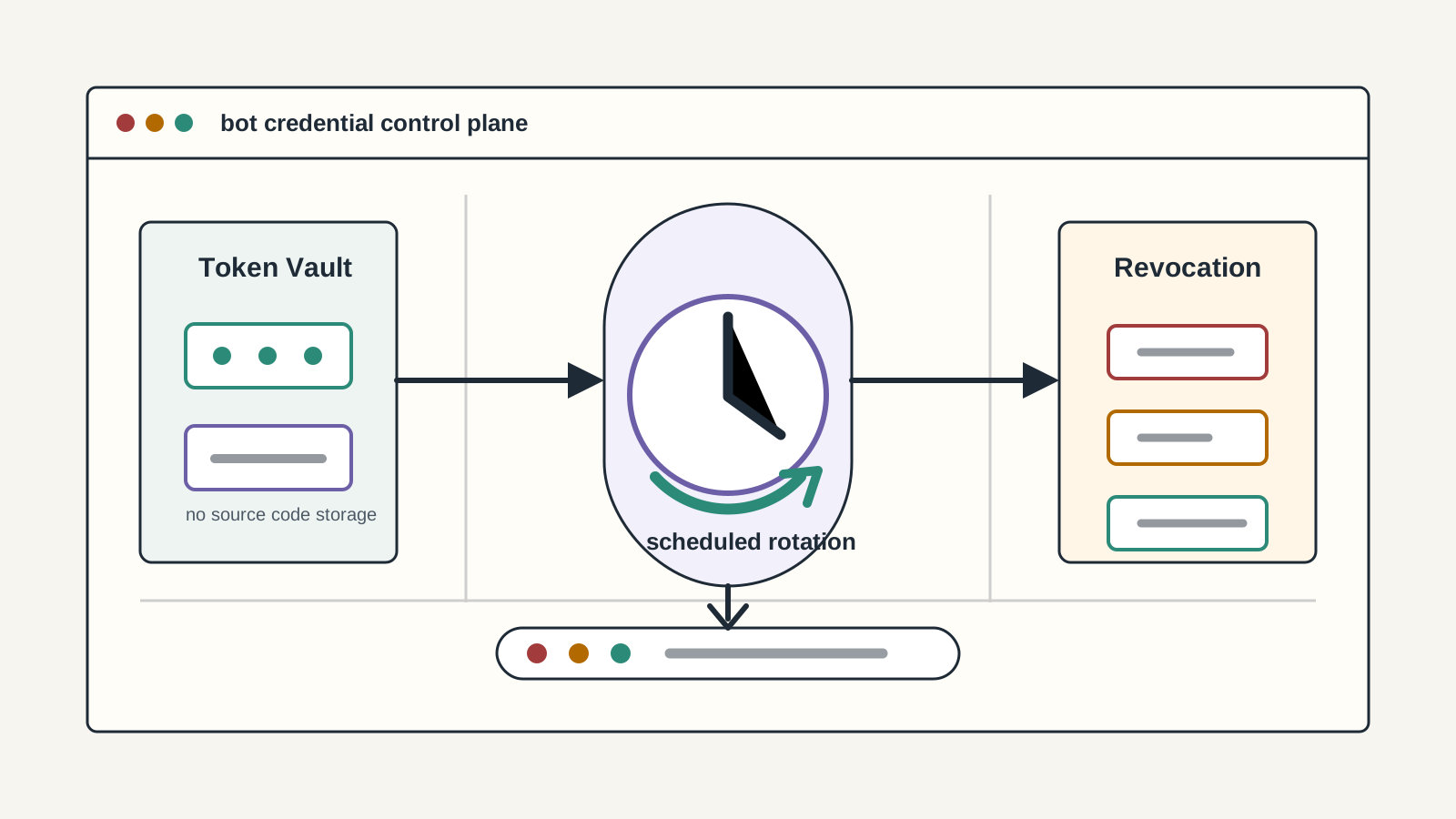
Bot Tokens Need Rotation Before The Leak
Discord, Slack, Telegram, and GitHub automation tokens are production credentials. Communities need ownership, storage, rotation, revocation, and leak-response policy before a bot becomes the breach path.
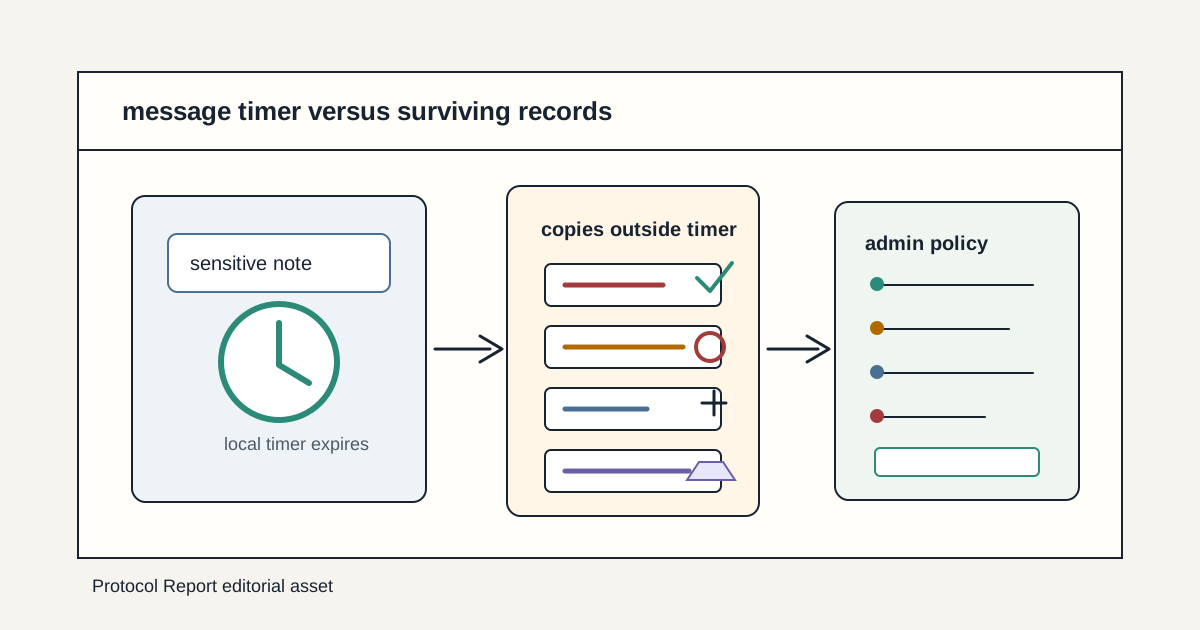
Disappearing Messages Are A Retention Policy, Not Erasure
Timers in Signal, WhatsApp, Telegram, and enterprise chat tools reduce local history, but screenshots, backups, linked devices, exports, bots, and legal holds still decide what survives.