Rate Limits Are Community Bot Security Controls
Discord, Slack, Telegram, and GitHub rate limits are not just reliability plumbing. Bot owners should treat quotas, 429 handling, queues, and invalid-request limits as blast-radius controls.
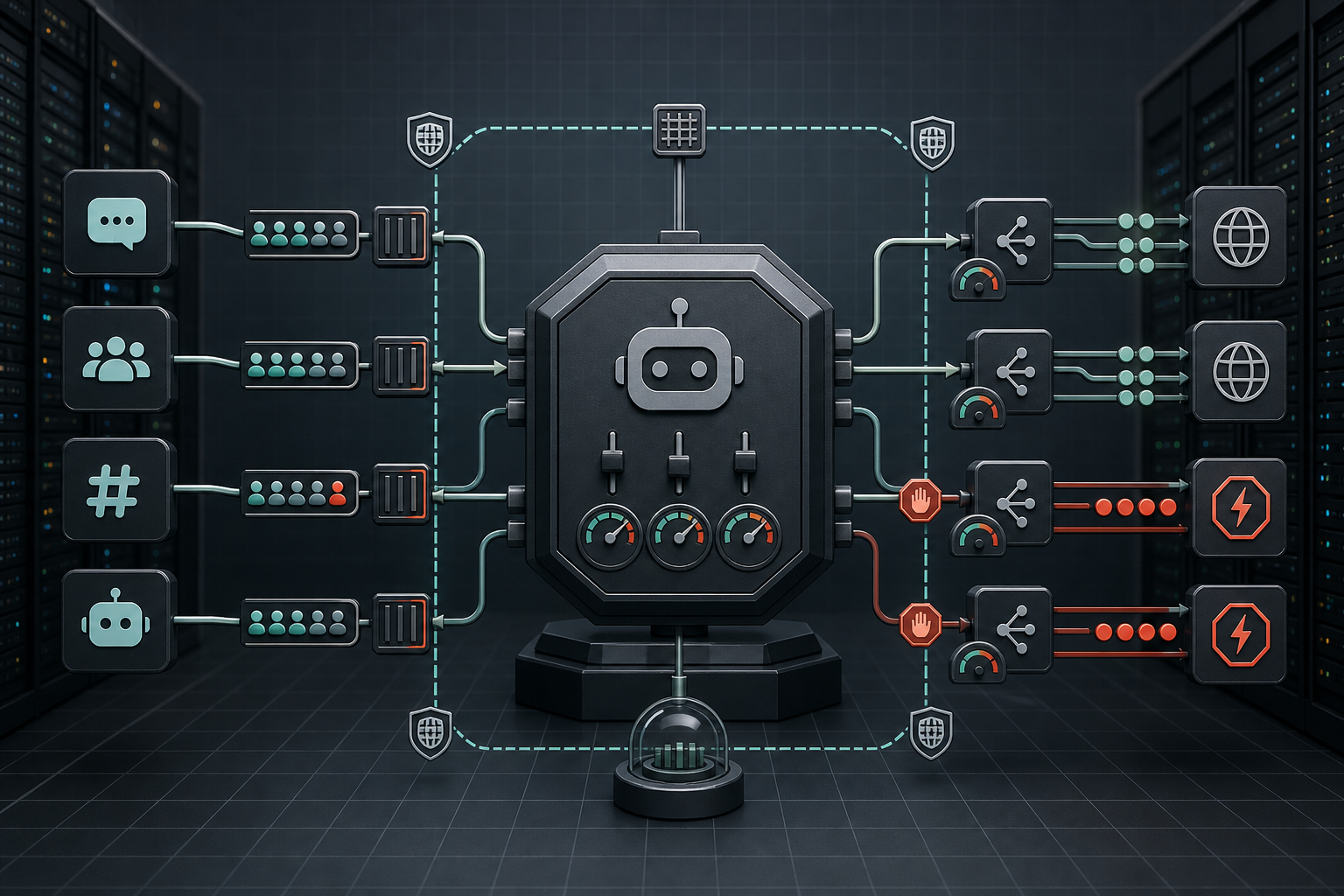
Community bots sit close to trust. They can welcome members, assign roles, delete messages, open tickets, mirror alerts, trigger builds, query repositories, and move information between chat and external systems. Their rate-limit behavior is therefore a security question, not only an uptime question. A bot that ignores throttling can amplify abuse, drop moderation events, retry destructive actions, or get itself blocked exactly when staff need it.
The strongest bot designs treat platform limits as part of the control plane. They parse rate-limit headers, honor retry windows, queue work by tenant and channel, separate moderation actions from noisy background jobs, and expose a kill switch. The goal is to keep a compromised, buggy, or overloaded integration from turning one bad input into a workspace-wide incident.
Key Takeaways
- check_circle Rate limits define how much work a bot can perform before the platform pushes back, so they directly affect blast radius.
- check_circle Discord, Slack, Telegram, GitHub, and other APIs use different buckets, scopes, retry headers, and abuse limits; copying one platform's assumptions into another is risky.
- check_circle HTTP 429 handling should be deterministic: stop, wait for the platform-provided retry interval, preserve idempotency, and shed noncritical work first.
- check_circle Invalid-request limits are security signals because repeated 401, 403, 404, or 429 responses may mean a token, permission, or target object is wrong.
- check_circle Queues need tenant, channel, user, and action boundaries so one noisy community cannot starve moderation or incident-response jobs elsewhere.
- check_circle Bot owners should test degraded behavior before launch, including rate-limit storms, revoked tokens, missing permissions, and webhook deletion.
Limits Set The Blast Radius
A bot's permissions decide what it may do. Its rate limits decide how quickly it can do it. That speed matters when a workflow posts alerts to thousands of members, assigns roles after wallet verification, deletes suspected spam, syncs tickets, or writes to a repository. A bug that loops once is a nuisance. A bug that loops at full API speed can become a moderation outage, notification flood, or irreversible data-change problem.
This is why rate limits belong in the security review for community apps. The review should ask what happens when a rule misfires, when an attacker triggers the most expensive command, when an upstream system sends duplicate webhooks, and when the platform starts returning throttling responses. A secure bot degrades deliberately instead of improvising under pressure.
Every Platform Buckets Differently
Discord's developer documentation describes per-route and global limits, response headers, retry intervals, bucket identifiers, and top-level resource behavior such as guilds, channels, and webhooks. It also warns developers not to hard-code limits because they depend on multiple factors and may change. That warning should be read as architecture guidance: the client must treat the platform as the authority.
Slack's Web API rate-limit documentation uses method tiers and special cases, while GitHub documents primary and secondary limits for REST API use. Telegram's bot documentation gives practical guidance for bots that hit message-sending limits. The common lesson is not that one quota is better than another. The lesson is that each platform encodes abuse prevention and capacity policy differently, and integrations need per-platform control logic.
429 Handling Is A Security Behavior
HTTP 429 is not a suggestion to retry harder. RFC 6585 defines the status code for too many requests and allows servers to communicate how long the client should wait. Discord's documentation shows Retry-After style behavior and explicit rate-limit headers. A bot that ignores those signals can stretch a small incident into an API ban, a queue backlog, or a lost moderation window.
The safer pattern is simple and strict. Parse the headers or response body documented by the platform. Pause the affected bucket. Keep idempotency keys or deduplication state for actions that might be retried. Drop or delay low-value work before staff actions. Record the event so maintainers can tell the difference between normal traffic, a bug, and an abuse attempt.
Invalid Requests Need Owners
Invalid requests are often treated as developer noise. In production, they can be evidence. Discord documents an invalid-request limit that can temporarily restrict access after too many 401, 403, 404, or 429 responses. Those failures may mean a token has been revoked, a bot lost permissions, a channel was deleted, a webhook was rotated, or code is hammering a resource it should have stopped using.
Assign ownership to those errors. A burst of 401s should trigger token review and stop further calls with that credential. A run of 403s should review role changes and permission drift. A run of 404s should evict stale channel, message, webhook, or repository identifiers from the queue. Treating these as security and lifecycle signals prevents a stale integration from becoming a denial-of-service source against itself.
Design Queues Around Trust Boundaries
A single global job queue is easy to build and hard to defend. One large community, busy channel, or attacker-triggered command can consume the queue and starve higher-value work. Separate queues by tenant, workspace, guild, channel, action type, and privilege where the product risk justifies it. Moderation and recovery jobs should not wait behind routine analytics, greetings, or cosmetic sync tasks.
Budgets should also match risk. A read-only status command can tolerate delay. A mass-role assignment needs stricter throttling and review. A message-delete workflow may need a circuit breaker that stops after a threshold and asks for human confirmation. A build or deployment command should be isolated from public chat volume. Queue design is where the permission model becomes operational reality.
Operate Bots Like Production Systems
The minimum operating model is testable. Create a staging workspace or guild, force 429 responses where possible, revoke a token, remove a permission, delete a webhook, and send duplicate upstream events. Confirm the bot waits, deduplicates, sheds load, and alerts the maintainer without exposing secrets or flooding staff channels. Run this before adding the bot to high-trust communities.
Then keep the evidence. Log rate-limit bucket identifiers where the platform permits it, retry intervals, queue depth, dropped noncritical jobs, invalid-request bursts, and kill-switch use. Avoid logging message content unless the workflow truly needs it. Good telemetry lets maintainers answer the important question during an incident: is the platform protecting itself from us, are we protecting the community from a bad input, or is an attacker using our bot as the amplifier?
Checklist
- Parse platform rate-limit headers and response bodies instead of hard-coding quotas.
- Separate queues by workspace, guild, channel, action type, and privilege where practical.
- Make moderation, recovery, and security alerts higher priority than analytics, greetings, and cosmetic sync jobs.
- Use deduplication or idempotency for retried actions that change roles, messages, tickets, repositories, or external records.
- Alert on invalid-request bursts, revoked tokens, permission drift, deleted webhooks, and sustained queue growth.
- Keep an operator kill switch that can pause risky commands without shutting down every read-only feature.
Sources
- Discord Developer Docs: Rate Limits open_in_new
- Slack Developer Docs: Web API rate limits open_in_new
- Telegram Bot FAQ: Bot limits open_in_new
- GitHub Docs: REST API rate limits open_in_new
- OWASP API Security Top 10: Unrestricted Resource Consumption open_in_new
- RFC 6585: Additional HTTP Status Codes open_in_new
Continue Reading
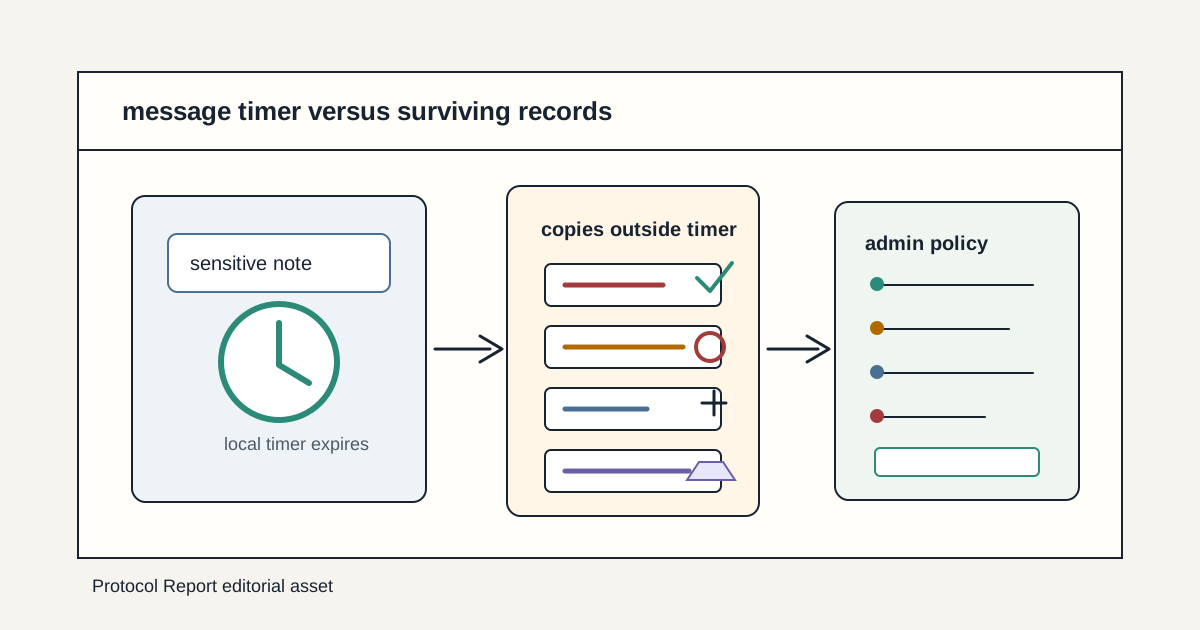
Disappearing Messages Are A Retention Policy, Not Erasure
Timers in Signal, WhatsApp, Telegram, and enterprise chat tools reduce local history, but screenshots, backups, linked devices, exports, bots, and legal holds still decide what survives.
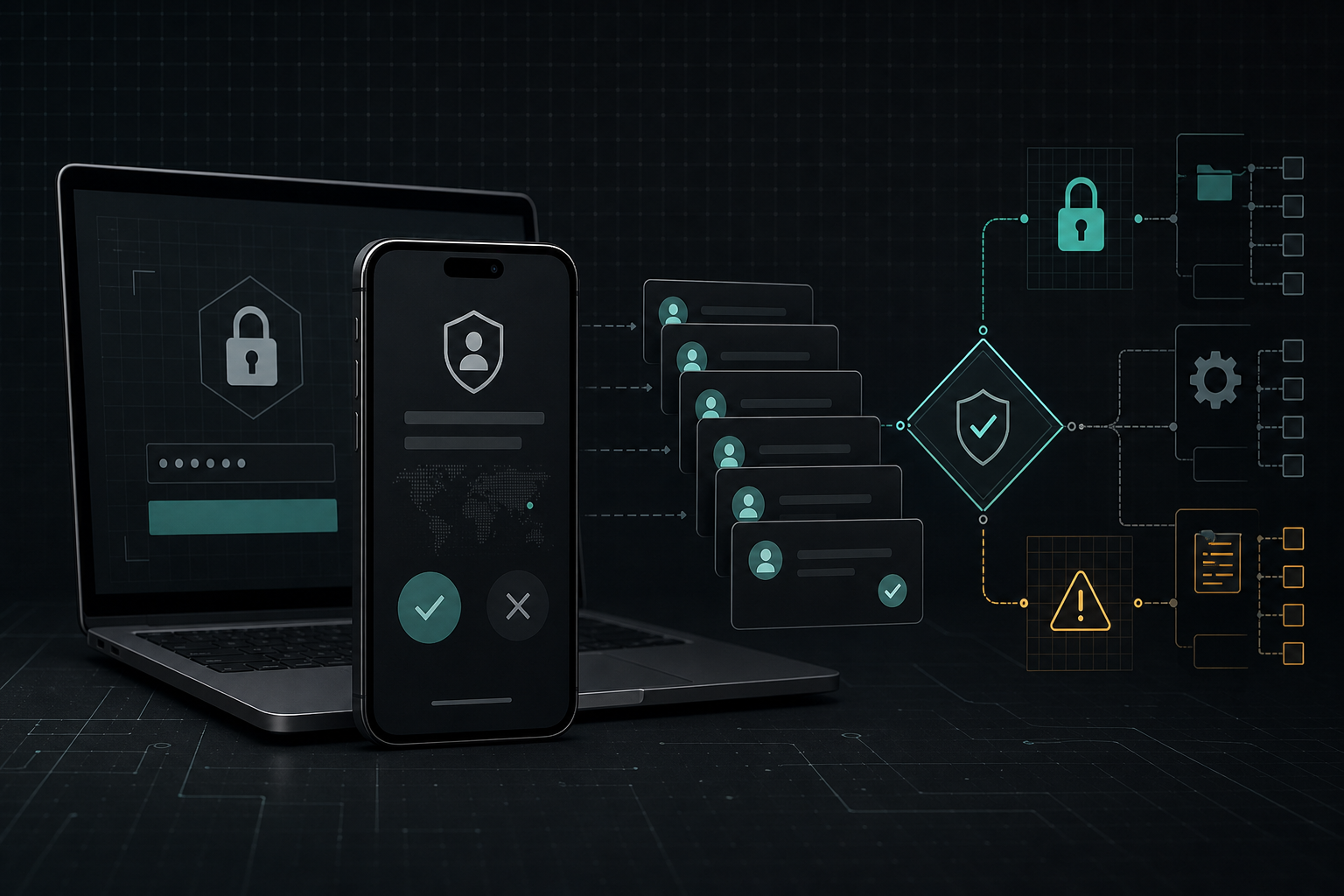
MFA Push Prompts Are Not Identity Proof
Push approvals can stop password-only compromise, but fatigue, phishing proxies, and weak recovery make them a consent surface. Treat prompts, number matching, and phishing-resistant MFA as admin policy.
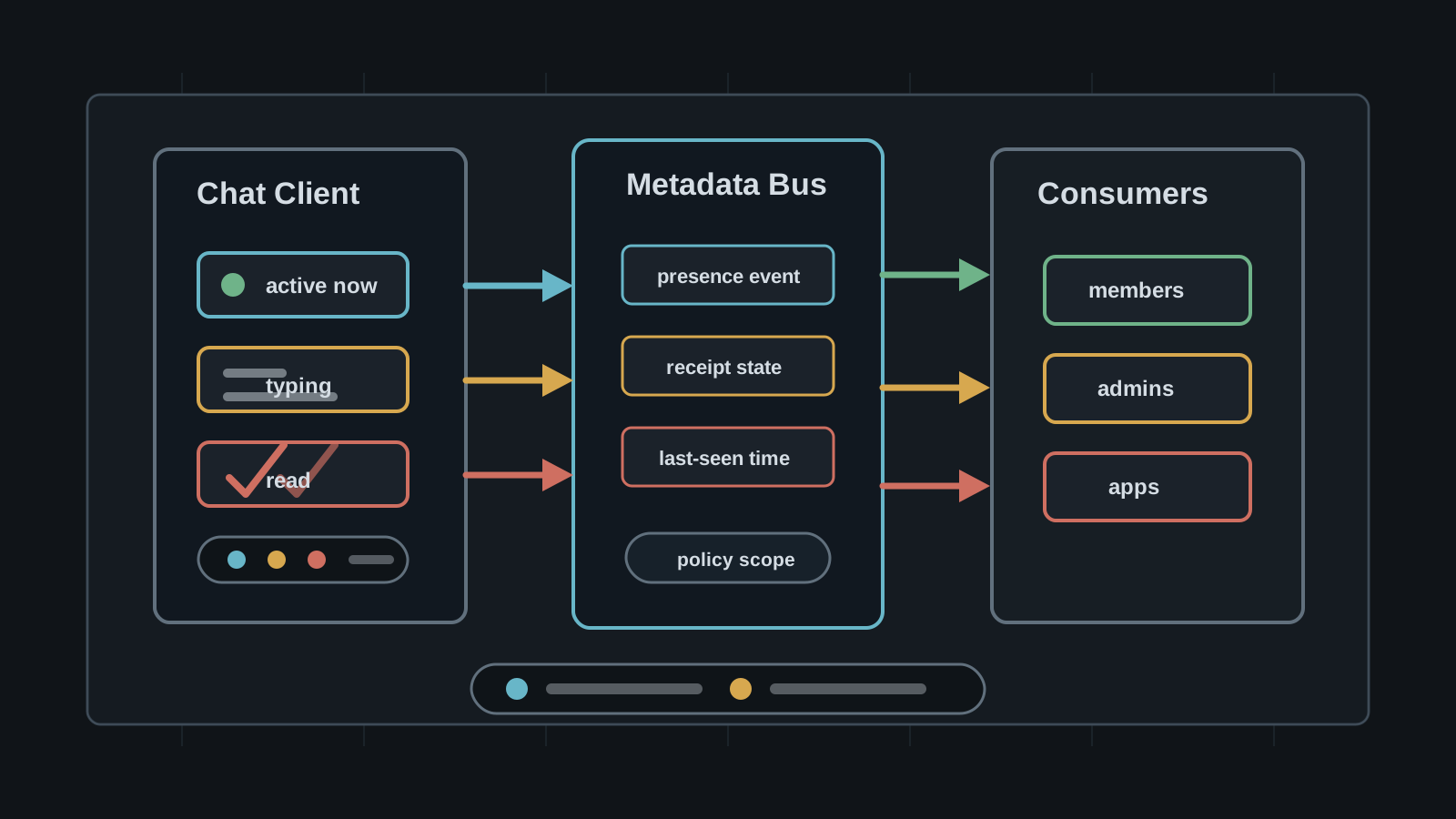
Presence And Read Receipts Are Chat Metadata
Typing indicators, read receipts, last-seen status, and presence APIs can reveal behavior without exposing message content. Treat chat metadata as a product and policy decision.