Moderation Logs Are Community Security Data
Bans, message removals, AutoMod hits, role changes, and reports are evidence and sensitive records. Community teams need log access, retention, and export policy.
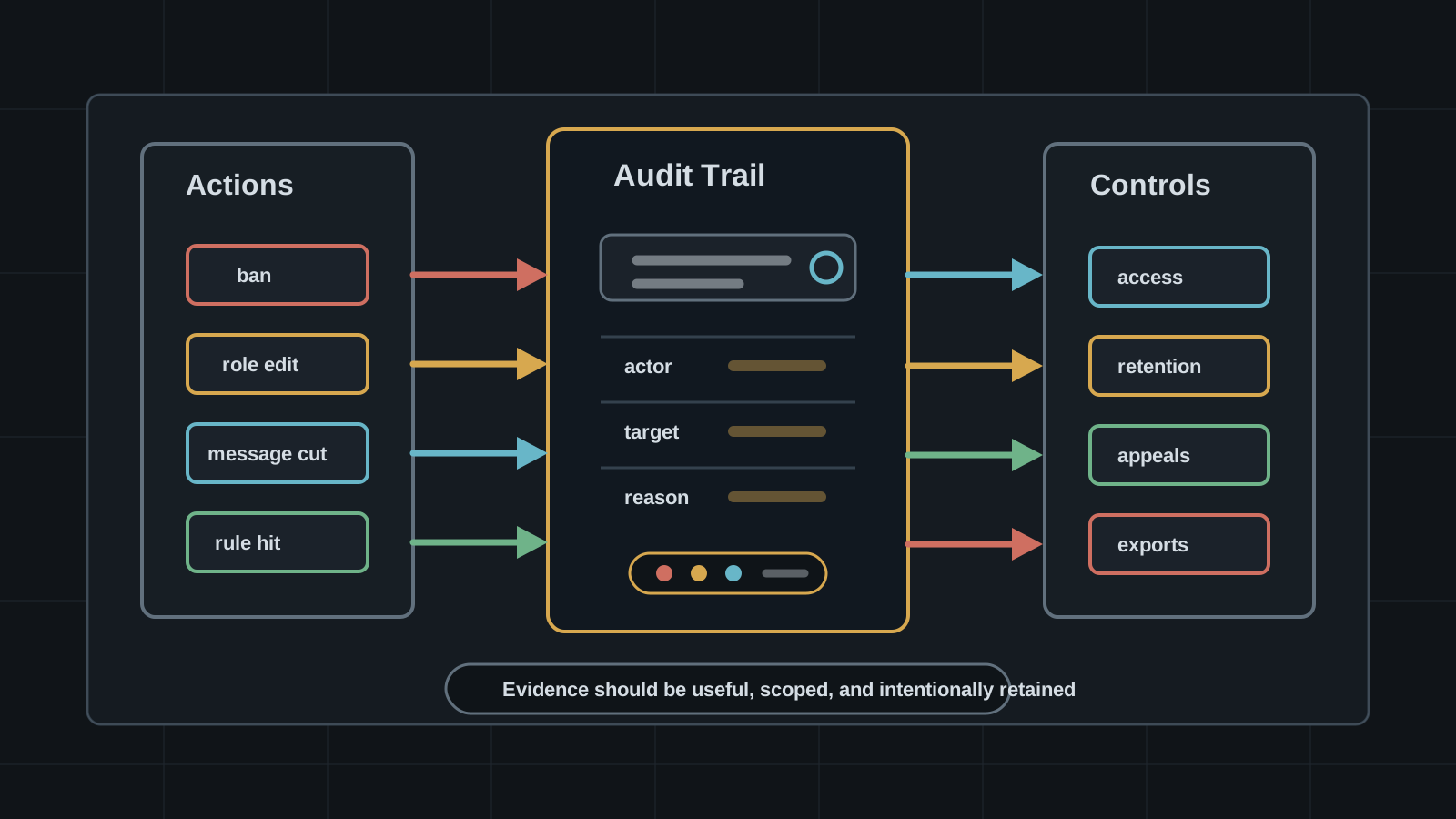
Moderation logs are often treated as operational clutter. They are more important than that. A moderation trail can identify who banned a user, why a role changed, which message was removed, which rule fired, which moderator acted, whether an automation blocked content, and whether a support appeal has enough evidence to be reviewed fairly.
The same records can also expose sensitive user behavior, deleted content, moderator judgment, rule names, private channel structure, incident timelines, and internal trust decisions. Community operators should handle moderation logs like security data: useful, access-controlled, retained on purpose, exportable for incidents, and minimized where long-term storage is not justified.
Key Takeaways
- check_circle Moderation logs are evidence, not just admin history.
- check_circle Audit trails should record actor, target, action, reason, timestamp, system source, and affected space whenever the platform supports it.
- check_circle Automated moderation can create especially sensitive records because rule hits may include blocked content or private context.
- check_circle Log access should be narrower than moderator access when logs contain appeals, reports, deleted content, or identity information.
- check_circle Retention should be long enough for appeals and incident response but not an indefinite archive by accident.
- check_circle Export and SIEM integrations need the same token, scope, and vendor review as other security data pipelines.
What A Moderation Log Contains
A useful moderation log answers basic accountability questions: who acted, what changed, when it happened, which user or object was affected, and why the action was taken. In a community, that can include bans, kicks, timeouts, role assignments, channel permission changes, invite changes, message deletes, pinned messages, webhook changes, bot additions, and automated rule triggers.
Those records are sensitive because they combine identity, authority, and context. A ban reason may mention harassment, self-harm, payment disputes, political identity, age concerns, or private reports. A deleted-message record may preserve details that ordinary members can no longer see. A role-change trail can expose staff structure or incident response.
Discord Shows The Shape
Discord's Audit Log resource is a useful concrete model. It says an administrative action in a guild adds an audit-log entry, that viewing audit logs requires the VIEW_AUDIT_LOG permission, that apps can fetch entries through an API endpoint, and that entries are stored for 45 days. It also supports an X-Audit-Log-Reason header so eligible API actions can include a reason.
The event list is broad. It covers server and channel changes, role updates, member bans and removals, invite changes, webhook changes, message delete events, integration changes, thread actions, command permission updates, and Auto Moderation events. That breadth is valuable for accountability, but it also means the audit log is a compact map of the community's control plane.
Enterprise Logs Are Not Message Monitoring
Slack draws a line that community teams should copy. Its Audit Logs API is meant for Enterprise organizations that need to monitor audit events, feed SIEM tools, review suspicious access, and understand how people access Slack. Slack also states that these API methods do not enable monitoring of message content and points customers with content-monitoring needs toward eDiscovery or data loss prevention tools.
That separation matters. A platform can log admin actions without turning every conversation into a surveillance feed. Community tools should distinguish event audit logs, trust-and-safety reports, deleted-content evidence, message exports, and legal holds. Mixing all of those into one moderator channel makes access control and retention harder.
Automated Moderation Creates Evidence
Automated moderation is not just a filter. Discord's Auto Moderation documentation describes rules that trigger on message sends, member profile updates, keywords, spam, mention limits, preset wordsets, and configured actions such as blocking a message, sending an alert message, timing a user out, or preventing interactions. Some actions can log user content to a specified channel.
That makes rule output evidence. It can help moderators respond quickly, show why an action happened, and reveal raids or coordinated abuse. It can also collect borderline content, false positives, sensitive phrases, and user identifiers. AutoMod alert channels should not be open staff chat by default. They need scoped access, retention rules, and a way to review false positives without copying sensitive content into more places.
Retention, Integrity, And Access
NIST SP 800-92 frames log management as a policy, infrastructure, analysis, and disposal problem. OWASP's logging guidance similarly emphasizes event selection, consistency, protection, and avoiding unnecessary sensitive data. The community version is the same: decide what must be logged, protect it from casual editing, make it searchable for incidents, and delete or aggregate it when its purpose expires.
Access should reflect sensitivity, not convenience. A junior moderator may need to see recent actions in the rooms they cover. Trust-and-safety leads may need appeal evidence. Security admins may need export and SIEM access. Legal or compliance owners may need holds. Those are different roles. The log system should make those differences explicit instead of handing every moderator the same archive.
A Practical Operating Model
Write a small moderation logging policy before the next incident. Define required reason codes, which actions need free-text context, who can see report evidence, how long deleted-content evidence is kept, when an export is allowed, and who reviews access to audit tools. Include bots and integrations in the same policy because many moderation actions are performed through apps.
Then test the workflow. Ban a test account, remove a message, change a role, trigger a harmless AutoMod rule, export the relevant records, and confirm the trail is understandable without exposing more content than needed. A good log trail should help a reviewer reconstruct the decision, not force them to ask moderators to rely on memory or private screenshots.
Checklist
- Define which moderation actions require a reason and which reason format moderators should use.
- Separate admin event logs from user reports, deleted-content evidence, message exports, and legal holds.
- Restrict audit-log, AutoMod alert, export, and SIEM access by role.
- Set retention periods for routine actions, serious incidents, appeals, and legal holds.
- Review bot tokens and app scopes that can read or write moderation records.
- Run a quarterly test that verifies logs can reconstruct a moderation decision without unnecessary content exposure.
Sources
- Discord Developer Docs: Audit Logs Resource open_in_new
- Discord Developer Docs: Auto Moderation open_in_new
- Slack Developer Docs: Audit Logs API open_in_new
- Microsoft Learn: Audit log activities open_in_new
- OWASP Cheat Sheet Series: Logging open_in_new
- NIST SP 800-92: Guide to Computer Security Log Management open_in_new
Continue Reading

Rate Limits Are Community Bot Security Controls
Discord, Slack, Telegram, and GitHub rate limits are not just reliability plumbing. Bot owners should treat quotas, 429 handling, queues, and invalid-request limits as blast-radius controls.
Presence And Read Receipts Are Chat Metadata
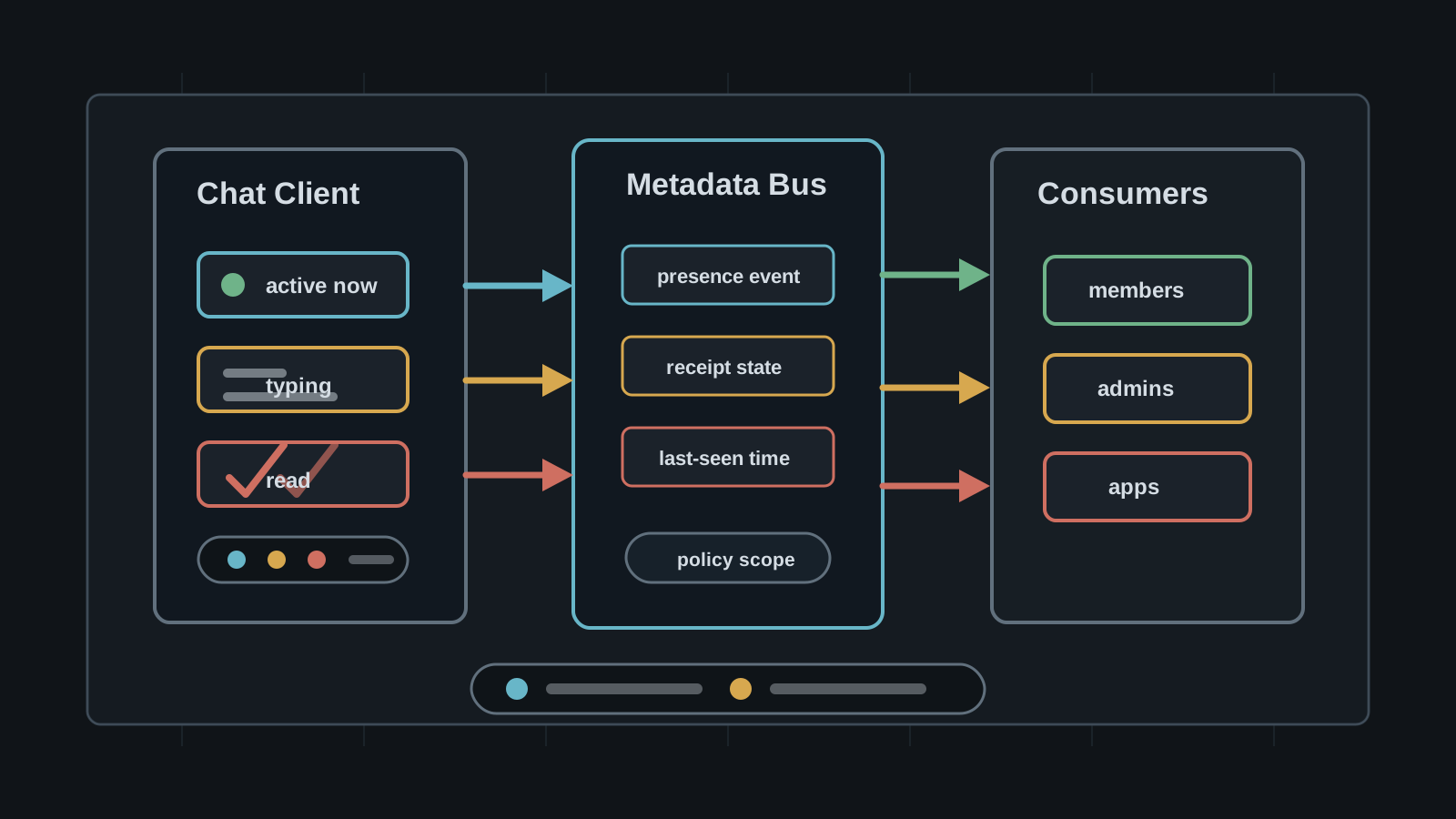
Typing indicators, read receipts, last-seen status, and presence APIs can reveal behavior without exposing message content. Treat chat metadata as a product and policy decision.
Chat Attachments Turn Encryption Into Storage Policy
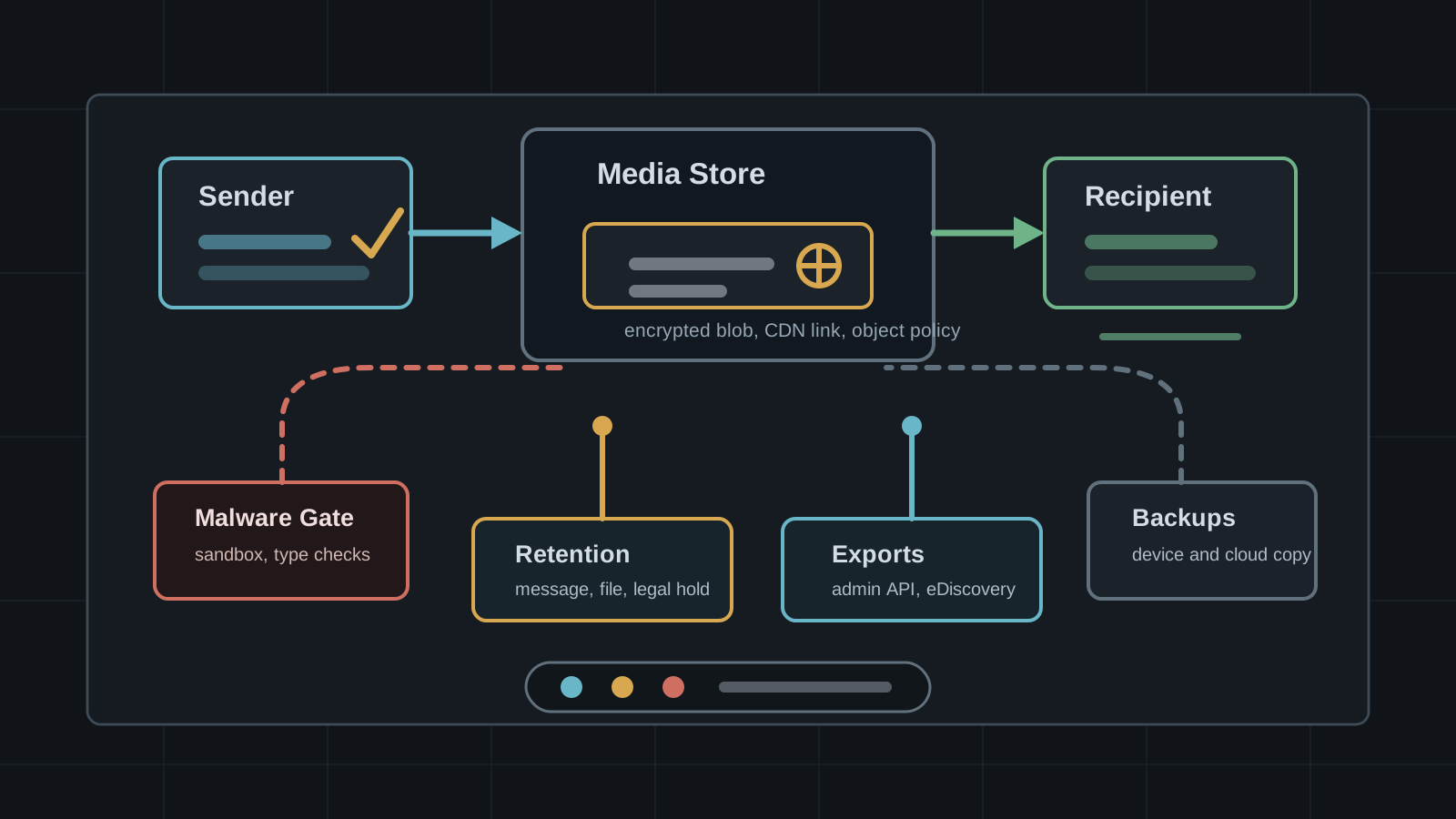
Files, images, voice notes, and previews often leave a different security trail than message text. Review chat attachments as storage, scanning, export, and retention infrastructure.