Chat Attachments Turn Encryption Into Storage Policy
Files, images, voice notes, and previews often leave a different security trail than message text. Review chat attachments as storage, scanning, export, and retention infrastructure.
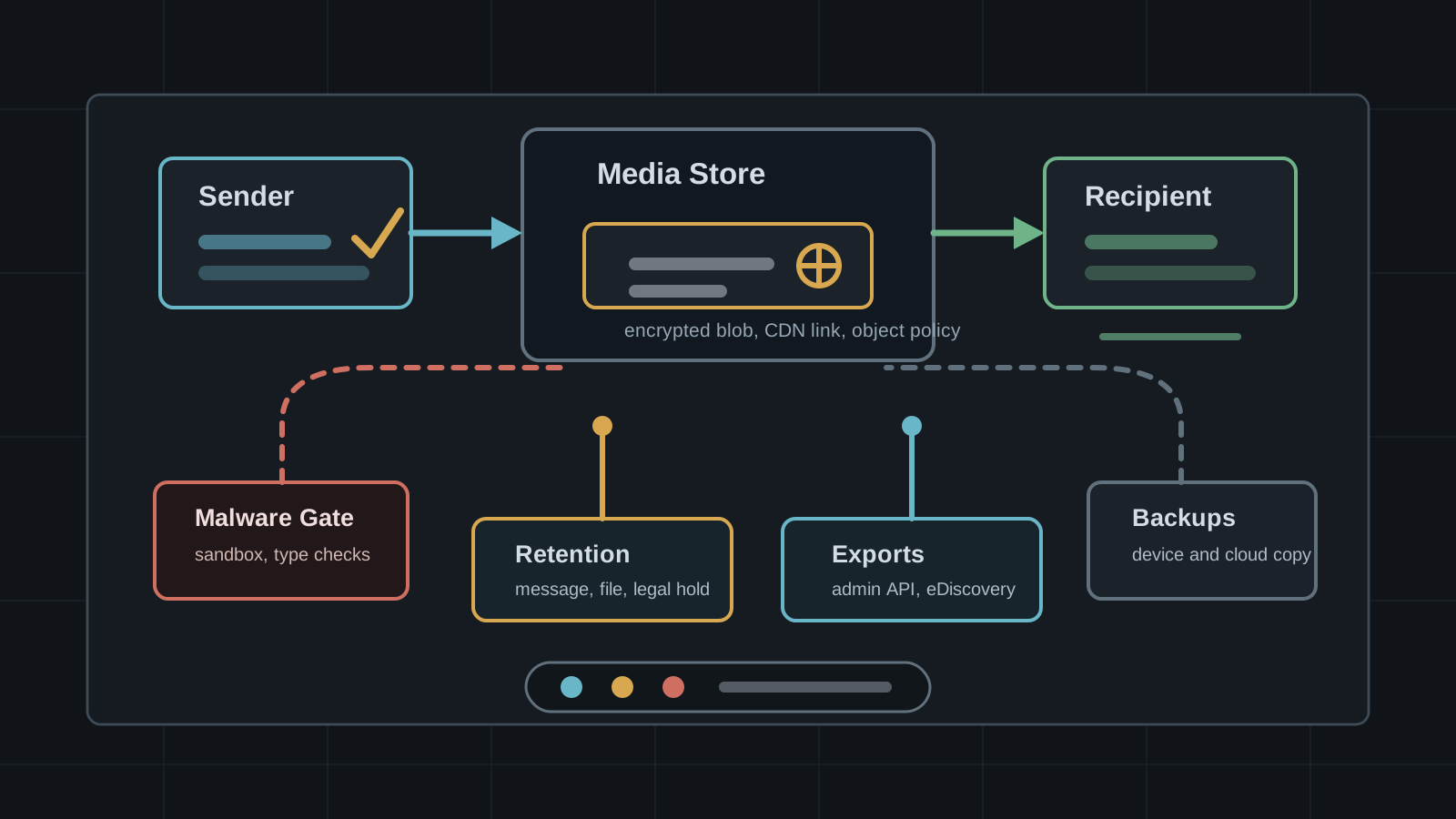
A chat app can encrypt message text correctly and still handle attachments through a separate operational path. Files may be uploaded to a media store, cached behind a CDN, scanned for abuse, indexed for search, exported for compliance, retained under legal hold, copied into backups, and opened by desktop clients or mobile previewers. That makes attachments a storage and processing problem, not only a cryptographic one.
The practical review question is not whether a vendor says chat is encrypted. It is which attachment flows are end-to-end encrypted, which are only encrypted at rest and in transit, which systems can inspect them, how long they remain retrievable, and which admins, bots, integrations, or export tools can reach them.
Key Takeaways
- check_circle Treat files, images, voice notes, and generated previews as a separate data path from message text.
- check_circle End-to-end encryption claims need scope: text, media, files, calls, history sync, backups, business APIs, and reports may not share one boundary.
- check_circle A media object can remain sensitive after the message around it is deleted, especially when CDN caches, exports, or device backups are involved.
- check_circle Malware scanning and trust-and-safety review can be useful, but they also reveal whether the service can access attachment contents or derived metadata.
- check_circle Workspace tools need retention and eDiscovery policy for files, not only channels and direct messages.
- check_circle Sensitive communities should decide which attachment types belong in chat and which belong in a dedicated, governed file system.
Why Attachments Are Different
Text messages are usually small, structured, and rendered inside the chat client. Attachments are larger, more varied, and often handled by different infrastructure. A PDF, photo, ZIP archive, video, or voice note may need upload APIs, object storage, transcoding, thumbnail generation, malware scanning, metadata extraction, CDN delivery, device download queues, and cleanup jobs.
That complexity changes the failure modes. A message can be hidden from a channel while its file URL still works for someone with a cached token. A deleted thread can leave copies in exports. A private community can keep a clean invite policy while members forward attachments into other workspaces. A secure messenger can protect the media payload cryptographically while still exposing size, timing, filename, sender, recipient, and retrieval patterns.
Encryption Claims Need Scope
The strongest design is client-side encryption before upload, with only intended devices holding the keys needed to decrypt the media. WhatsApp's February 2026 Encryption Overview says WhatsApp messages including chats, images, videos, voice messages, and files use its Signal-protocol based end-to-end encryption when sent between WhatsApp clients. Matrix also specifies encrypted file metadata so clients can fetch ciphertext from a content repository and decrypt it locally.
That is not how every collaboration product works. Slack says customer data is encrypted at rest and in transit by default and offers controls such as Enterprise Key Management, audit logs, DLP, retention policies, legal holds, and eDiscovery. Those controls are valuable for enterprise governance, but they are different from end-to-end encryption. The organization and provider operate an administrative data plane around the content.
The Media Store Is A Policy Surface
A media store should be reviewed like a production data store. Ask how object names are generated, whether URLs are bearer tokens, how access is checked after membership changes, whether thumbnails inherit the same policy as originals, and how long cached objects remain reachable. The file path should also answer whether a bot, app, webhook, bridge, preview service, or search index can fetch the attachment.
OWASP's file upload guidance is useful because chat attachments are still file uploads. Extension allowlists, MIME-type distrust, file signature checks, generated filenames, size limits, storage isolation, antivirus or sandbox review, authorization checks, and download throttling all apply. A chat product may feel conversational, but its file pipeline can carry the same risks as a public document-upload feature.
Scanning And Moderation Change The Trust Model
Scanning can reduce malware, child-safety, spam, and abuse risk. It can also change what users should believe about confidentiality. Discord's privacy policy says users may upload and share files, and that Discord may detect fraud and malware and proactively scan attachments and other content for illegal or harmful activity. That is a clear trust-and-safety statement, not an end-to-end encryption claim for text and file content.
Security teams should separate three cases. In an end-to-end encrypted design, scanning may happen on device, after user report, or on data voluntarily submitted to the provider. In a workspace design, scanning may happen server-side under enterprise policy. In a public community design, scanning may be part of platform safety. Each choice can be legitimate, but each choice belongs in user-facing policy and administrator documentation.
Exports, Retention, And Backups
Files become durable records quickly. A workspace can retain them under a global retention policy, place them on legal hold, export them for discovery, or feed them into DLP and audit tooling. Slack advertises information-governance capabilities including retention policies, legal holds, and eDiscovery. Those features are often required for regulated organizations, but they mean file confidentiality depends on administrative process as much as transport security.
Consumer messengers have a different backup problem. WhatsApp says its clients use end-to-end encryption for messages and also describes end-to-end encrypted message-history transfer between devices. Backup settings still matter because a user can preserve media outside the active chat. On desktop and mobile, downloaded files may also enter OS search, photo libraries, downloads folders, cloud sync, antivirus quarantine, and local backups.
How To Review A Chat Attachment Path
Start with a data-flow map. For each attachment type, identify who encrypts it, where it is stored, how clients authenticate to fetch it, whether preview generation touches plaintext, and what happens when the sender deletes the message or a moderator removes a user. Do the same for thumbnails, transcripts, OCR, virus-scan results, previews, reactions, filenames, and EXIF metadata.
Then map authority. Which admins can export files? Which apps can read file content? Which bots can receive attachment events? Does DLP see plaintext or only metadata? Are reported attachments decrypted or forwarded to a review queue? A credible vendor should answer these questions without collapsing all media behavior into a single encryption slogan.
Checklist
- List every attachment type the community allows: images, videos, audio, PDFs, archives, voice notes, and code files.
- Confirm whether each type is end-to-end encrypted, provider-readable, or organization-readable under enterprise controls.
- Review media URLs, CDN caching, thumbnail policy, object expiry, and access after user removal.
- Check malware scanning, abuse reporting, DLP, bot access, app scopes, and bridge behavior around files.
- Align file retention, legal hold, exports, and backups with the sensitivity of the rooms where files are shared.
- Move highly sensitive documents to a dedicated file system when chat cannot enforce the required policy.
Sources
Continue Reading
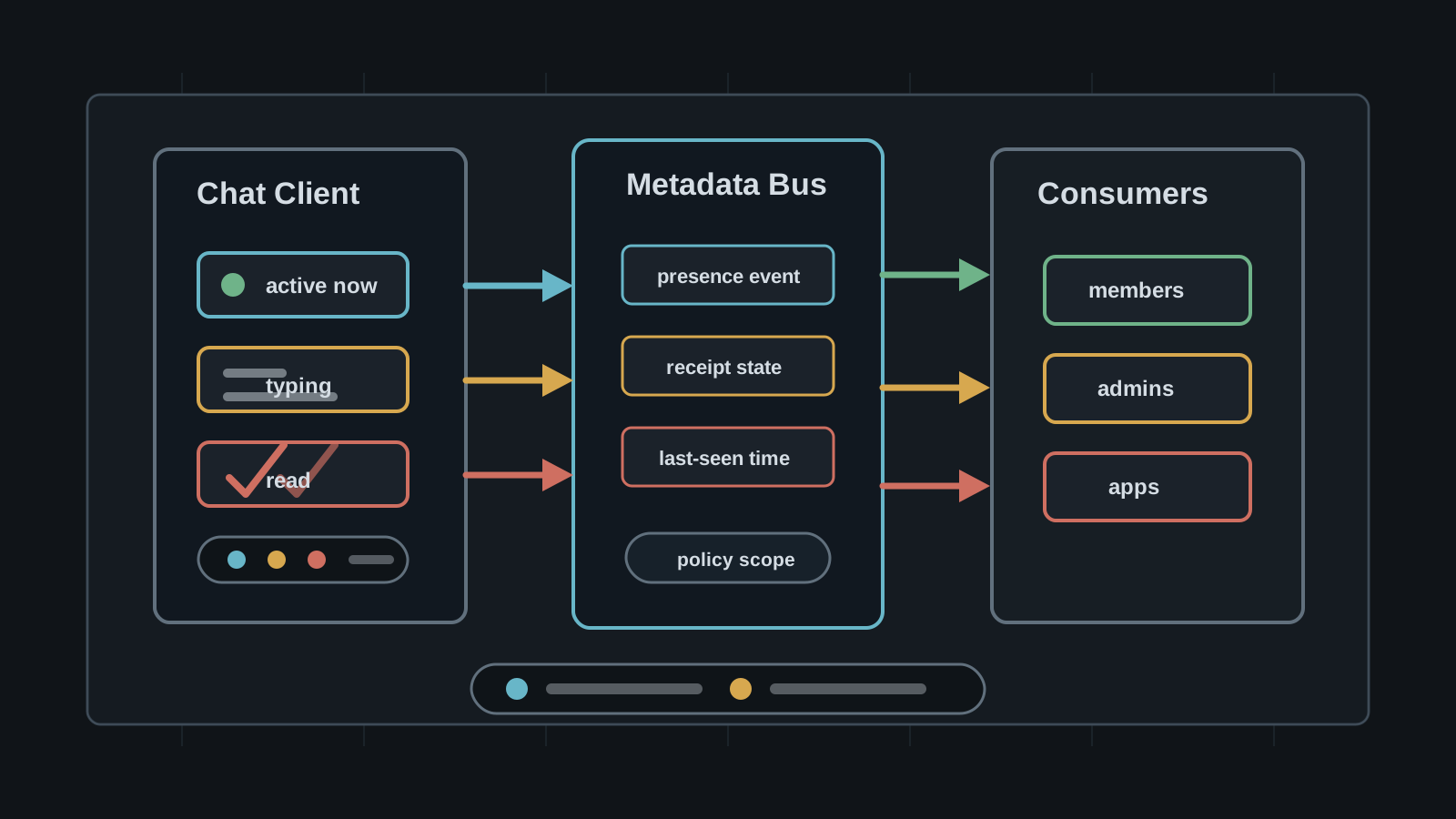
Presence And Read Receipts Are Chat Metadata
Typing indicators, read receipts, last-seen status, and presence APIs can reveal behavior without exposing message content. Treat chat metadata as a product and policy decision.
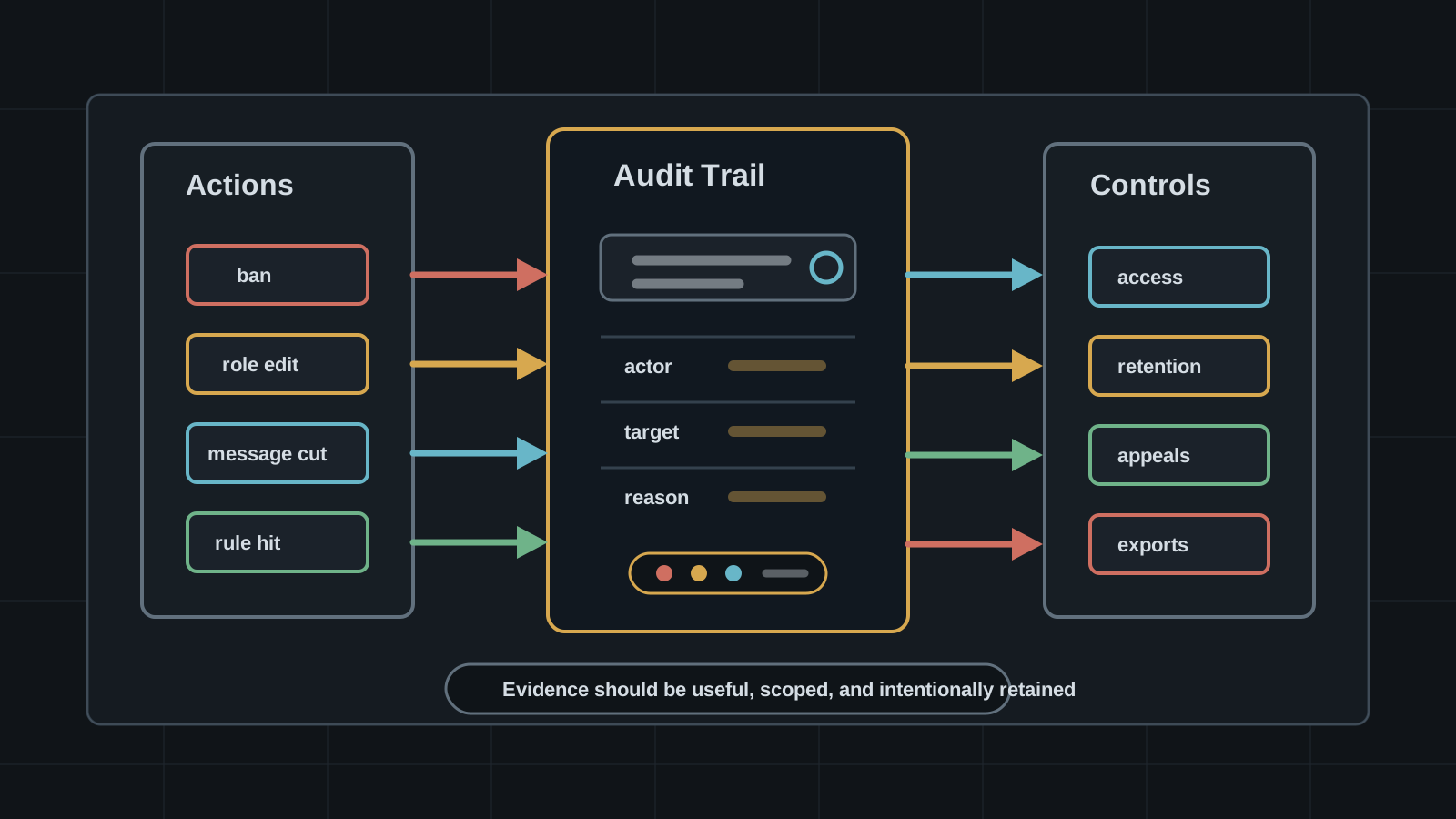
Moderation Logs Are Community Security Data
Bans, message removals, AutoMod hits, role changes, and reports are evidence and sensitive records. Community teams need log access, retention, and export policy.
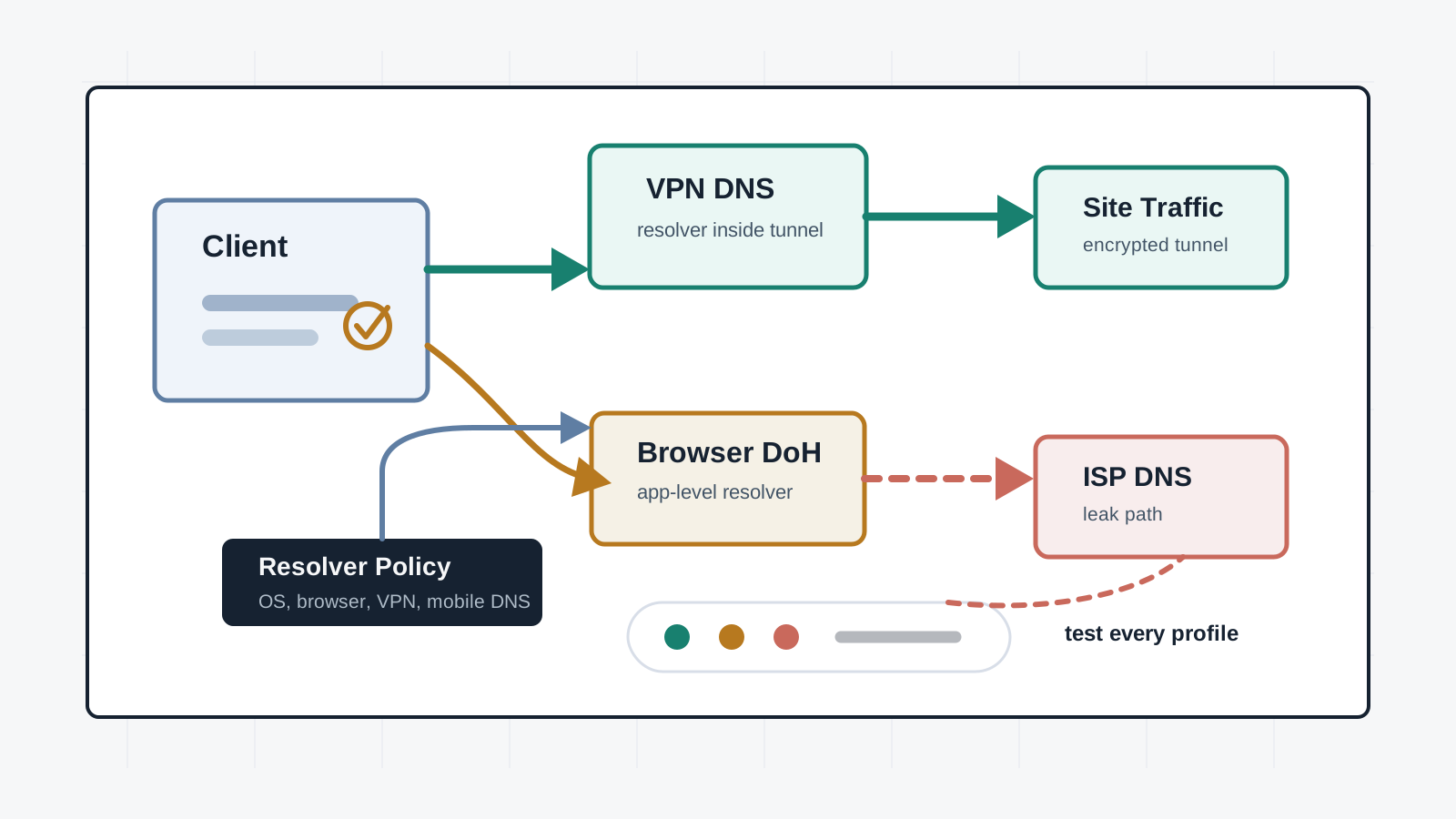
DNS Leaks Turn VPN Privacy Into Resolver Policy
A VPN can hide traffic while DNS queries still identify where a device is going. Resolver choice, browser DoH, mobile private DNS, and leak testing belong in the VPN policy.