MLS Makes Group Chat Security A Protocol Integration Problem
Messaging Layer Security standardizes group key agreement, but delivery services, identity, access control, ordering, and backups still decide whether a secure room behaves safely.
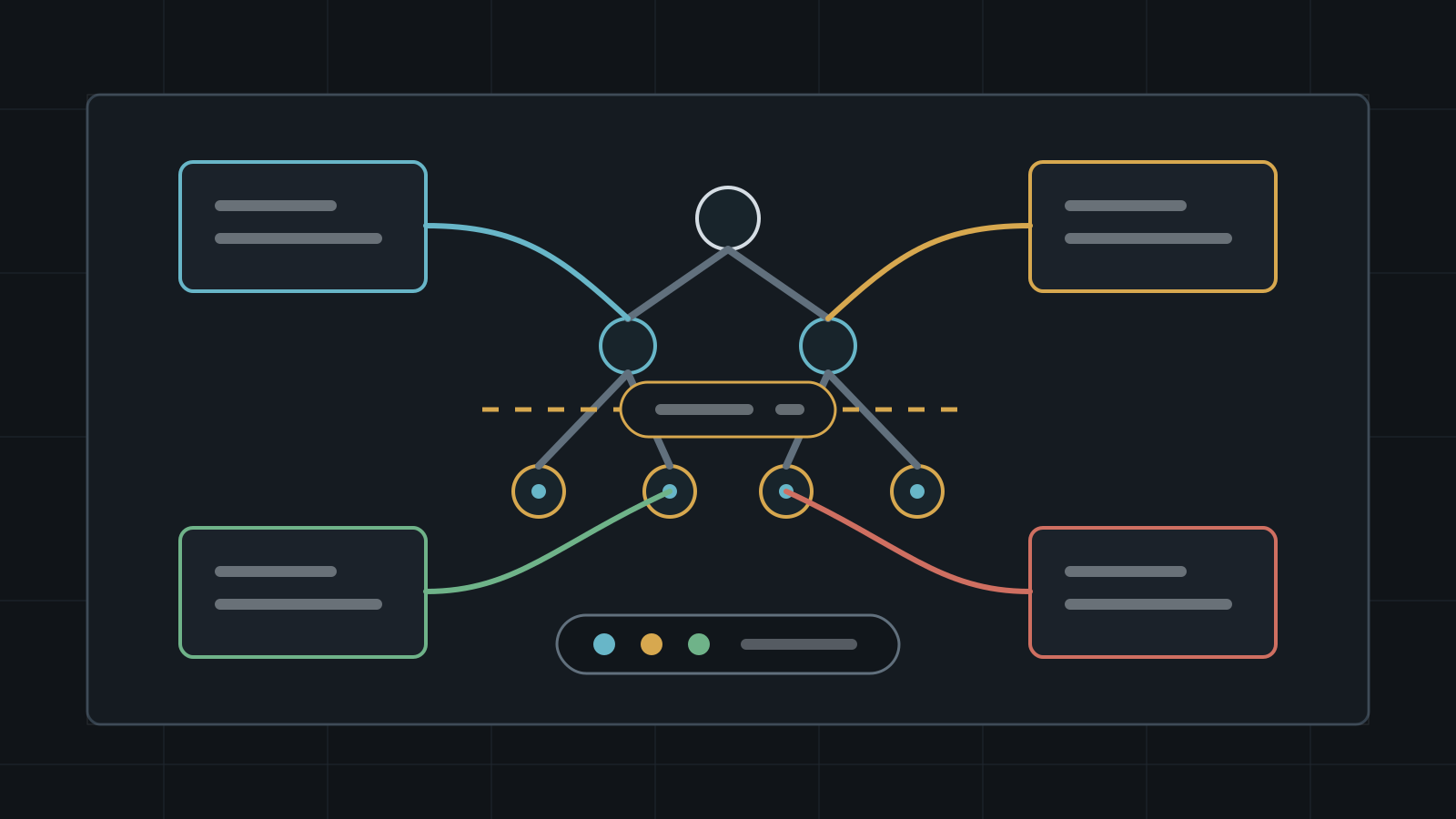
Messaging Layer Security is an important standard because it gives group messaging a shared cryptographic foundation. RFC 9420 specifies asynchronous group key establishment with forward secrecy and post-compromise security for groups ranging from two clients to thousands. That is the part many secure chat systems historically implemented in incompatible ways.
The integration work is where practical risk remains. MLS is not a complete chat product. It does not decide who is allowed to add members, how usernames map to keys, how a delivery service orders commits, how backups work, or how a user should respond when a device falls behind. A vendor claiming MLS support should still be reviewed like a full messaging system.
Key Takeaways
- check_circle MLS standardizes group key agreement, not the whole collaboration platform around it.
- check_circle The delivery service can still suppress, delay, reorder, or partition messages unless clients and application policy handle those cases.
- check_circle Authentication and access control remain application responsibilities, including admin rights, device enrollment, and identity binding.
- check_circle Large groups introduce operational costs around membership churn, multi-device state, key packages, commits, and recovery.
- check_circle Backups and history recovery can preserve usability while changing the real confidentiality boundary.
- check_circle A secure procurement review should ask how MLS is profiled, audited, monitored, and exposed to users in failure states.
What MLS Actually Standardizes
RFC 9420 defines a protocol for group key establishment. Members of a group hold cryptographic state, move through epochs as membership or key material changes, and process proposals and commits that update the group. New members receive a Welcome message that lets them join the current epoch. The protocol uses tree structures so group updates can scale better than pairwise encryption for every participant.
That is a major improvement for interoperable encrypted group messaging. It gives implementers a common language for forward secrecy, post-compromise security, application messages, handshake messages, key packages, and ratchet-tree operations. It also means product claims can become more precise. A team can ask which MLS version, cipher suites, extensions, and implementation profile a vendor uses instead of accepting a generic statement about end-to-end encryption.
The Delivery Service Still Matters
MLS assumes a delivery service that distributes messages and key material between clients. The architecture draft describes that delivery service as the component that receives and distributes messages, stores initial public key material, and may act as a broadcaster for group messages. MLS protects message content and cryptographic state, but the delivery layer still controls availability, ordering, timing, and sometimes visibility into traffic patterns.
A compromised or unreliable delivery service may not be able to decrypt application messages, but it can cause damage by delaying commits, suppressing removals, replaying stale state, partitioning users into different views, or making a target miss key updates. MLS has transcript and state machinery that helps clients detect many inconsistencies, but the application must decide what to do when detection happens. A silent retry loop is not the same as a safe user experience.
Identity Is Not Automatic
A group key is only useful if participants know which real accounts or devices hold it. The MLS architecture separates an authentication service from the delivery service. That authentication service binds application identifiers to the public key material used by clients. In one product that may mean phone numbers. In another it may mean enterprise accounts, Matrix IDs, wallet addresses, verified domains, or certificate-backed device identities.
Those choices change the security model. If an organization uses MLS for a private community, it still has to define how new devices are enrolled, how compromised devices are removed, how account recovery works, and how users verify identities. Key transparency, safety-number style verification, enterprise device management, and SCIM offboarding may all sit around MLS without being solved by MLS itself.
Access Control Is Application Policy
The MLS architecture draft says plainly that MLS does not itself enforce access control on group operations. A member can send a proposal to add or remove someone at the protocol layer. If only room admins are supposed to change membership, the application has to communicate and enforce that policy. The security boundary is therefore partly cryptographic and partly product logic.
This matters for communities and workspaces because membership is the sensitive operation. A rogue moderator, compromised admin session, broken bot, or stale SCIM group can become a cryptographic event if the app lets it change room membership. Reviewers should ask whether admin-only changes are enforced before commits are accepted, whether clients display who changed membership, and whether removed members lose access to new epochs promptly.
Scale Changes The Failure Modes
MLS was designed to support groups much larger than a simple two-person chat. The IETF working group charter describes groups from two to thousands, and the protocol's tree structure is meant to make updates efficient. Even so, implementation details matter. A 2025 experimental analysis of MLS reported that practical computation costs can scale linearly in tested settings, even when theory points to better asymptotic behavior for some operations.
Federated and decentralized systems add another constraint: ordering. Matrix's public MLS status page says one of the hard integration problems is that MLS assumes epochs have a linear ordering, while Matrix is decentralized and lacks a single central authority. That does not make MLS unsuitable. It shows why support for MLS is not a box to tick. The hard work is making ordering, backfill, membership changes, and multi-device state behave predictably under real network conditions.
Backups And History Are The Usability Tradeoff
Users expect a chat app to survive phone loss, browser refresh, device replacement, and accidental logout. Encryption expects old key material to be deleted when it is no longer needed. Those pressures collide in group messaging. If a system stores enough key material to restore history easily, that material becomes a sensitive recovery asset. If it deletes aggressively, users can lose access to legitimate conversations after routine device problems.
MLS does not remove that tradeoff. Applications still choose whether to support key backup, cross-device history sync, server-assisted recovery, export, legal hold, or message retention. Each choice can be reasonable for a different threat model. A newsroom, a gaming community, and a regulated enterprise may all want encrypted groups, but they should not share the same backup and history policy by accident.
How To Evaluate MLS Claims
The practical review starts with specificity. Ask which MLS implementation is used, which protocol version and cipher suites are enabled, whether the vendor has changed the protocol, and whether independent audits cover the MLS integration or only the general app. Ask how the delivery service behaves during message loss, reordered commits, offline devices, and failed membership updates.
Then review the surrounding controls. The application should expose meaningful identity and membership state to users. Admin actions should be logged. Key changes and new-device events should be understandable. Removed members should stop receiving future group secrets. Backups should have a clear encryption and recovery model. MLS is a strong protocol foundation, but a secure group chat is still the result of the whole system built around it.
Checklist
- Ask vendors to name the MLS version, implementation, cipher suites, extensions, and any local protocol changes.
- Review how the delivery service handles commit ordering, message loss, offline clients, and partitioned clients.
- Verify how identities, devices, and account recovery are bound to MLS credentials.
- Confirm that room-admin policy is enforced before membership-changing commits are accepted.
- Document how backups, exports, history sync, and legal hold affect group secrets.
- Test member removal, device loss, large group churn, and restored-device behavior before trusting sensitive rooms.
Sources
- RFC 9420: The Messaging Layer Security Protocol open_in_new
- IETF Datatracker: Messaging Layer Security working group open_in_new
- IETF Internet-Draft: The Messaging Layer Security Architecture open_in_new
- arXiv: Analysis of Efficiency of the Messaging Layer Security protocol in Experimental Settings open_in_new
- Are We MLS Yet? Matrix MLS implementation status open_in_new
- RFC 9180: Hybrid Public Key Encryption open_in_new
Continue Reading
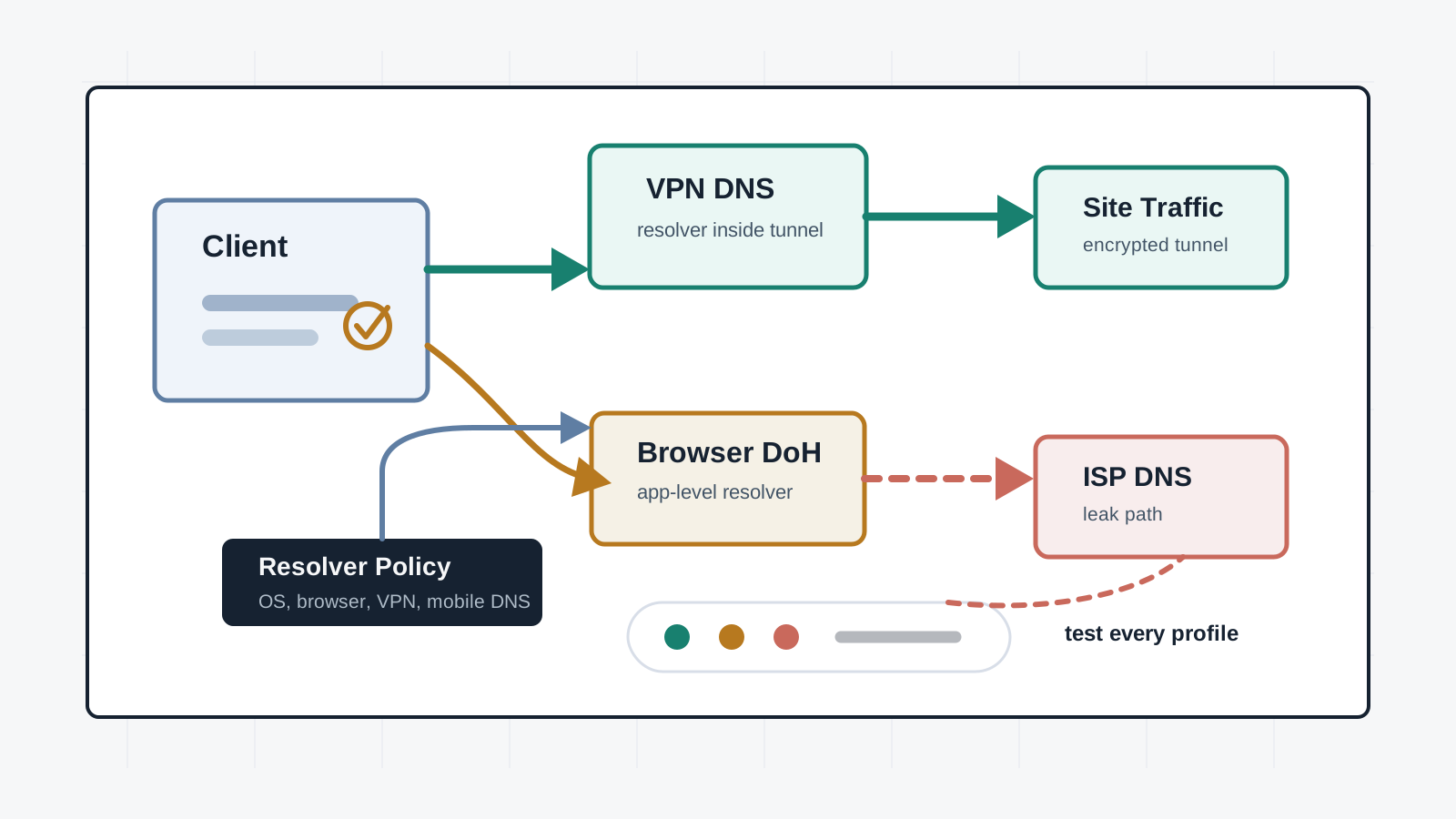
DNS Leaks Turn VPN Privacy Into Resolver Policy
A VPN can hide traffic while DNS queries still identify where a device is going. Resolver choice, browser DoH, mobile private DNS, and leak testing belong in the VPN policy.
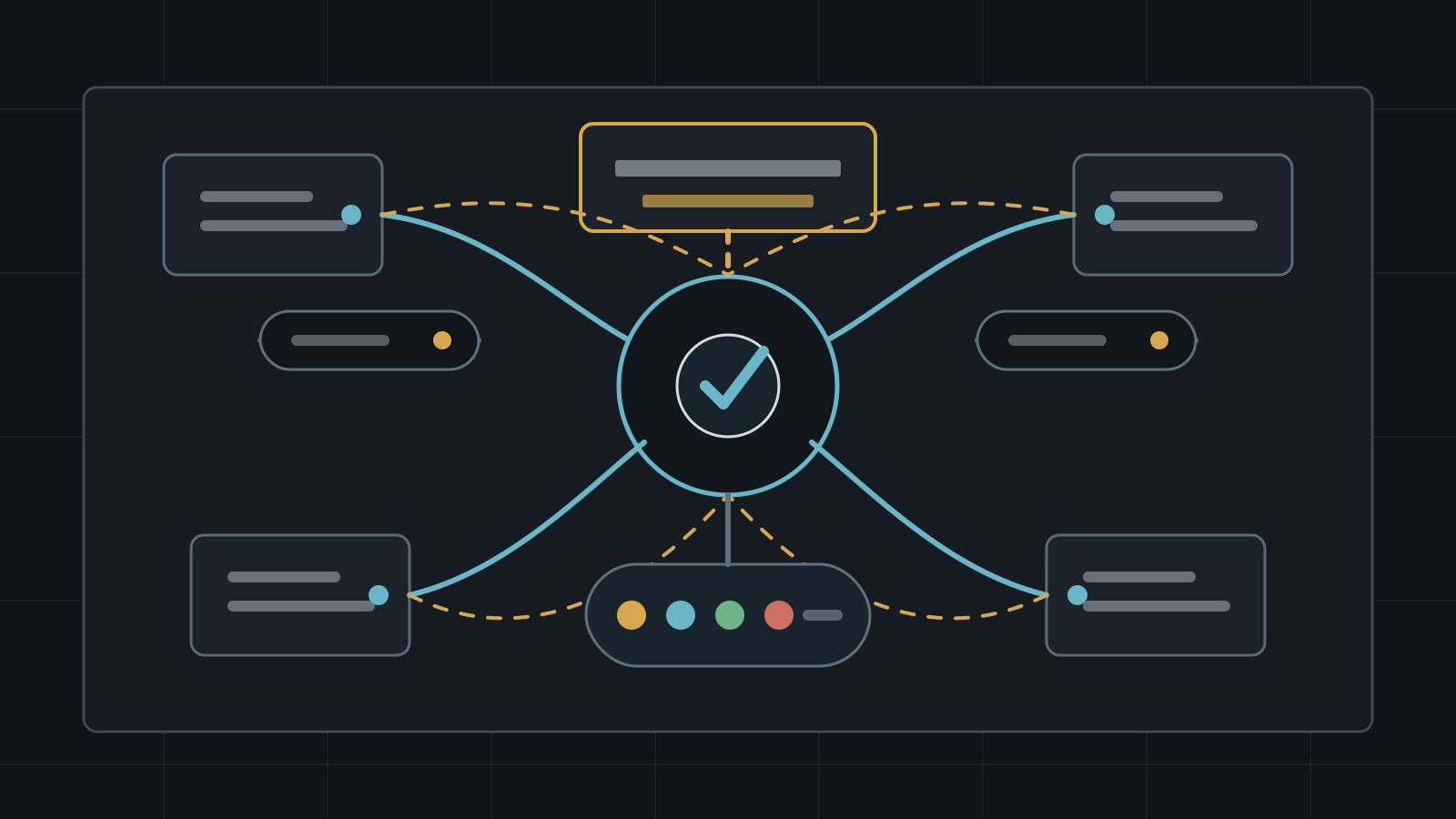
DKVE Makes Key Verification A Social-Graph Problem
A new DKVE paper proposes privacy-preserving mutual-contact checks for encrypted messaging keys. The practical question is how much trust should move from manual safety numbers to automated validation.
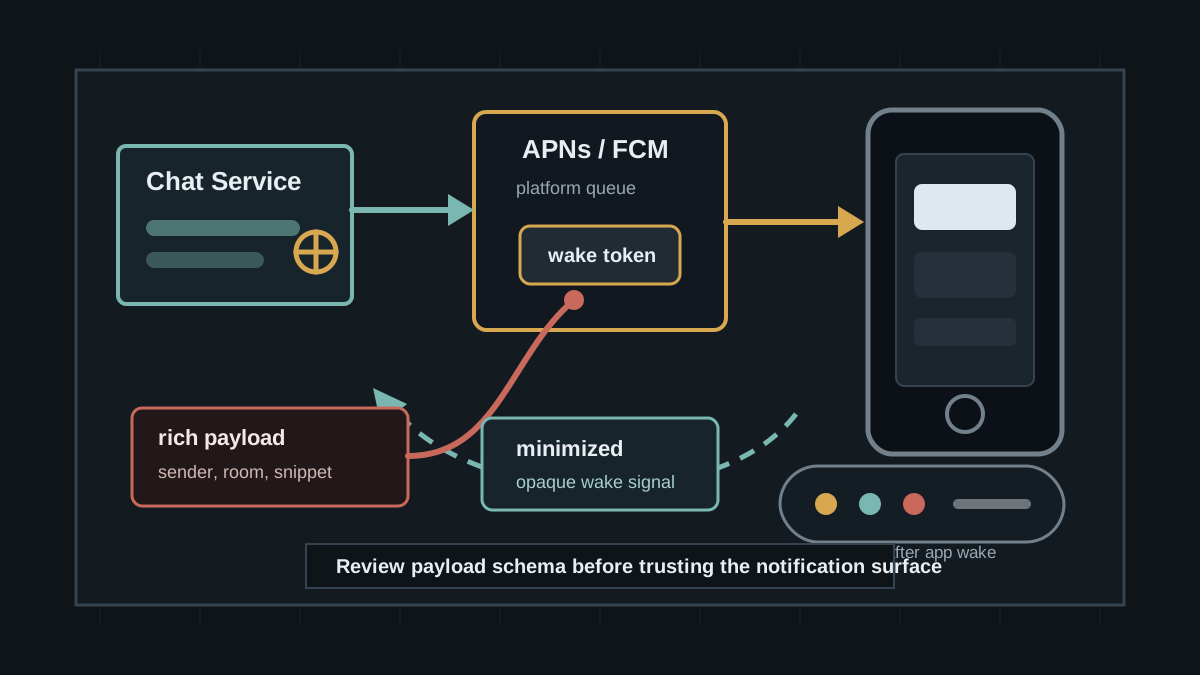
Push Notifications Make Secure Chat A Platform Boundary
End-to-end encrypted chat still depends on APNs, Firebase Cloud Messaging, lock-screen settings, and app payload choices. Review notification payloads as privacy infrastructure.