Oracle PeopleTools RCE Puts HR Portals On The Fast Patch List
Oracle's June 10 alert for CVE-2026-35273 affects PeopleTools 8.61 and 8.62 and is remotely exploitable without authentication. Exposed PeopleSoft portals need fast patching and forensics triage.
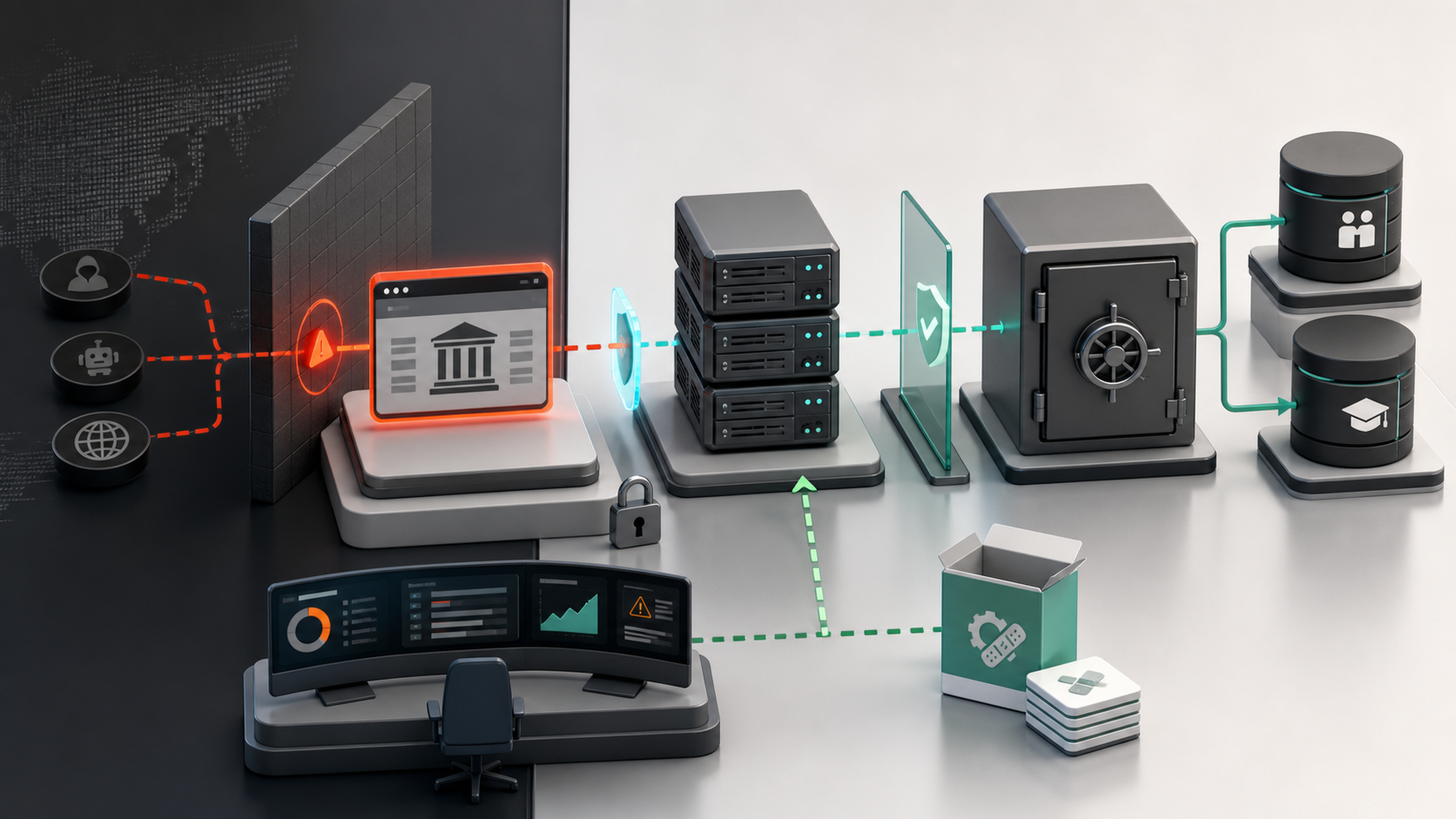
Oracle issued a June 10, 2026 Security Alert for CVE-2026-35273 in PeopleSoft Enterprise PeopleTools, component Updates Environment Management. Oracle says supported PeopleTools versions 8.61 and 8.62 are affected, and that the vulnerability is easily exploitable by an unauthenticated attacker with network access via HTTP. NVD says successful attacks can result in takeover of PeopleSoft Enterprise PeopleTools.
CISA's KEV enrichment changes the triage posture. NVD records CVE-2026-35273 as present in CISA's Known Exploited Vulnerabilities Catalog, with a June 12 date added and a June 15, 2026 due date for required action under federal guidance. Public sources do not yet provide a detailed exploit narrative, but the combination of unauthenticated HTTP reachability, enterprise portal data, and KEV status is enough to make exposed PeopleSoft systems a short-window priority.
Key Takeaways
- check_circle The confirmed affected supported PeopleTools versions are 8.61 and 8.62.
- check_circle Oracle describes the issue as remotely exploitable without authentication over HTTP.
- check_circle NVD records the outcome as takeover of PeopleSoft Enterprise PeopleTools.
- check_circle CISA KEV lists a June 15, 2026 required-action due date, so federal and similarly governed teams have little time.
- check_circle PeopleSoft exposure should be triaged by internet reachability, identity privilege, data sensitivity, and customization burden.
- check_circle Patch first where possible, but preserve logs and snapshots before cleanup if exploitation is plausible.
What Oracle Disclosed
Oracle's alert is narrow and serious. It names one CVE, CVE-2026-35273, in PeopleSoft Enterprise PeopleTools, specifically the Updates Environment Management component. Oracle lists supported versions 8.61 and 8.62 as affected. The advisory text says the vulnerability is easily exploitable and allows an unauthenticated attacker with network access via HTTP to compromise PeopleSoft Enterprise PeopleTools.
Oracle's risk matrix language matters because it gives defenders the exposure model. This is not a post-login administrative weakness. It is a remotely reachable path that does not require credentials. Oracle does not disclose detailed technical analysis in the public alert, and customers are directed to Oracle support channels for patch details. That leaves defenders with enough to prioritize, but not enough to safely infer exploit mechanics from public text.
What NVD And KEV Add
NVD's description mirrors the core Oracle facts and adds the consequence: successful attacks can result in takeover of PeopleSoft Enterprise PeopleTools. It also records CWE-306, missing authentication for critical function, and lists CISA's KEV reference. NVD shows CISA added the vulnerability to KEV on June 12, with a due date of June 15, 2026.
That due date is unusually tight in practical terms, especially for an enterprise platform that often has custom workflows, integration points, change freezes, and business owners outside the security team. KEV inclusion does not disclose the full exploitation story, but it is CISA's signal that the vulnerability is known to be exploited. For internet-exposed PeopleSoft deployments, waiting for a public proof of concept before acting is the wrong threshold.
Why PeopleSoft Exposure Is Different
PeopleSoft deployments often sit near sensitive business records: human resources, payroll, finance, benefits, student administration, procurement, and identity-linked employee data. The exact data depends on the installation, but the platform category makes compromise materially different from a low-value web app. An attacker who compromises the application tier may be able to reach integrations, service accounts, reports, stored documents, or downstream databases depending on local design.
The most exposed systems are not only fully public portals. Risk also includes partner-access portals, VPN-accessible administrative interfaces, load balancer paths that were meant to be internal, old test environments with production-like data, and disaster-recovery systems that were never brought under the same patch discipline. The first inventory should map every HTTP/S route to PeopleTools, not only the production hostname users recognize.
Patch Work Is Still Operational Work
Oracle's FAQ says Security Alerts are issued for fixes deemed too critical to wait for the next scheduled patch cycle. It also says customers should apply Critical Patch Update, Critical Security Patch Update, or Security Alert fixes as soon as possible, while testing patches in customer environments because customizations can affect production behavior. That is the normal Oracle tension: patch quickly, but respect the local application stack.
For CVE-2026-35273, the exposure model argues for a faster exception path. If a PeopleSoft instance is reachable from the internet or from a broad partner network, isolate access before waiting for full regression testing. Use network controls, VPN or ZTNA allowlists, emergency maintenance windows, and temporary feature restrictions where they reduce unauthenticated HTTP reachability without breaking the organization. Those mitigations should buy time for patching, not replace it.
Forensics Before Cleanup
When a vulnerability is in KEV, responders should assume patching and investigation may need to happen together. Before making disruptive changes, preserve web server logs, application logs, reverse proxy logs, WAF events, EDR telemetry, database audit trails, configuration snapshots, and any PeopleTools-specific logs that cover the exposure window. If storage is tight, prioritize systems reachable by unauthenticated HTTP and logs around suspicious requests, file changes, process launches, and new administrative behavior.
The investigation should not stop at the web tier. Review service-account usage, scheduled jobs, integration broker activity, new or modified PeopleSoft users, changes to roles or permissions, unusual report exports, database access from application hosts, and outbound connections from PeopleSoft servers. If evidence indicates compromise, rotate secrets used by the application, review downstream systems that trusted PeopleSoft, and preserve images or snapshots for deeper analysis.
How To Prioritize The Fleet
Start with internet exposure. A fully public PeopleSoft endpoint on affected PeopleTools versions should be treated as highest priority. Next, include systems reachable by large internal networks, contractors, partners, student networks, or shared jump hosts. Then evaluate lower-exposure systems that still hold high-value data or privileged integration keys.
Second, classify by data and authority. A test instance with production payroll data can be as sensitive as production. A training instance with live single sign-on and service accounts can become an identity pivot. An old disaster-recovery instance might be forgotten by business owners but visible to scanners. Treat each route, host, database, and integration as part of the same attack surface.
Third, document exceptions. If a system cannot be patched by June 15, record why, who approved the delay, what compensating controls are active, what telemetry is being watched, and when the next decision point occurs. A silent exception is usually worse than a delayed patch with isolation and monitoring.
What Teams Should Do Now
Ask three questions immediately: which PeopleTools versions are running, which HTTP/S routes can reach them, and which systems are already patched or isolated. If the answer depends on institutional memory, treat the inventory process itself as a finding. PeopleSoft systems are too important to be discovered during a zero-day response.
Coordinate security, PeopleSoft administrators, infrastructure, identity, legal, and business owners in one response track. The patch may be technical, but the blast radius can include employee records, payroll processes, student data, procurement, audit evidence, and regulatory notification decisions. A small group cannot safely reason about those implications in isolation.
After the urgent window closes, convert the work into a standing playbook: supported-version tracking, exposure mapping, quarterly patch rehearsal, log-retention validation, service-account rotation plans, and a clear emergency path for future Oracle Security Alerts. CVE-2026-35273 is the immediate risk; the durable lesson is that enterprise portals need evidence-ready patch operations.
Checklist
- Identify every PeopleSoft Enterprise PeopleTools 8.61 or 8.62 deployment, including test, training, DR, and partner-access environments.
- Map all HTTP/S exposure paths through load balancers, WAFs, reverse proxies, VPNs, ZTNA gateways, and internal networks.
- Apply Oracle's CVE-2026-35273 fix or isolate vulnerable systems while patch testing completes.
- Preserve web, application, proxy, WAF, EDR, database, and PeopleTools logs before disruptive cleanup.
- Review PeopleSoft users, roles, scheduled jobs, integration activity, report exports, file changes, and service-account behavior.
- Rotate application and integration secrets if telemetry suggests compromise or if affected systems were broadly reachable.
- Record any patch exception with owner, reason, compensating controls, telemetry, and the next review time.
Sources
- Oracle Security Alert Advisory: CVE-2026-35273 open_in_new
- NVD: CVE-2026-35273 open_in_new
- CISA Known Exploited Vulnerabilities Catalog: CVE-2026-35273 open_in_new
- Oracle Critical Patch Update and Security Alert Programs FAQ open_in_new
- Oracle Risk Matrix Glossary open_in_new
- Oracle Lifetime Support Policy resources open_in_new
Continue Reading
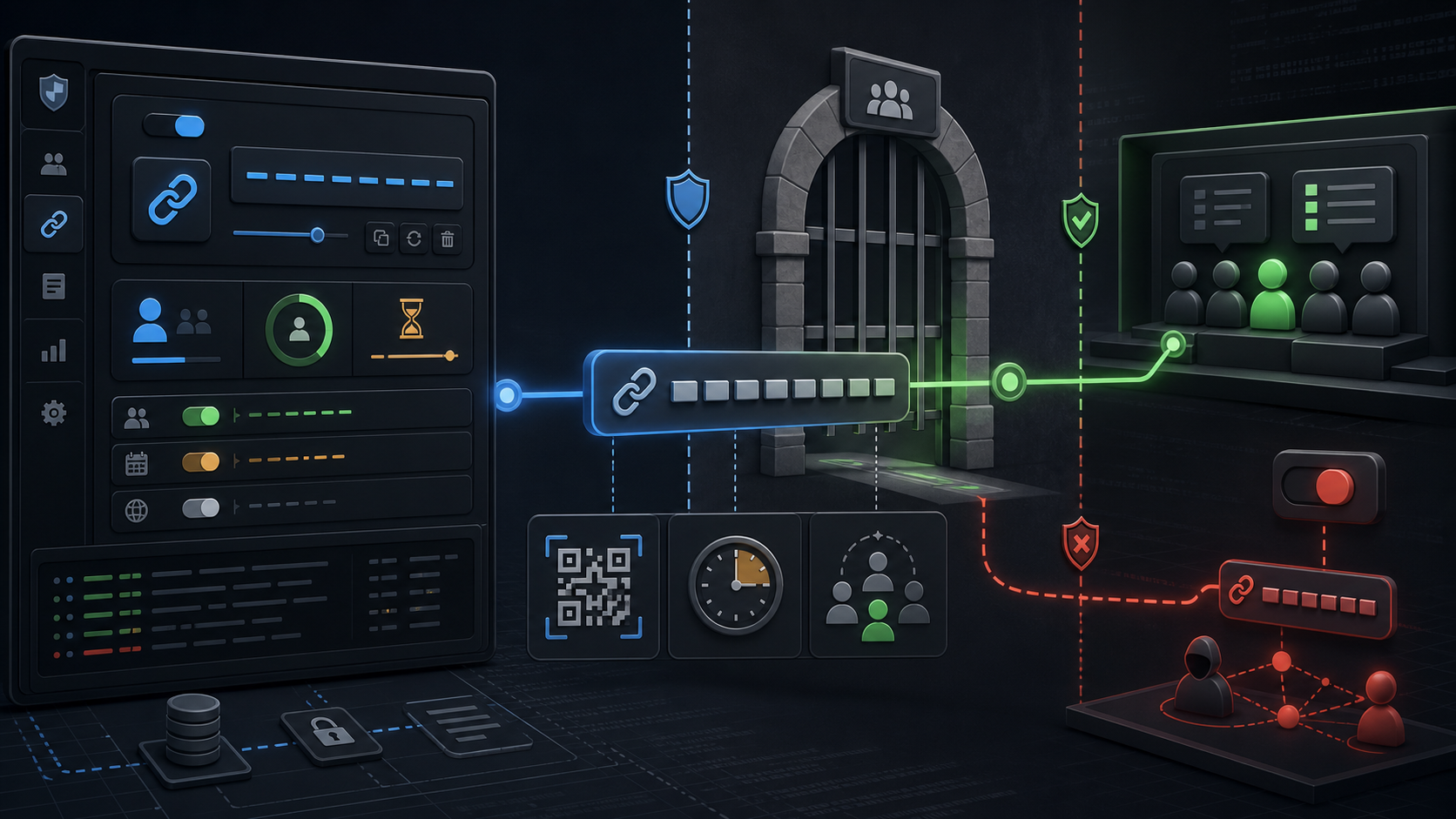
Private Community Invite Links Are Access Tokens
Invite links for Discord, Slack, Telegram, WhatsApp, Signal, and other community tools behave like bearer credentials. Private groups need expiry, approval, rotation, and offboarding rules.

Chrome's V8 Zero-Day Turns Browser Patch Lag Into Session Risk
Google patched an exploited V8 flaw in Chrome 149.0.7827.102/.103. The practical work is managed relaunch, session review, and treating browser patch lag as identity exposure.
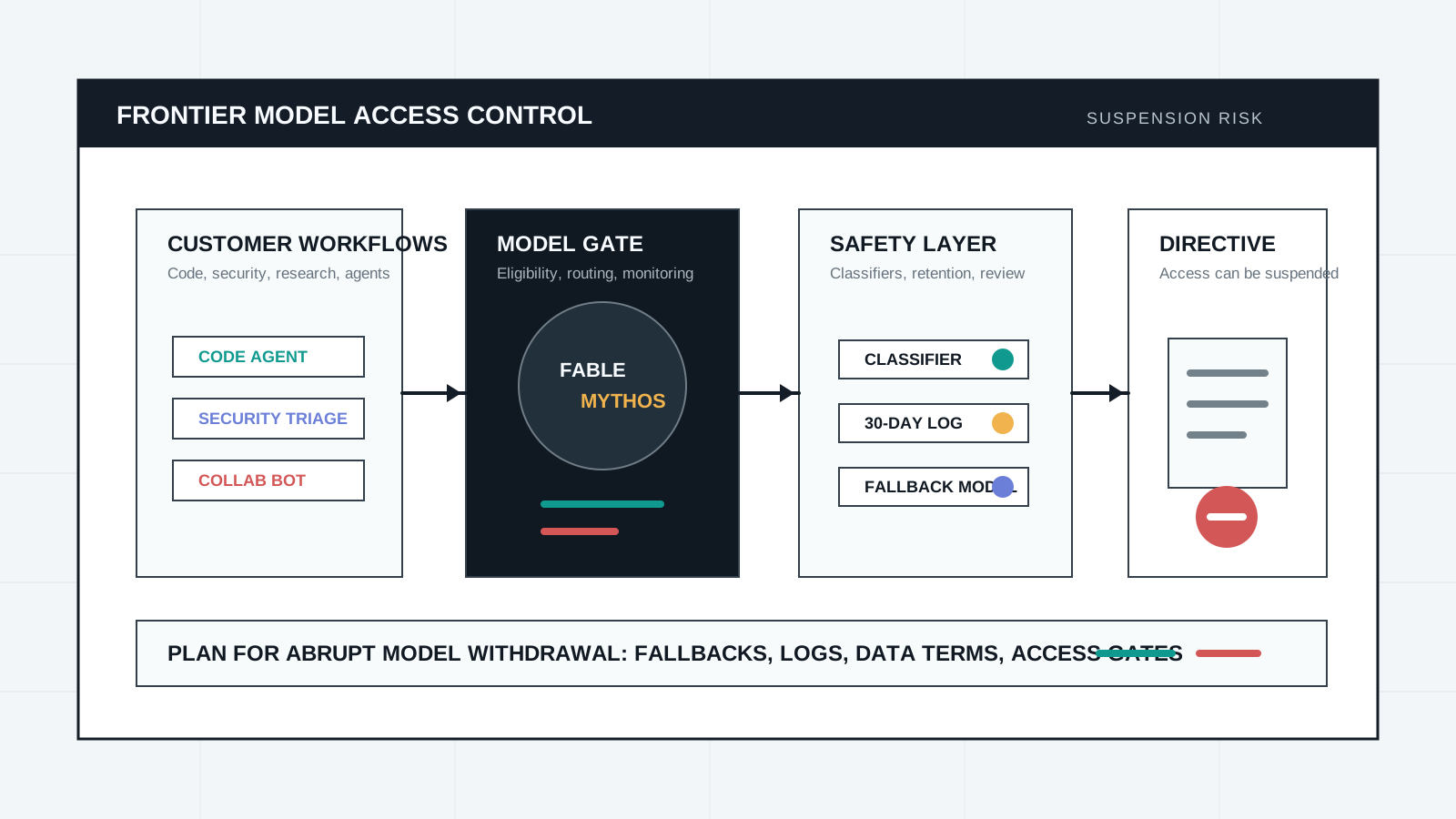
Fable 5 Suspension Makes AI Safety A Deployment-Control Issue
Anthropic says a US government directive forced it to disable Fable 5 and Mythos 5 after a narrow jailbreak concern. The practical lesson is access design, retention policy, and fallback planning.