RingCentral Breach Turns Contact Data Into Social-Engineering Fuel
RingCentral confirmed a social-engineering incident, while a verified leaked dataset exposes contact data tied to 1.59 million email addresses.
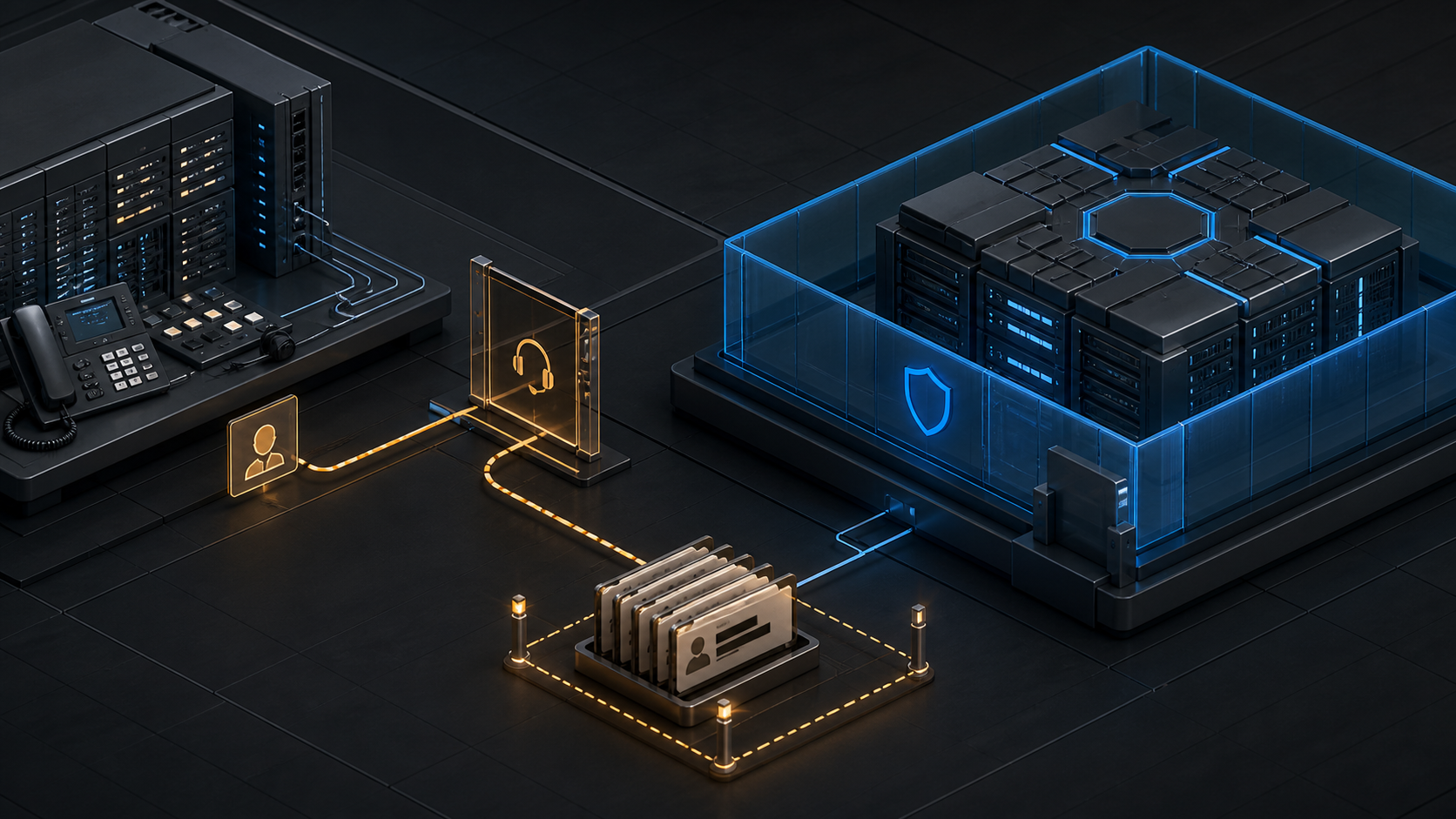
RingCentral says it discovered a sophisticated social-engineering campaign, stopped the unauthorized activity, and engaged a third-party forensic firm. The company says data belonging to a limited portion of customers was affected, that affected customers were contacted directly, and that the core RingCentral platform remained operational and was not impacted. Its public notice does not identify the system reached, the person or process deceived, the intrusion dates, the exact data fields, or the attacker.
A new public-data development sharpens the practical risk without closing those gaps. Have I Been Pwned added a verified RingCentral dataset on August 13 containing 1,596,490 unique email addresses plus names, phone numbers, and physical addresses. RingCentral has not confirmed that count or the extortion group's claims. Organizations should therefore treat the exposed contact combinations as credible phishing, smishing, and vishing inputs, while avoiding unsupported claims that passwords, calls, messages, recordings, or every RingCentral account were compromised.
Key Takeaways
- check_circle RingCentral confirms unauthorized activity caused through social engineering and data impact for a limited portion of customers, but says the core platform was not affected.
- check_circle Have I Been Pwned marks the leaked dataset as verified and counts 1,596,490 unique email addresses with names, phone numbers, and physical addresses.
- check_circle The verified dataset does not independently prove the attacker's identity, the claimed archive size, the initial-access method beyond RingCentral's broad social-engineering description, or access to communications content.
- check_circle Names, addresses, email addresses, and phone numbers make convincing support, billing, voicemail, delivery, and account-recovery lures even when no password is present.
- check_circle A separate campaign spoofed RingCentral from an unrelated mail server and reached some Microsoft 365 inboxes because permissive safe-sender handling overrode failed email authentication. Researchers did not establish that the breach supplied its target list.
- check_circle Customer response should start with notice reconciliation, support-channel verification, mail-control review, and targeted monitoring. A blanket password reset is not evidence-led unless account or credential exposure is found.
The Vendor Notice And The Dataset Establish Different Facts
RingCentral posted its general advisory on July 28. It says a sophisticated social-engineering campaign led to unauthorized activity, which the company stopped after detection. RingCentral engaged a third-party forensic firm, says it has not seen new unauthorized activity since remediation, and describes the affected data as belonging to a limited portion of customers. It also says directly contacted customers are the affected population and that the core platform continued operating without disruption.
Have I Been Pwned records July 27 as the breach date and August 13 as the date the dataset entered its service. Its public API lists 1,596,490 unique email addresses and four data classes: email addresses, names, phone numbers, and physical addresses. The record is marked verified, not fabricated, and not a stealer log. That is strong evidence that a coherent corpus matching the described RingCentral incident exists and contains usable contact data.
Those two sources should not be collapsed into one claim. RingCentral has not publicly confirmed the 1.59 million count, each field in the released archive, or the extortion actor's attribution. Have I Been Pwned can validate and normalize a leaked corpus, but it does not have the vendor's forensic visibility into initial access or every system touched. The responsible statement is that RingCentral confirmed an incident and limited customer-data impact, while an independently verified leaked dataset now defines a much larger observable contact-data population.
Extortion Claims Remain Outside The Confirmed Boundary
SecurityWeek reports that the ShinyHunters group listed RingCentral on a leak site, claimed to have taken more than 623 gigabytes, and later published a 280-gigabyte archive. The report also says RingCentral had not confirmed the actor's claims or the number of affected individuals. These details provide timeline context, but they remain claims by an extortion party and observations about a released archive, not findings in RingCentral's public investigation notice.
The distinction matters for scoping. The confirmed leaked fields can support impersonation and targeting. They do not prove that an attacker obtained passwords, authentication tokens, call recordings, message bodies, voicemail, contact-centre transcripts, payment data, or administrator credentials. RingCentral's statement that its core platform was not impacted argues against describing the event as a compromise of every call, message, or account, but the notice is too brief to identify the exact data repository involved.
Organizations should preserve both sides of the boundary in internal communications. Tell people which contact fields are known to appear in the verified dataset and what threats those fields enable. Separately list the facts still requested from RingCentral: affected tenant or business unit, record ownership, collection purpose, retention period, access window, exported fields, and evidence about authentication or communications content. This keeps the response useful without letting an extortion narrative become the incident report.
Contact Data Changes The Quality Of Impersonation
A name paired with a business email, direct phone number, and physical address gives an attacker several ways to make a false request feel routine. A caller can cite an office location, an email can refer to a known communications provider, and a text can continue the same story on a second channel. None of those fields is a secret authentication factor, but many support desks and employees still treat accurate personal context as evidence that the caller is legitimate.
The likely pressure points are provider support, voicemail notifications, billing changes, number porting, executive-assistant workflows, help-desk resets, and requests to install remote-support software. The FTC warns that a caller knowing a person's name or address does not make the call trustworthy and advises hanging up before contacting the organization through an independently obtained number. That advice belongs in the employee notice because the leaked fields are precisely the context an impersonator would use to resist verification.
Administrators should also remove knowledge-based shortcuts from support. A name, address, recent invoice detail, extension, or phone number may help locate a record, but it should not authorize a password reset, MFA change, number transfer, forwarding rule, administrator grant, or payment update. Require a separate trusted channel, an existing authenticated session, a managed-device approval, or a supervisor-controlled recovery workflow for consequential changes.
A Separate RingCentral Lure Shows The Mail-Control Failure Mode
BleepingComputer reported an August Greatness phishing campaign that used fake RingCentral voicemail and performance-review notices to target Microsoft 365 users. The messages came from an unrelated IONOS mail server, failed SPF and DMARC, and carried no DKIM signature. Some still received a low spam score because RingCentral had been placed on a safe-sender list. The landing flow then used adversary-in-the-middle or device-code phishing to obtain Microsoft 365 access.
That campaign is relevant because it shows how a communications brand and a plausible notification can become an identity attack. It must not be described as a confirmed consequence of the RingCentral breach. The researchers said a leaked customer list was a possible source of valid targets but could not confidently connect the two events. Treat it as a demonstrated control failure that the newly exposed contact data could make easier to aim, not as proof that the same actor reused the dataset.
Review every allow rule that treats a display name, From domain, or vendor brand as sufficient. A legitimate RingCentral message should still have to satisfy the expected authentication and sending-path policy. Replace blanket safe-sender exclusions with narrow conditions that require aligned SPF or DKIM, correct DMARC handling, expected infrastructure, and an owned business reason. Alert when a message claims a trusted communications vendor while arriving from unrelated infrastructure or asking for device-code entry, credential submission, or remote access.
Build A Tenant-Level Response From Evidence
Start by identifying who received RingCentral's direct notice and which contract, tenant, reseller, or business unit it references. Do not assume that silence in a shared mailbox proves the organization is unaffected. Check security, privacy, procurement, billing, legal, and administrator contacts, then ask the account representative for the affected data owner, field list, time window, and population. Keep RingCentral's statement that uncontacted customers are unaffected, but verify that the registered notice contacts are current.
Reconcile the disclosed population against the corporate directory without copying the leaked archive into another uncontrolled system. Domain-monitoring results from a breach-notification service can help locate exposed addresses. Classify active employees, former workers, shared mailboxes, contractors, and public role accounts separately. An address that appears in the dataset establishes contact-data exposure, not compromise of the associated mailbox or RingCentral login.
Use account evidence to decide on credential actions. Review RingCentral and identity-provider audit records for unfamiliar administrators, authentication methods, sessions, forwarding changes, integrations, and export activity where the relevant product exposes them. If those signals show account misuse, contain the account, revoke sessions, rotate credentials, and scope downstream access. If the only evidence is contact data in the leak, prioritize phishing-resistant MFA, support-process controls, and monitoring rather than creating reset fatigue through an unsupported fleet-wide password change.
The Durable Fix Is Stronger Human And Message Authentication
This incident started with social engineering according to RingCentral and leaves behind data that improves future social engineering. That loop is the durable lesson. Protect privileged support and administrative actions with phishing-resistant authentication, just-in-time access, recorded approvals, and explicit checks for recovery-factor changes. Train support staff to treat an accurate biography as attacker-supplied context, not proof of identity.
Apply the same principle to messages. CISA's joint phishing guidance recommends controls that reduce credential theft and malware delivery, including phishing-resistant MFA, secure email configuration, and clear reporting paths. Make it easy for employees to report suspicious voicemail, billing, and provider notices without forwarding active links to colleagues. Correlate reports so the security team can block a campaign across email, text, voice, and collaboration channels rather than investigating each lure in isolation.
Finally, demand a closure record from the provider that is precise enough to test. Useful answers include the compromised workflow, affected repository, access and containment dates, complete data classes, customer and individual counts, log coverage, and any required tenant action. Until those arrive, the right posture is neither panic nor dismissal: the contact dataset is credible and operationally important, while the broader platform and content claims remain unconfirmed.
Checklist
- Locate RingCentral's direct notices across security, privacy, procurement, billing, legal, and tenant-administrator contacts.
- Ask RingCentral for the affected tenant or system, exact fields, access window, population, retention purpose, and any required customer action.
- Identify exposed corporate addresses through an approved breach-monitoring workflow without importing the leaked archive into internal systems.
- Brief employees and support teams that names, addresses, emails, phone numbers, and caller ID are not identity proof.
- Remove blanket RingCentral safe-sender rules and require aligned email authentication and expected sending infrastructure.
- Review identity and RingCentral audit evidence for suspicious account, administrator, recovery, integration, forwarding, or export changes.
- Reset credentials and revoke sessions only where account exposure or misuse is supported, while enforcing phishing-resistant MFA broadly.
Sources
- RingCentral security bulletin: July 2026 general advisory open_in_new
- Have I Been Pwned API: verified RingCentral breach record open_in_new
- SecurityWeek: 1.6 million likely impacted by RingCentral data breach open_in_new
- BleepingComputer: RingCentral-themed Greatness phishing campaign open_in_new
- CISA, NSA, FBI, and MS-ISAC: Phishing Guidance, Stopping the Attack Cycle at Phase One open_in_new
- FTC: How to handle unexpected calls that claim your money is at risk open_in_new
- RingCentral Support: viewing the Engage Digital audit log open_in_new
Continue Reading
SafePal Order-Data Breach Turns Shipping Details Into Wallet Lures
SafePal says an order-tracking authorization flaw exposed 39,798 customers. Wallet keys were not breached, but purchase data sharpens phishing risk.
Google Cloud PQC Defaults Put TLS Compatibility On The Clock
Google Cloud will default supported load balancers to hybrid post-quantum key exchange in October 2026. Customers need compatibility evidence now.
Pass-ta-key Shows Synced Passkeys Inherit Endpoint Risk
Unit 42 demonstrated three post-compromise attacks against Google-synced passkeys on Chrome for Windows. The cryptography holds, but endpoint trust matters.