Google Cloud PQC Defaults Put TLS Compatibility On The Clock
Google Cloud will default supported load balancers to hybrid post-quantum key exchange in October 2026. Customers need compatibility evidence now.
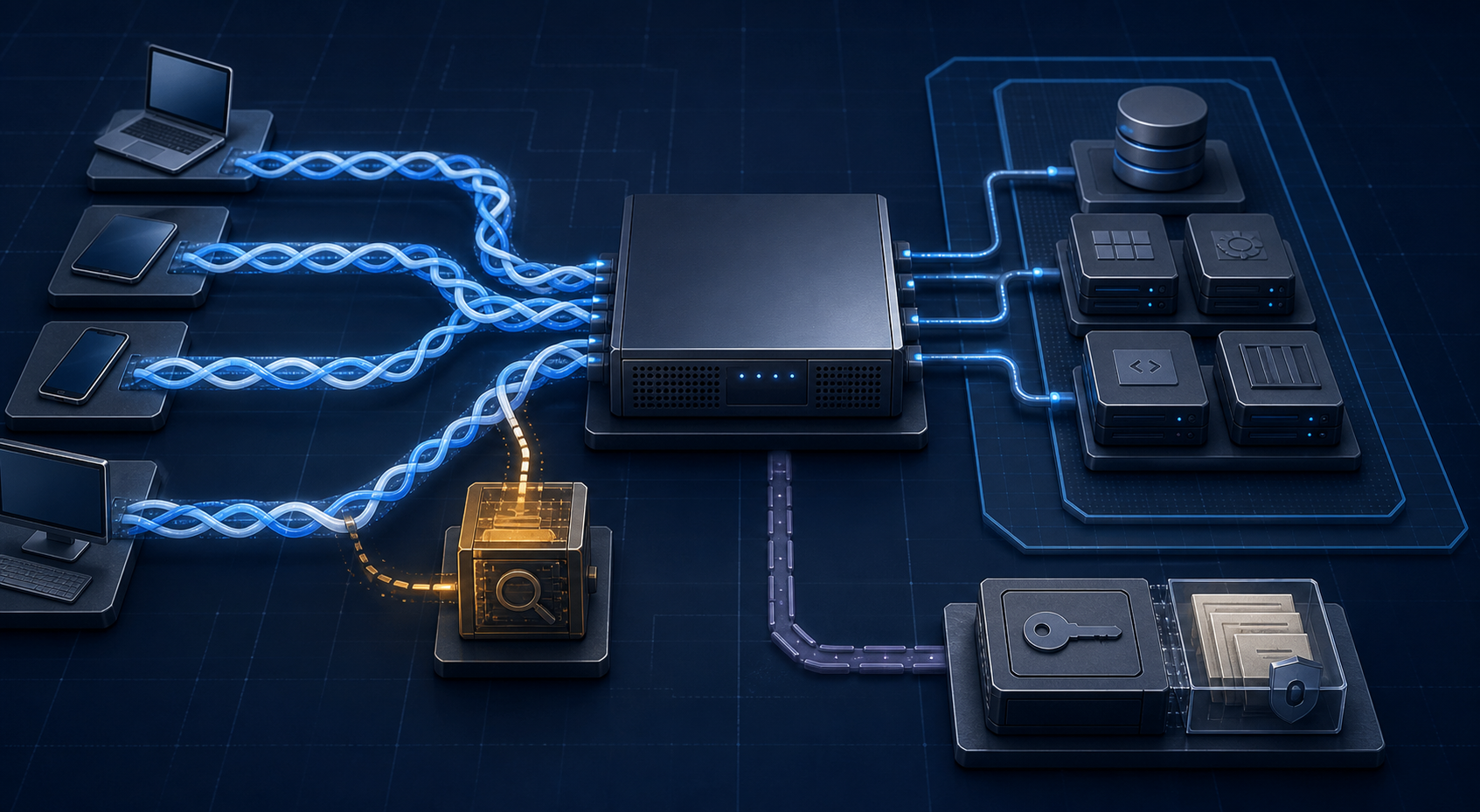
Google Cloud published an updated post-quantum cryptography roadmap on August 11 with a 2029 readiness target and nearer customer deadlines. The immediate operational change is at supported Application and proxy Network Load Balancers: hybrid X25519MLKEM768 key exchange is opt-in now, Google plans to begin enabling it by default in October 2026, and customers can use a DEFERRED policy only until October 2027.
This is not an emergency response to a working cryptographically relevant quantum computer, and it does not make the entire TLS or cloud stack quantum-safe. The current load-balancer control covers compatible clients negotiating TLS 1.3 on the frontend connection. Certificate signatures, identity, VPN and interconnect paths, software attestations, HSMs, and customer-managed application keys move on separate schedules. Teams should test real client populations now, inventory each cryptographic layer, and record which changes belong to Google and which remain their responsibility.
Key Takeaways
- check_circle Google Cloud targets full post-quantum readiness in 2029, while acknowledging that some hardware and ecosystem work may continue into the 2030s.
- check_circle Supported load balancers can negotiate hybrid X25519MLKEM768 with TLS 1.3 clients today. The setting applies only to frontend client-to-load-balancer TLS connections.
- check_circle Google plans to enable the hybrid exchange by default in October 2026; a DEFERRED policy can postpone it until October 2027, after which the documentation says it will always be enabled.
- check_circle Clients that do not advertise TLS 1.3 and X25519MLKEM768 continue on their existing path, but operators still need evidence for custom clients, inspection devices, proxies, SDKs, and unusual network stacks.
- check_circle Hybrid key exchange reduces store-now-decrypt-later risk for captured traffic. It does not replace classical certificate signatures or automatically migrate application keys, service identities, JWTs, OAuth tokens, or private PKI.
- check_circle Cloud KMS exposes standardized post-quantum algorithms, but customers still own application integration, asymmetric-key lifecycle, configuration, compatibility testing, and proof of negotiated protection.
The 2029 Roadmap Contains A 2026 Customer Change
Google Cloud's headline is full post-quantum readiness by 2029. The roadmap divides that work into three domains: reducing store-now-decrypt-later exposure, protecting integrity and identity against future signature forgery, and building cryptographic agility across keys, libraries, hardware, and partner systems. Google targets the confidentiality-focused domain for the end of 2027 and the integrity and foundational-key domains for the end of 2028, with the efforts converging in 2029.
Customers do not have until 2029 to start. The load-balancer documentation, updated on August 11, says post-quantum key exchange is disabled by default today unless an SSL policy sets it to ENABLED. Google plans to begin enabling it by default in October 2026 for supported load balancers with no SSL policy or no explicit post-quantum setting. A DEFERRED setting can postpone the change until October 2027, after which Google says the hybrid exchange will always be enabled.
That schedule turns a long-range cryptography program into a near-term compatibility task. The right deliverable is not a board slide that says the cloud provider owns quantum risk. It is an inventory of exposed load balancers, attached SSL policies, client populations, TLS intermediaries, application owners, test results, and any temporary deferral. A deferral without an owner and exit date simply converts a controlled test window into a later forced change.
The Current Control Is Hybrid Frontend Key Exchange
Google Cloud supports X25519MLKEM768 on global, classic, regional, and cross-region Application Load Balancers and on listed global external proxy Network Load Balancers. It is a hybrid key exchange that combines the established X25519 mechanism with NIST-standardized ML-KEM. When the setting is enabled, a connecting client must advertise TLS 1.3 and X25519MLKEM768 for that hybrid group to be selected. Clients without that support are unaffected according to the documentation.
The scope is explicitly the frontend TLS connection between the client and the load balancer. Enabling it does not prove that the backend hop from the load balancer to an application, a service-to-service mesh connection, a Cloud VPN tunnel, a developer CLI flow, or a data-transfer tool is using the same protection. Google's broader roadmap lists those paths separately, including VPN, Interconnect, SDKs, the Cloud SDK, GKE service mesh, Storage Transfer Service, and BigQuery tooling across 2026 and 2027.
This is also key exchange, not complete post-quantum authentication. The hybrid handshake can protect a recorded session from future decryption without replacing the certificate chain that authenticates the server. Google's roadmap places private CA work, cloud-wide post-quantum certificates, IAM, service-account keys, JWT and OAuth integrity, and infrastructure-wide quantum-safe authentication on later 2027 and 2028 tracks. Status reports should name the protected layer rather than describe a load balancer as fully quantum-safe.
Hybrid Deployment Is A Risk-Control Choice, Not A Quantum Alarm
NIST says a cryptographically relevant quantum computer capable of breaking today's public-key systems does not currently exist. The planning concern is that some encrypted traffic remains sensitive for years. An adversary can record a classical key exchange now and attempt to decrypt it later if capable quantum hardware becomes available. Long-lived medical, legal, research, source-code, government, and strategic communications deserve earlier attention than data whose confidentiality value expires quickly.
A hybrid exchange is a cautious migration mechanism because it does not discard the classical algorithm while the post-quantum ecosystem is still gaining implementation and operational experience. The TLS secret is derived through a construction that includes both X25519 and ML-KEM material. Teams should describe the result as hybrid post-quantum key exchange, not as proof that every cryptographic component is quantum-resistant or that ordinary endpoint, session, phishing, and authorization attacks have been solved.
Symmetric session ciphers are a separate matter. Google notes that AES and ChaCha20 are not the target of the public-key break described by its TLS guidance. Replacing a key exchange therefore should not trigger an improvised replacement of every symmetric cipher or data-encryption key. Migration work should follow the actual use of asymmetric cryptography: handshakes, certificates, software signatures, workload identities, key wrapping, attestation, remote access, and application protocols.
Compatibility Evidence Must Come From Real Clients
Google says correctly implemented clients are not expected to experience issues, and unsupported clients should continue without the hybrid group. That fallback design lowers rollout risk but does not eliminate it. Enterprise traffic may pass through TLS inspection appliances, proxies, old mobile libraries, embedded devices, partner integrations, custom agents, and protocol allowlists that were built before the new key-share size and group were expected. The important test is whether the complete path behaves correctly, not whether a current browser succeeds in a lab.
Start with an opt-in canary SSL policy on a representative noncritical load balancer, then expand by client class. Measure handshake failures, negotiated TLS versions and groups where telemetry allows, connection latency, retry patterns, help-desk reports, and differences across direct and inspected traffic. Test old but supported application versions, managed mobile clients, CI agents, API consumers, VPN-connected clients, synthetic monitors, and important partners. Record whether a successful connection actually negotiated X25519MLKEM768 rather than merely surviving through classical fallback.
Use DEFERRED only for an evidenced incompatibility or a test dependency, and attach the exception to an accountable service owner. Document the failing client, minimum compatible version, compensating protection, remediation release, retest date, and October 2027 hard stop. A broad organization-wide deferral makes it harder to learn which small part of the estate needs work and sacrifices protection for compatible traffic that could have moved earlier.
Cloud KMS Availability Does Not Migrate Existing Applications
Google Cloud KMS documents ML-KEM key encapsulation plus ML-DSA and SLH-DSA signing algorithms. That gives application teams managed access to NIST-standardized building blocks, and the roadmap describes those algorithms as generally available. It does not convert an existing RSA decryption key, ECDSA signing key, certificate profile, token format, or third-party protocol automatically. Cloud KMS key purpose and algorithm choices are made at key-version creation, while the consuming application still has to understand the operation and data format.
An application migration needs a protocol decision before it needs a new key. Teams must define what is being protected, which peer encapsulates or verifies, how public keys are distributed, whether a hybrid construction is required, how algorithm identifiers are carried, how larger keys and signatures affect storage and network limits, and how rollback works. Creating a post-quantum key without an interoperable protocol and lifecycle can add inventory without reducing risk.
The shared-responsibility line is unusually explicit in Google's roadmap. Google owns the transition of its network, global frontends, servers, hardware, operating systems, and internal transport foundations. Customers own their applications, client software, asymmetric-key lifecycle, and service configurations. They also own evidence that a chosen setting is active. Procurement and architecture reviews should therefore request product-specific dates and scopes rather than accepting a provider-level 2029 promise as coverage for every workload.
Build One Register Across Confidentiality, Integrity, And Identity
A useful cryptographic inventory records more than algorithm names. For each externally reachable service and sensitive data flow, list the terminating load balancer, SSL policy, client owners, TLS inspection points, backend encryption path, confidentiality lifetime, certificate chain, application signing keys, service identities, token formats, HSM or external-key dependencies, and provider roadmap. Mark whether the current risk is retrospective decryption, future forgery, compatibility, or an unsupported dependency.
Prioritize traffic whose captured plaintext would remain damaging beyond the expected migration window, then run the load-balancer canary before the October default. In parallel, identify certificate, software-supply-chain, IAM, and external-key dependencies that will not move with frontend key exchange. NIST and CISA both emphasize inventory, vendor engagement, risk assessment, and phased migration because hidden cryptography and long replacement cycles are the real schedule risk.
The practical message is measured. Google Cloud has put a concrete hybrid control and default date in front of customers, which makes validation possible now. It has also published later milestones that show why the job is not finished at the edge. Teams that test the 2026 change, preserve a precise layer-by-layer status, and assign owners to the 2027 through 2029 dependencies will gain durable cryptographic agility without presenting a future threat as a current breach.
Checklist
- Inventory supported Google Cloud load balancers, attached SSL policies, frontend client classes, and TLS inspection paths.
- Enable X25519MLKEM768 on a canary service and verify negotiated protection, failures, latency, retries, and classical fallback.
- Test custom agents, embedded clients, mobile SDKs, partner APIs, proxies, inspection appliances, and synthetic monitors.
- Use DEFERRED only for a documented incompatibility with an owner, compatible-version target, retest date, and October 2027 deadline.
- Track frontend key exchange separately from backend TLS, VPN, Interconnect, certificates, IAM, tokens, attestations, and application keys.
- Classify data by confidentiality lifetime so store-now-decrypt-later protections reach the longest-lived secrets first.
- Treat Cloud KMS algorithms as protocol building blocks, and review interoperability, lifecycle, key distribution, monitoring, and rollback before adoption.
Sources
- Google Cloud: post-quantum cryptography roadmap open_in_new
- Google Cloud documentation: post-quantum TLS for load balancing open_in_new
- Google Cloud KMS documentation: key purposes and algorithms open_in_new
- Google Cloud: post-quantum cryptography resource hub open_in_new
- NIST NCCoE: migration to post-quantum cryptography FAQ open_in_new
- NIST IR 8547: transition to post-quantum cryptography standards open_in_new
- CISA, NSA, and NIST: Quantum-Readiness, Migration to Post-Quantum Cryptography open_in_new
Continue Reading

Threema DDoS Outage Shows Encryption Is Not Availability
Threema's August DDoS outage left message encryption intact but disrupted delivery and status updates. Crisis plans need a truly independent channel.
SafePal Order-Data Breach Turns Shipping Details Into Wallet Lures
SafePal says an order-tracking authorization flaw exposed 39,798 customers. Wallet keys were not breached, but purchase data sharpens phishing risk.

RingCentral Breach Turns Contact Data Into Social-Engineering Fuel
RingCentral confirmed a social-engineering incident, while a verified leaked dataset exposes contact data tied to 1.59 million email addresses.