Encrypted Spaces Pushes E2EE Beyond Chat
The June 11 Encrypted Spaces research preview proposes Slack-like collaboration on untrusted servers. The idea is important, but it is still a prototype that needs review before teams treat it as infrastructure.
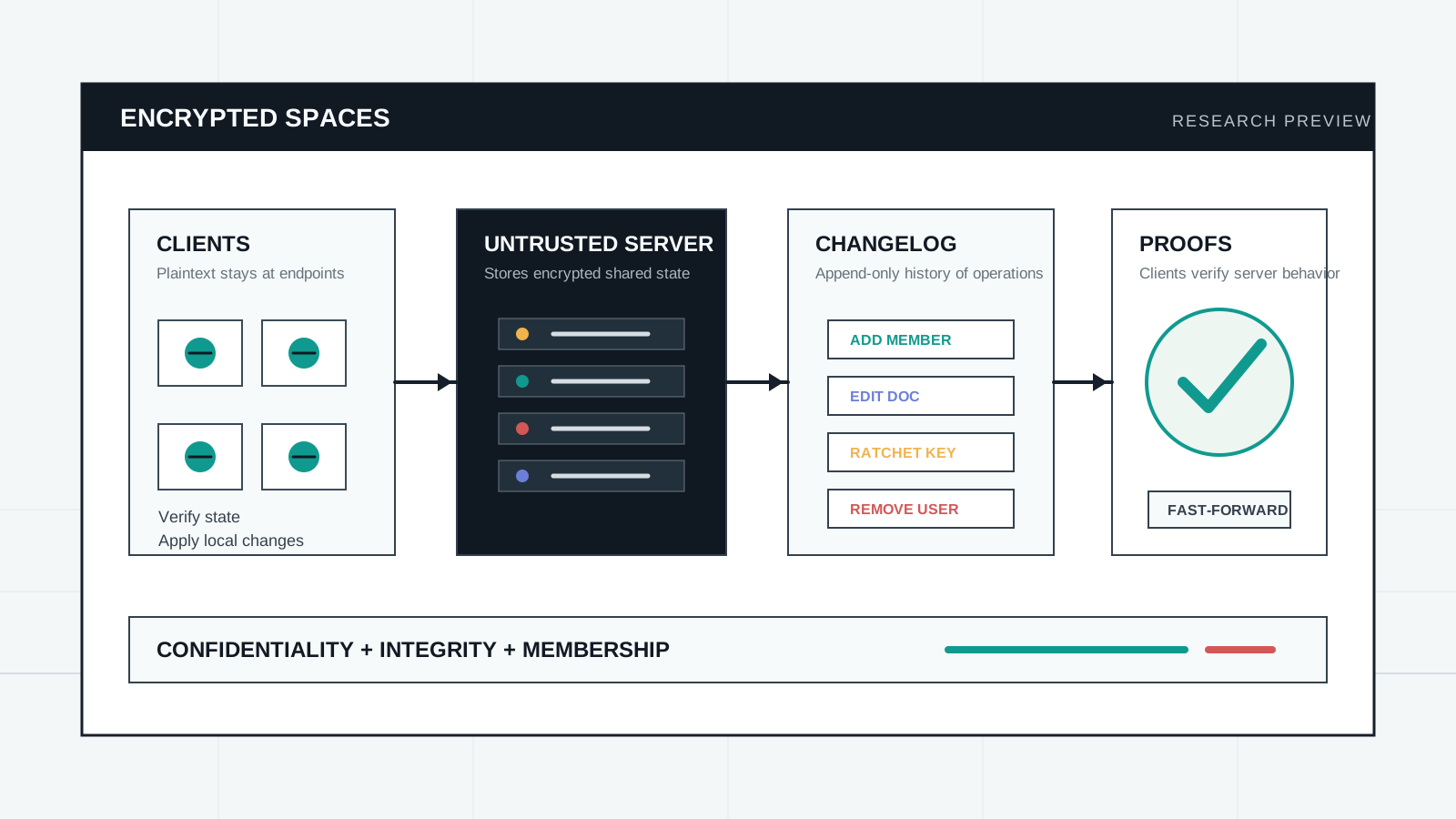
Encrypted Spaces released a June 11, 2026 research preview, whitepaper, and open-source prototype for building collaborative applications where servers store shared state but should not read plaintext user data. The project is aimed at the hard middle ground between private messengers and full collaboration suites: chat, files, notes, calendars, tables, and workflows that need durable shared state across many people and devices.
The release matters because most end-to-end encryption discussions still assume a simple message path. Collaboration software is different. A Slack-like or Google Docs-like service needs membership changes, history, access control, retention, search, edits, conflict handling, and server-side synchronization. Encrypted Spaces proposes a cryptographic architecture for that world, using encrypted state, changelogs, key management, and verifiable proofs. It is promising work, but the project itself describes it as active research, not a finished system.
Key Takeaways
- check_circle Encrypted Spaces is a research preview published on June 11, 2026, not a production collaboration service.
- check_circle The core idea is to let servers store and synchronize shared application state while clients verify cryptographic proofs about that state.
- check_circle The design targets collaboration features that ordinary two-party messaging protocols do not naturally handle.
- check_circle Its own materials warn that some metadata and explicitly unencrypted schema information can remain visible to the server.
- check_circle Teams should treat the release as a security architecture to study, prototype, and audit before relying on it for sensitive operations.
- check_circle The practical near-term value is a better checklist for evaluating encrypted collaboration claims.
What Was Released
Encrypted Spaces published a research preview site, a 42-page architectural whitepaper dated June 11, 2026, and a GitHub organization containing a Rust research prototype. The site describes the project as an architecture for collaborative applications where data is encrypted and operations are cryptographically verifiable. It is not presented as a shipping product, and the project page explicitly says the properties described apply to a protocol still under design and review.
WIRED's launch coverage places the work in the lineage of Signal group privacy research, with contributors from CNRS, Harvard, Microsoft Research, and independent applied-cryptography work. That reporting is useful for timeline and context, but the stronger evidence is the project material itself: the whitepaper, the stated threat model, the prototype, and the public warning that this is active research.
Why Collaboration Is Harder Than Messaging
A private one-to-one messenger can treat the server as a delivery pipe. That model is not enough for a collaborative workspace. A collaboration product has long-lived shared state: documents, task lists, group membership, files, permissions, calendar entries, comments, and edits. People join and leave. Some history should remain available, some should not. Multiple devices need a consistent view. Servers are expected to make the product fast and reliable without forcing every client to replay years of changes.
The Encrypted Spaces whitepaper starts from that tension. It says modern collaboration tools increasingly rely on centralized backends that store and mediate shared state, and that most deployed systems process that state in plaintext. The project's goal is not only confidentiality. It also wants users to verify that the server processed encrypted state correctly. That is a higher bar than simply saying the server cannot decrypt a message body.
What The Architecture Claims
The project describes an encrypted space as a shared, persistent data system with five major components: membership state, a verifiable database with an append-only changelog, key management, key retention, and application-defined operations. The server acts as a centralized store and synchronization point, but clients should not have to trust it with plaintext sensitive data. Users verify proofs that the server behaved correctly.
The whitepaper's cryptographic structure is built around encrypted application state, hash commitments, Merkle-style inclusion proofs, and fast-forward proofs that let a client authenticate a later state without downloading and applying the entire changelog. The paper also discusses dynamic group membership, including adding users, deleting data, rekeying after removal, and limiting access to data whose lifetime overlaps with a user's membership. Those details are exactly where encrypted collaboration usually becomes difficult.
The Limits Matter
The project is careful about its threat model. It says the host server could still observe communications metadata such as IP addresses, as well as any unencrypted data stored in the space. It also notes that the application schema can define what is encrypted and what the server can see to support richer queries. In other words, the promise is not invisibility. It is a design for reducing server trust while preserving enough structure for collaboration.
Availability is also treated differently from confidentiality. The whitepaper gives the server responsibility for keeping the system running and for rejecting certain bad client operations, because malicious group members can be an availability risk. That is a useful reminder for product teams: encrypted collaboration does not remove every trusted role. It changes what the server is trusted to do and makes some failures detectable.
How To Evaluate It
The near-term question is not whether everyone should migrate from Slack, Discord, Google Docs, Matrix, or shared drives. They should not. The near-term question is whether Encrypted Spaces gives developers and cryptographers a credible common surface for reviewing encrypted collaboration. A reusable framework can be valuable only if the primitives, implementation, protocol transitions, client UX, recovery behavior, and audit process withstand hostile review.
Security teams evaluating prototypes should ask concrete questions. Which data fields remain visible to the server? What metadata is observable? How are keys generated, stored, rotated, and destroyed? How are membership changes verified? What happens when a client is offline for months? How is history shared with new members? What does deletion mean if another member already had the key? What denial-of-service paths remain? What proof system and implementation assumptions are being made?
What Community Operators Should Do Now
For community operators, the release is best read as a map of hard problems rather than a migration plan. If a vendor claims secure collaboration, ask how it handles group membership, history, server-visible metadata, backup, device addition, admin visibility, retention, abuse reporting, and search. If the vendor says the product is end-to-end encrypted but cannot explain those boundaries, the product may still be useful, but the claim is incomplete.
Encrypted Spaces also sharpens the difference between content privacy and operational control. Communities still need moderation, incident response, legal process handling, export controls, and member recovery. A cryptographic architecture can reduce what a server learns, but it does not decide whether a moderator can see a reported message, whether a compromised device can export history, or whether a workspace should keep certain records at all. Those are product and governance decisions.
Checklist
- Treat Encrypted Spaces as a research preview until the protocol, code, and deployment model receive broader review.
- Ask encrypted collaboration vendors to identify which fields, indexes, metadata, and access patterns remain server-visible.
- Review group membership, key rotation, member removal, and history-sharing behavior before moving sensitive rooms.
- Separate confidentiality claims from availability, moderation, retention, search, and recovery requirements.
- Require external cryptographic review for any production system built on the prototype.
- Test what happens when clients are offline, compromised, removed, or restored from backup.
- Document which collaboration workflows actually need server-side plaintext and which can tolerate stricter privacy.
Sources
Continue Reading
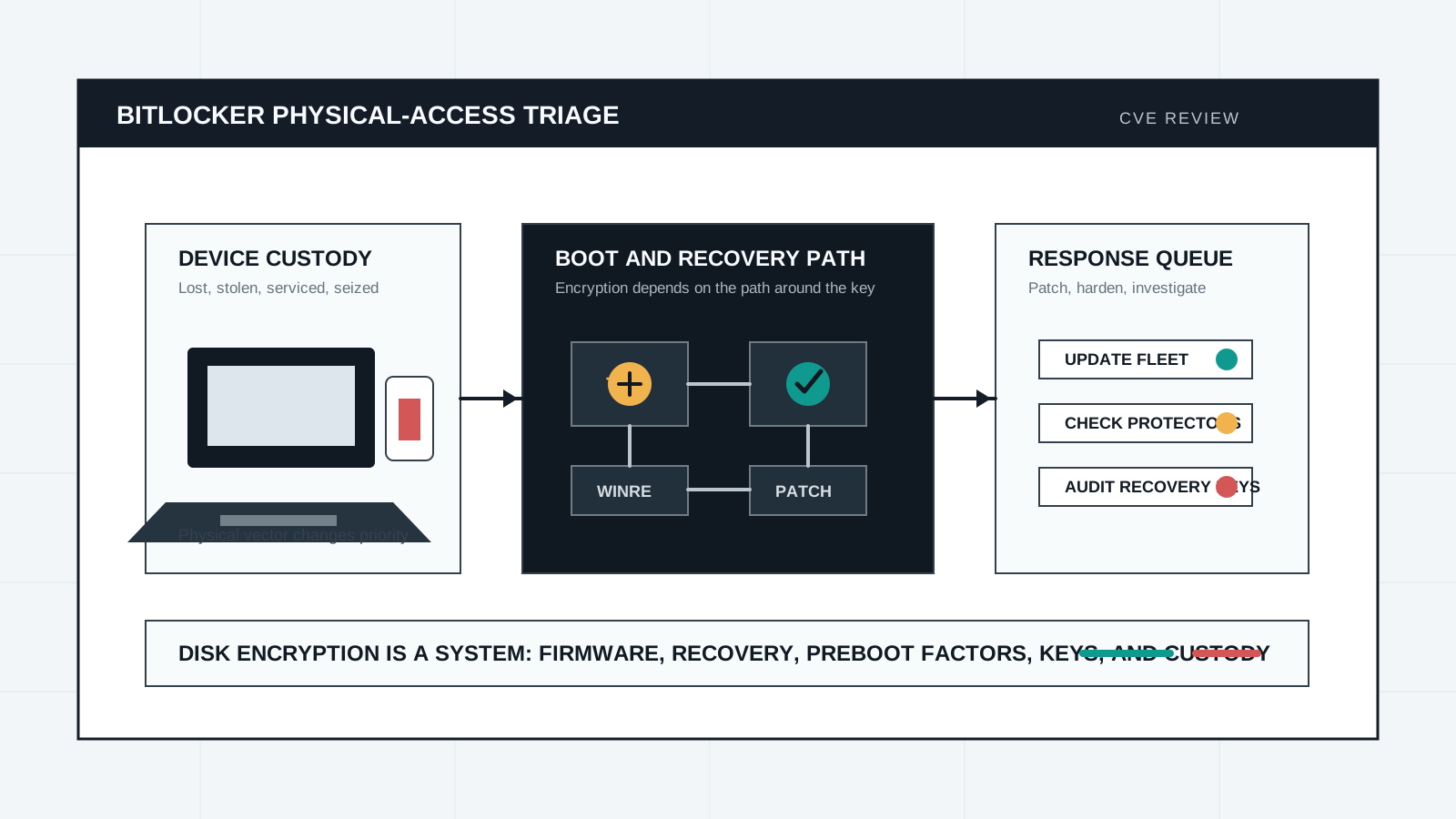
YellowKey Puts BitLocker Back On The Physical-Access Checklist
Microsoft and NVD records for YellowKey put BitLocker risk back on the physical-access checklist. Patch, review TPM-only devices, and reserve TPM+PIN for laptops that leave controlled spaces.
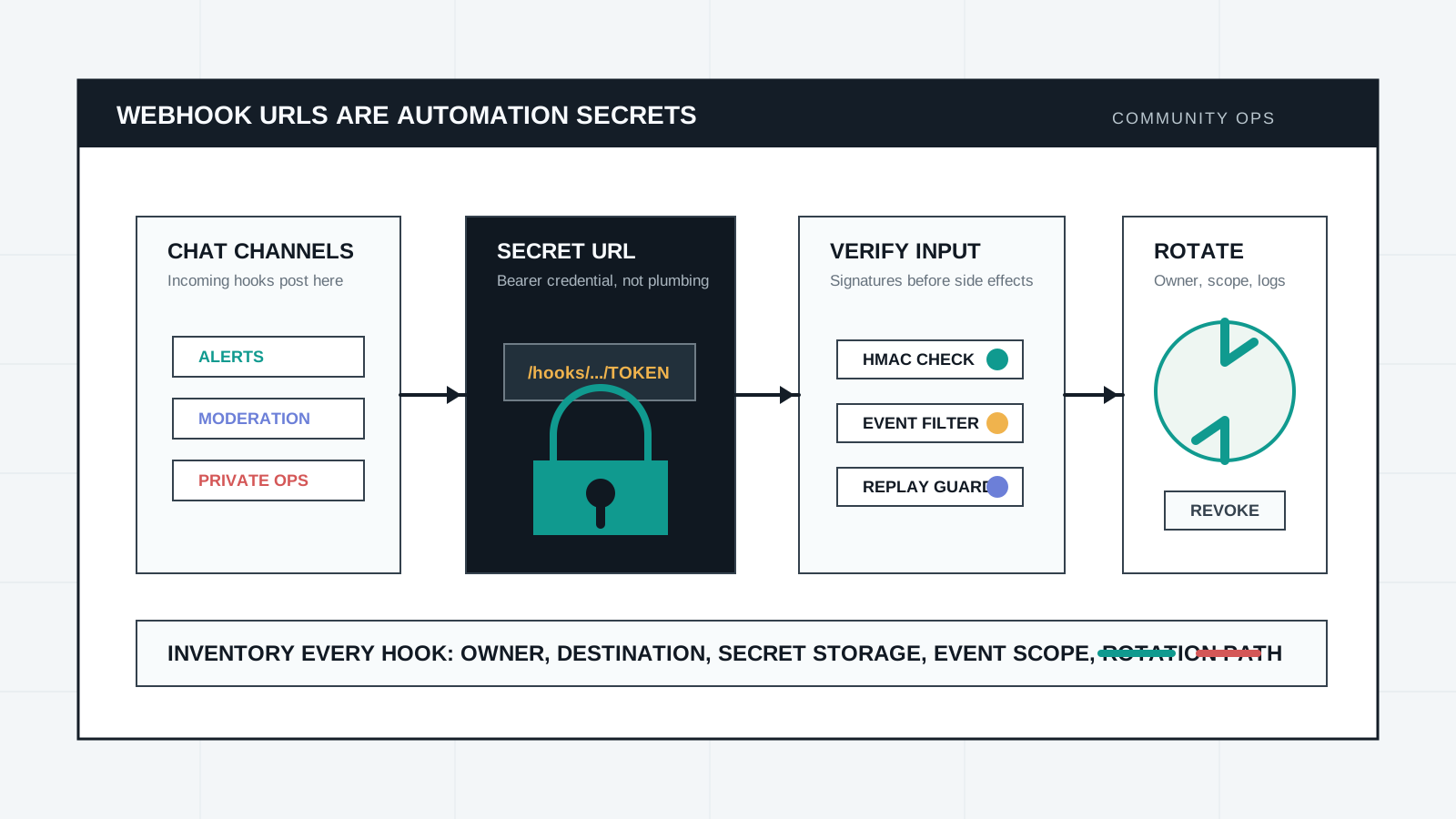
Webhook URLs Are Community Automation Secrets
Slack, Discord, GitHub, and payment webhooks often sit between chat rooms, repositories, bots, and operational systems. Treat each URL and signing secret like a credential with owner, scope, rotation, and logging.
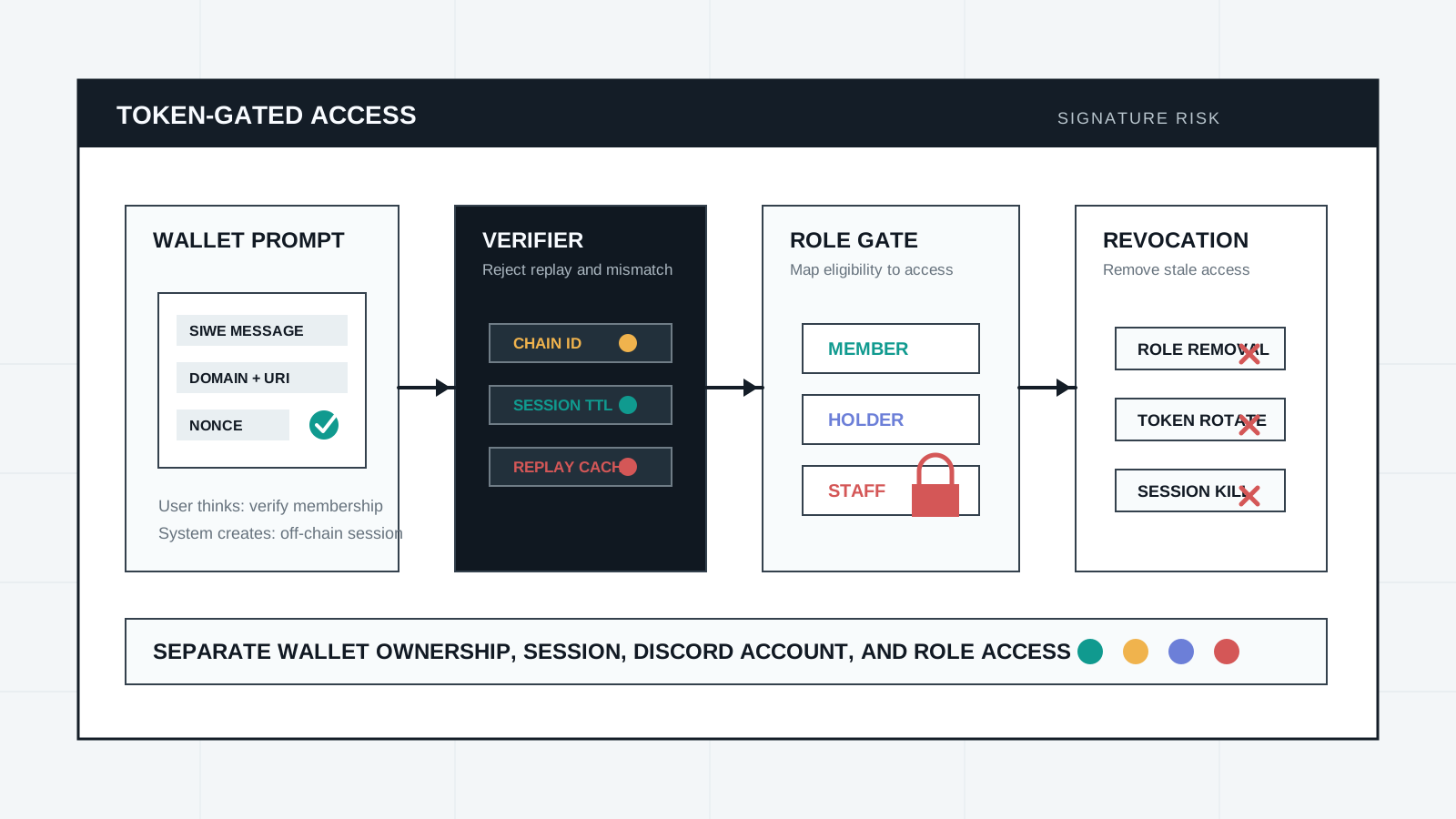
Token-Gated Discord Starts With Signature Risk
Token-gated communities often ask members to connect wallets, sign messages, and receive Discord roles. The danger is not only asset approval; it is session, domain, and role integrity.