Webhook URLs Are Community Automation Secrets
Slack, Discord, GitHub, and payment webhooks often sit between chat rooms, repositories, bots, and operational systems. Treat each URL and signing secret like a credential with owner, scope, rotation, and logging.
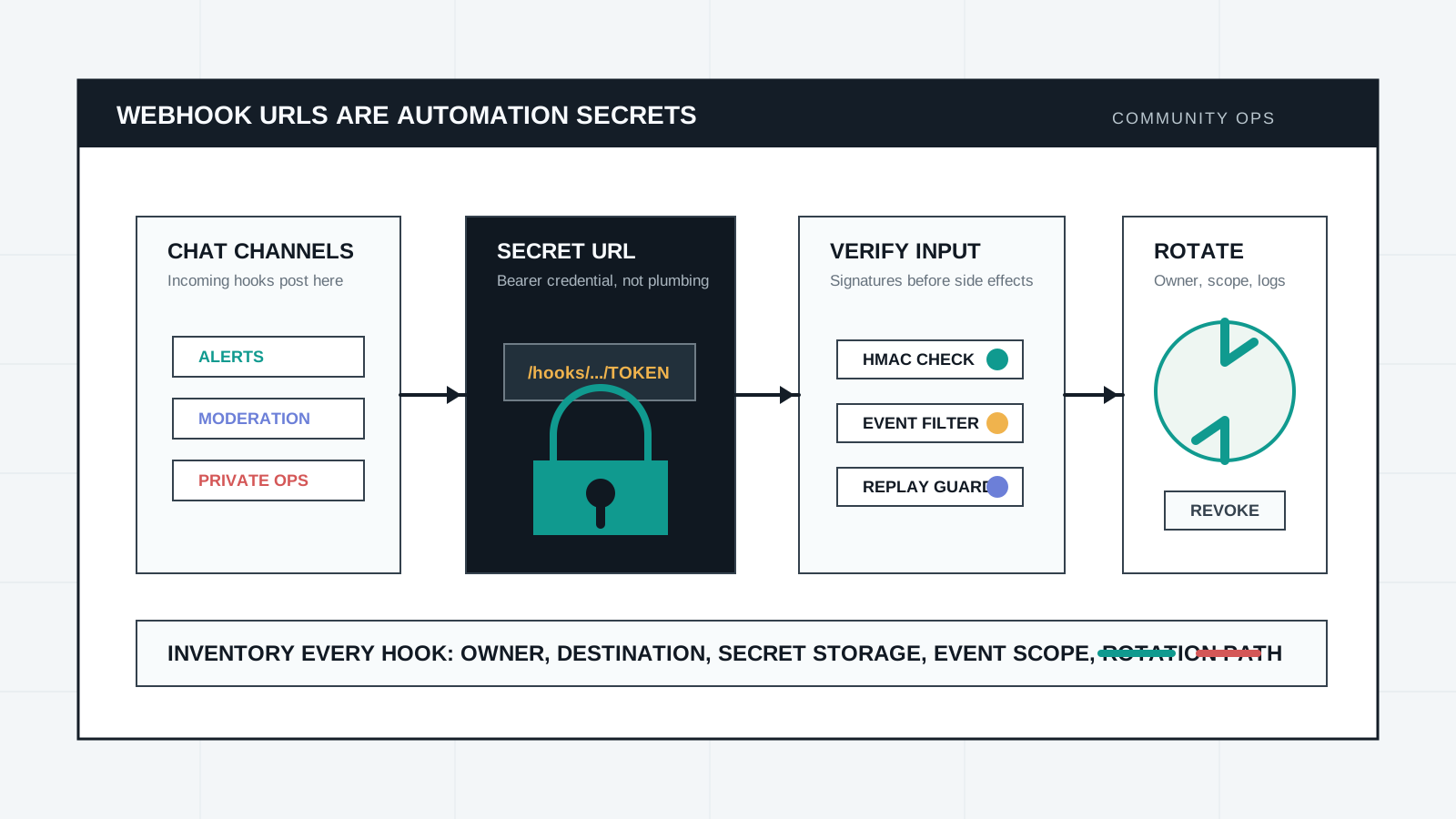
Webhook security often gets treated as integration plumbing. For community operators, developer groups, token-gated servers, and small teams, it is closer to credential management. A Slack incoming webhook URL can post into a specific channel. A Discord incoming webhook includes a secure token and can post without a bot user. A GitHub outbound webhook can trigger deploys, role sync, moderation workflows, billing updates, or incident alerts. Any one of those links can become an automation credential if it leaks or accepts unverified input.
The practical fix is to give webhooks the same lifecycle as secrets and the same input discipline as APIs. Incoming chat webhooks need narrow channels, clear owners, storage outside code, rotation procedures, and leak monitoring. Outbound webhooks need high-entropy signing secrets, signature verification over the raw body, event filtering, replay handling, and queues. The goal is not to make automation slower. It is to keep a copied URL, spoofed delivery, or malformed message from becoming an administrative action.
Key Takeaways
- check_circle Treat every incoming webhook URL as a bearer credential, even if it can only post to one channel.
- check_circle Keep webhook URLs and signing secrets out of source code, issue trackers, screenshots, chat transcripts, and public docs.
- check_circle Verify outbound webhook signatures before parsing or processing payloads.
- check_circle Filter event type and action before doing work; broad event subscriptions increase blast radius and noise.
- check_circle Sanitize user-controlled message text and restrict mentions so automation cannot unexpectedly notify or impersonate groups.
- check_circle Assign each webhook an owner, channel, purpose, rotation procedure, and removal date.
Why Webhooks Need A Threat Model
A webhook is a simple idea: one system sends an HTTP request when something happens, or another system posts to a prebuilt URL to publish a message. That simplicity is why webhooks spread everywhere. Community servers use them for GitHub releases, moderation queues, incident alerts, billing events, token-gate checks, CI results, event signups, and support escalations.
The security problem is that the URL or signing secret often outlives the context around it. A volunteer creates a Discord webhook for an announcement channel. A developer puts a Slack incoming webhook into a script. A maintainer adds a GitHub webhook to a private service. Six months later, nobody knows who owns it, where the URL is stored, what events it accepts, whether the channel is still appropriate, or how to rotate it during an incident.
Incoming Chat Webhooks Are Bearer Credentials
Slack's incoming webhook documentation is direct: the generated URL contains a secret and should not be shared online, including in public repositories. Slack also says incoming webhooks are specific to a single user and a single channel, and that Slack actively searches for and revokes leaked secrets. Those details define the model. Whoever has the URL can send messages through that integration until the URL is disabled or revoked.
Discord's documentation makes the same pattern visible in a different shape. Incoming webhooks can post messages to channels with a generated token, and some webhook-with-token operations do not require normal authentication. Creating or listing webhooks requires the Manage Webhooks permission, but execution depends on possession of the tokenized URL. That makes channel choice, permission to create webhooks, and webhook inventory part of community administration.
Outbound Webhooks Need Verification
Outbound webhooks invert the risk. Instead of protecting a URL that can post to chat, the receiving service has to prove that an incoming request really came from the expected provider and was not modified. GitHub's webhook guidance recommends using a high-entropy webhook secret, HTTPS, SSL verification, IP allow lists where appropriate, event filtering, and replay protection with the delivery identifier.
GitHub's validation documentation explains the core control: create a secret token, store it securely, calculate an HMAC over the payload, and compare it with the signature header before processing the delivery. Stripe's webhook guidance makes a related point that trips up many implementations: signature verification depends on the raw request body. If a framework parses, reorders, or normalizes the body before verification, a legitimate event may fail validation or a handler may end up validating the wrong bytes.
Message Content Is Also Input
A chat webhook is not only a credential problem. It is also an input-rendering problem. Discord warns developers to sanitize user-generated strings passed into webhook message content and to use allowed mentions to prevent unexpected mentions. That matters for any workflow where outside data becomes chat output: GitHub issue titles, support tickets, payment metadata, username fields, incident labels, package names, or moderation reports.
The danger is not limited to spam. A malicious title can trigger broad mentions, impersonate a trusted service, hide context in formatting, or create urgency around a false action. Community operators should decide which webhook messages are allowed to ping everyone, which may include links, which can embed files, and which must route to a moderation or review channel before reaching a public room.
Rotation Is An Operations Problem
Webhook rotation fails when the only record is a URL pasted into a script. OWASP's secrets guidance emphasizes lifecycle controls such as creation, rotation, revocation, expiration, auditing, and centralized handling. Those concepts fit webhooks well. Each webhook should have a named owner, a destination, a source, a purpose, a storage location, a creation date, and a known path for disabling or replacing it.
Rotation should be rehearsed before a leak. For Slack and Discord, that means knowing how to disable or delete the old webhook and validate that dependent jobs stop using it. For GitHub, Stripe, and other outbound senders, it means supporting overlapping secrets or coordinated cutover when possible, then confirming that stale deliveries are rejected. For incident response, logs should answer when the webhook was used, what it posted or triggered, which source sent it, and whether errors or unusual volumes appeared.
A Practical Operating Model
Start with inventory. List all incoming chat webhooks, outbound service webhooks, workflow triggers, and bot-created hooks. Map each one to a channel, repository, billing system, queue, or internal endpoint. Delete anything with no owner or current purpose. Move remaining secrets into a secret manager or controlled platform setting, not source code or shared documents.
Then reduce blast radius. Use one webhook per purpose instead of one shared URL for every automation path. Subscribe to the minimum events needed. Verify signatures before parsing. Enqueue work and acknowledge quickly so webhook delivery retries do not create duplicated side effects. For chat output, set mention restrictions and treat all outside strings as untrusted. Finally, add webhook review to offboarding, channel archival, repository transfer, and incident-response checklists.
Checklist
- Inventory Slack, Discord, GitHub, payment, CI, and custom webhooks with owner, destination, and purpose.
- Move webhook URLs and signing secrets into approved secret storage.
- Use high-entropy webhook secrets and verify signatures before parsing payloads.
- Subscribe only to necessary events and check event type plus action before processing.
- Restrict mentions, sanitize user-controlled text, and route sensitive messages to private review channels.
- Define a rotation and revocation process for every webhook before it leaks.
- Review webhook access during admin offboarding, channel archival, repository transfer, and incident response.
Sources
- Slack Developer Docs: Sending messages using incoming webhooks open_in_new
- Discord Developer Docs: Webhook resource open_in_new
- GitHub Docs: Best practices for using webhooks open_in_new
- GitHub Docs: Validating webhook deliveries open_in_new
- OWASP Cheat Sheet Series: Secrets Management open_in_new
- Stripe Docs: Resolve webhook signature verification errors open_in_new
Continue Reading
Fable 5 Suspension Makes AI Safety A Deployment-Control Issue
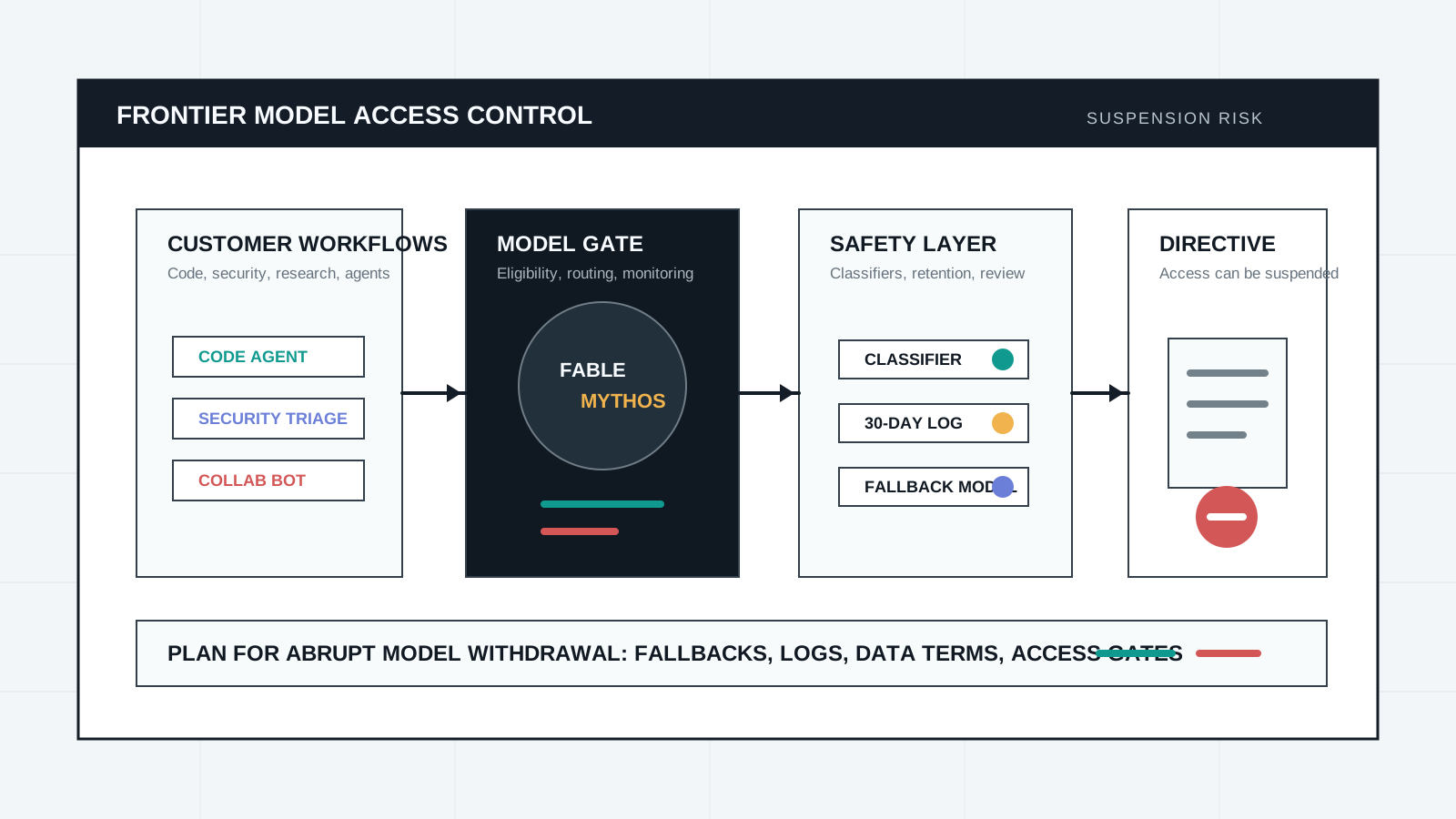
Anthropic says a US government directive forced it to disable Fable 5 and Mythos 5 after a narrow jailbreak concern. The practical lesson is access design, retention policy, and fallback planning.
YellowKey Puts BitLocker Back On The Physical-Access Checklist
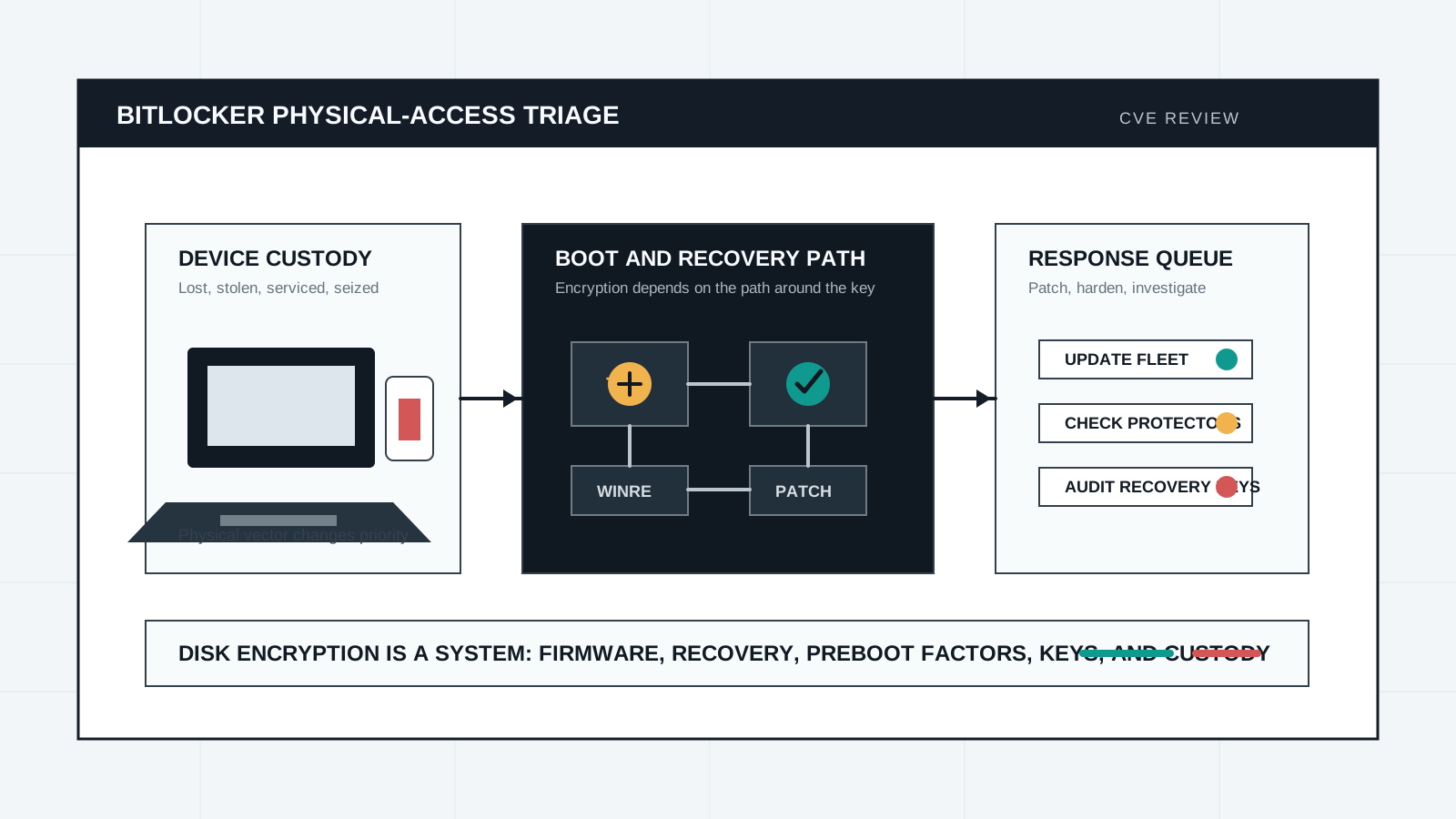
Microsoft and NVD records for YellowKey put BitLocker risk back on the physical-access checklist. Patch, review TPM-only devices, and reserve TPM+PIN for laptops that leave controlled spaces.
Encrypted Spaces Pushes E2EE Beyond Chat
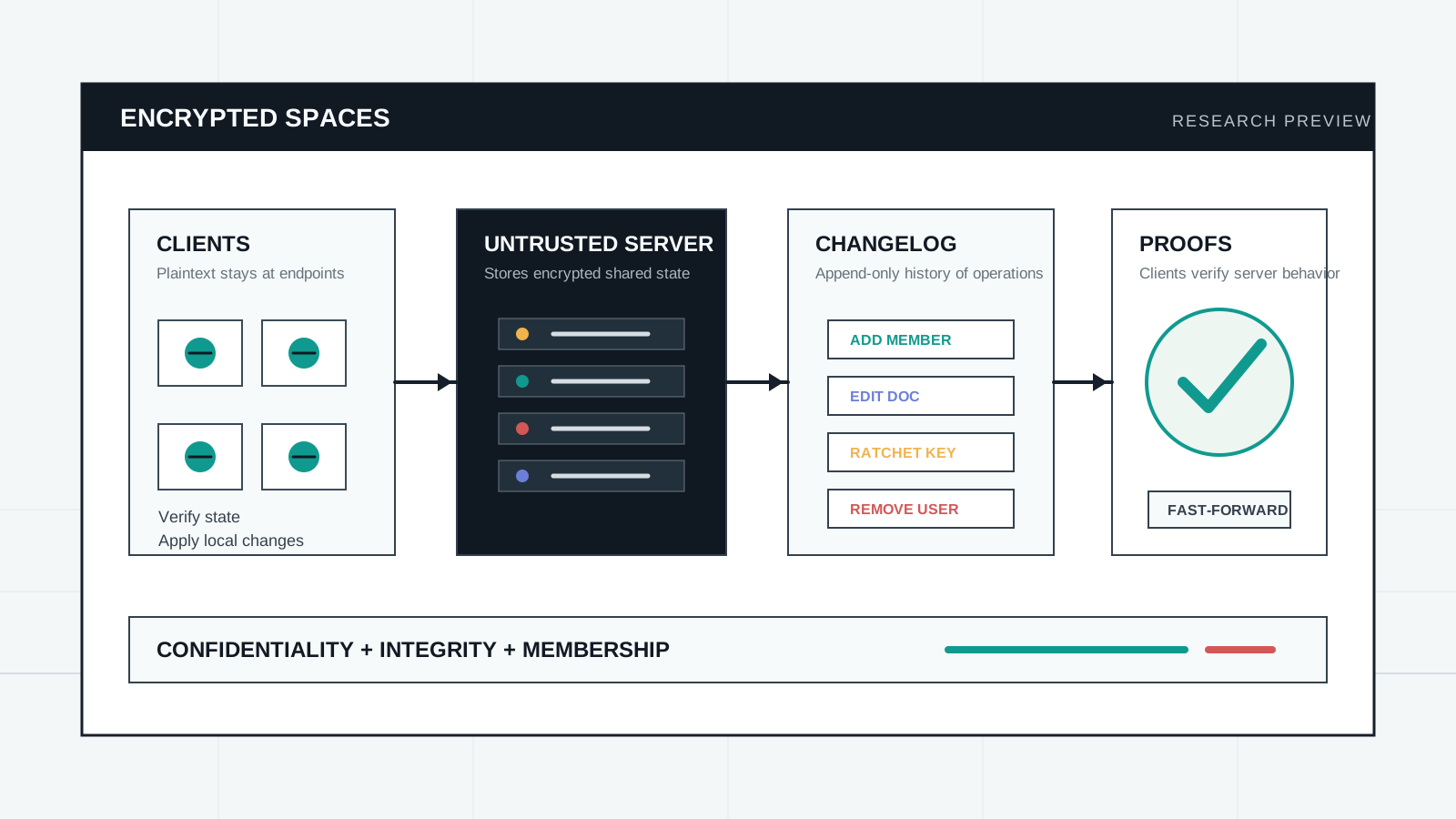
The June 11 Encrypted Spaces research preview proposes Slack-like collaboration on untrusted servers. The idea is important, but it is still a prototype that needs review before teams treat it as infrastructure.