Telegram Restriction Turns Message Editing Into Platform Risk
India's National Testing Agency says Telegram access is restricted until June 22 and message editing is disabled until June 30 around the NEET re-exam. The practical issue is auditability, not only chat privacy.
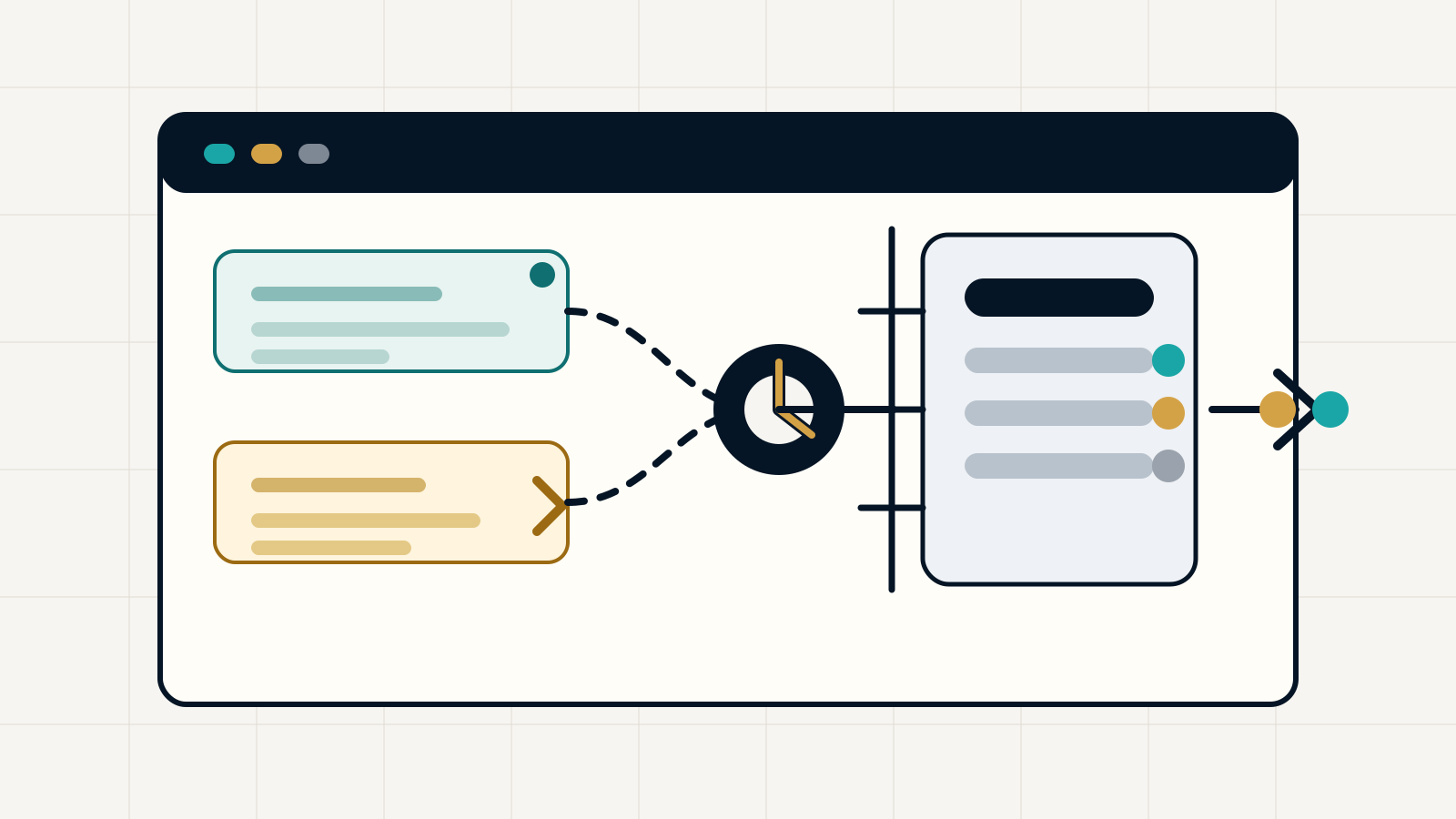
India's National Testing Agency said on June 16 that it recommended a temporary Telegram restriction until June 22, 2026, and a separate disabling of Telegram's message-editing feature until June 30. The agency tied the recommendation to the NEET UG re-examination and alleged that edited Telegram material had been used to create false evidence of paper leaks.
For community operators, educators, exam bodies, and platform-security teams, the useful lesson is not that one app is uniquely unsafe. It is that message editing, forwarded media, private channels, public groups, takedown queues, and official communications all become part of the trust boundary when a platform is used for time-sensitive public coordination.
Key Takeaways
- check_circle NTA's public statement is the primary confirmed source for the recommended Telegram restriction and message-editing disablement window.
- check_circle News reports say the Delhi High Court declined to interfere with the temporary restriction, but the exact legal reasoning should be treated as reporting unless the order is reviewed directly.
- check_circle Message editing is a product feature with a security cost: it can improve usability, but it complicates later proof about who said what and when.
- check_circle Takedowns and platform blocking are blunt tools; high-stakes institutions need stronger official channels and faster authenticity checks before a crisis.
- check_circle Telegram users and admins should avoid assuming that encryption, channel membership, or forwarded screenshots settle authenticity.
- check_circle The best operational response is evidence preservation, verified public communications, edit-history controls where available, and clear fraud-reporting paths.
What Is Confirmed
The strongest source is NTA's own June 16 statement. NTA said it had found that Telegram was being used to disseminate false information about alleged NEET UG paper leaks. It also said edited messages and screenshots were being used to fabricate evidence. The agency described its recommended access restriction as temporary and tied it to the re-examination period.
NTA's stated timeline matters. The agency said the Telegram restriction would run until June 22, 2026, and that message editing would remain disabled until June 30, 2026. That is materially different from an open-ended platform ban. It also turns attention toward a specific feature, message editing, rather than treating the whole event as a generic content-moderation dispute.
What Reporting Adds
The Times of India and Economic Times reported that the Delhi High Court upheld, or declined to interfere with, the temporary restriction before the NEET re-exam. Those reports are useful for timeline context, but they are not the same as reading the court order. The practical conclusion should therefore be narrow: a reported court challenge did not stop the temporary measure from taking effect.
The same reporting also described network-level effects and public concerns about access to Telegram during the restriction window. Those details help explain why temporary platform controls become controversial quickly. A messaging app is not only a place where rumors spread. It may also be a business channel, education group, customer-support path, activist tool, or family communication layer.
Why Message Editing Is A Security Feature
Editability is usually presented as a quality-of-life feature. People make mistakes, correct typos, update event details, and fix broken links. In casual rooms that is fine. In a high-stakes setting, the same feature can make later evidence harder to evaluate, especially when screenshots, forwarded files, and cropped posts circulate faster than platform-side audit records.
The core question is not whether edited messages are always suspicious. They are not. The question is whether a reader, moderator, investigator, or journalist can distinguish the original state from the later state with enough confidence. When that confidence is missing, edited message artifacts become a low-cost way to create panic, accuse institutions, move markets, impersonate insiders, or pressure admins into emergency action.
Blocking Is A Weak Last Line
Platform blocking can reduce immediate distribution, but it is a weak last line of defense. False material can move through screenshots, mirrors, alternate apps, SMS, email, video clips, and social feeds. The more consequential the event, the faster audiences will copy material outside the original platform. A restriction can slow one path while leaving the information problem intact.
A better control starts before the incident. Exam bodies, private communities, creator groups, and token-gated projects should maintain official channels that are already known before a crisis. Members should know where authentic notices appear, how changes are signed or verified, which channels are only informational, and where fraud should be reported. If the first authenticity plan is announced during the rumor wave, it is late.
What Community Operators Can Copy
Community operators do not run national exams, but they face similar patterns at smaller scale. A fake moderator post, edited announcement, fabricated wallet-drainer warning, or altered ban screenshot can trigger panic in a Discord server, Telegram group, Slack workspace, WhatsApp community, or forum. The response should include preserved originals, moderator-only audit records, official announcement channels, and a public correction path that does not depend on arguments inside the same room where the false claim is spreading.
Admins should also treat message-editing policy as a room classification issue. Casual lounges can allow broad editing. Announcement rooms, finance rooms, incident rooms, legal rooms, exam rooms, support escalation channels, and governance spaces may need shorter edit windows, immutable announcement copies, versioned posts, or separate archives. The point is not to remove every convenience. It is to stop convenience features from becoming the only evidence layer.
Unknowns And Limits
There are important unknowns. Public sources do not prove the full volume of false material, the exact platform-enforcement mechanics, or whether every affected Telegram user had a clear alternative channel. Telegram's own public FAQ describes broad platform capabilities, but it does not resolve the specific Indian enforcement facts. Any claim about Telegram's intent, cooperation, or internal moderation should be avoided unless Telegram or the court record confirms it.
The restrained lesson is still useful. High-trust communication needs provenance. Encryption protects content from some readers. Moderation removes some content after review. Neither one, by itself, proves that a viral screenshot was authentic at a specific time. If an organization depends on chat during a sensitive event, it needs a way to preserve state, publish verified corrections, and explain which messages are authoritative.
Checklist
- Publish a pre-known official channel list before a sensitive event starts.
- Use announcement channels where only authorized accounts can post and where edits are restricted or versioned.
- Preserve original messages, attachments, timestamps, and moderation logs before deleting suspected fraud material.
- Create a public fraud-reporting path that does not require users to amplify the suspicious post.
- Tell members how corrections will be signed, posted, and archived.
- Avoid treating screenshots as proof unless the original platform record or sender can be verified.
- Review edit windows and posting rights for exam, finance, governance, support, and incident rooms.
Sources
- National Testing Agency: Telegram restriction statement, June 16, 2026 open_in_new
- Times of India: Delhi High Court upholds Telegram ban ahead of NEET UG re-exam open_in_new
- Economic Times: government blocks Telegram until June 22 after court upholds ban open_in_new
- Telegram FAQ open_in_new
- Indian Cyber Crime Coordination Centre: National Cyber Crime Reporting Portal open_in_new
Continue Reading
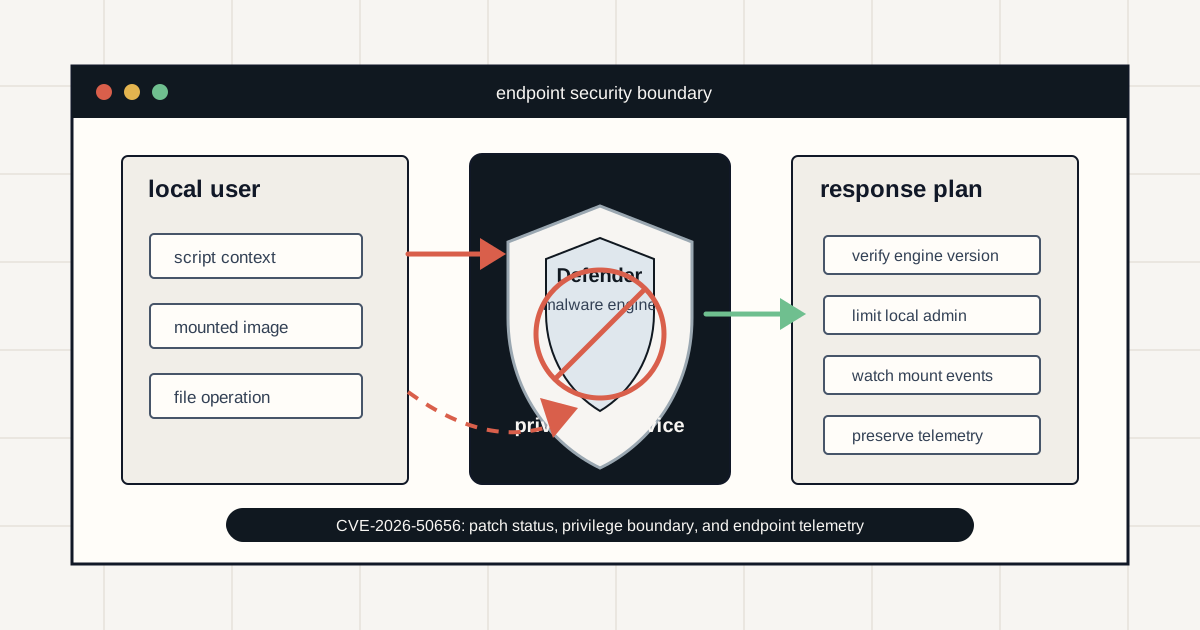
RoguePlanet Shows Defender Is Part Of The Attack Surface
Microsoft and NVD track CVE-2026-50656 as a Microsoft Defender Malware Protection Engine elevation-of-privilege issue. The practical response is patch readiness, local privilege control, and endpoint telemetry.
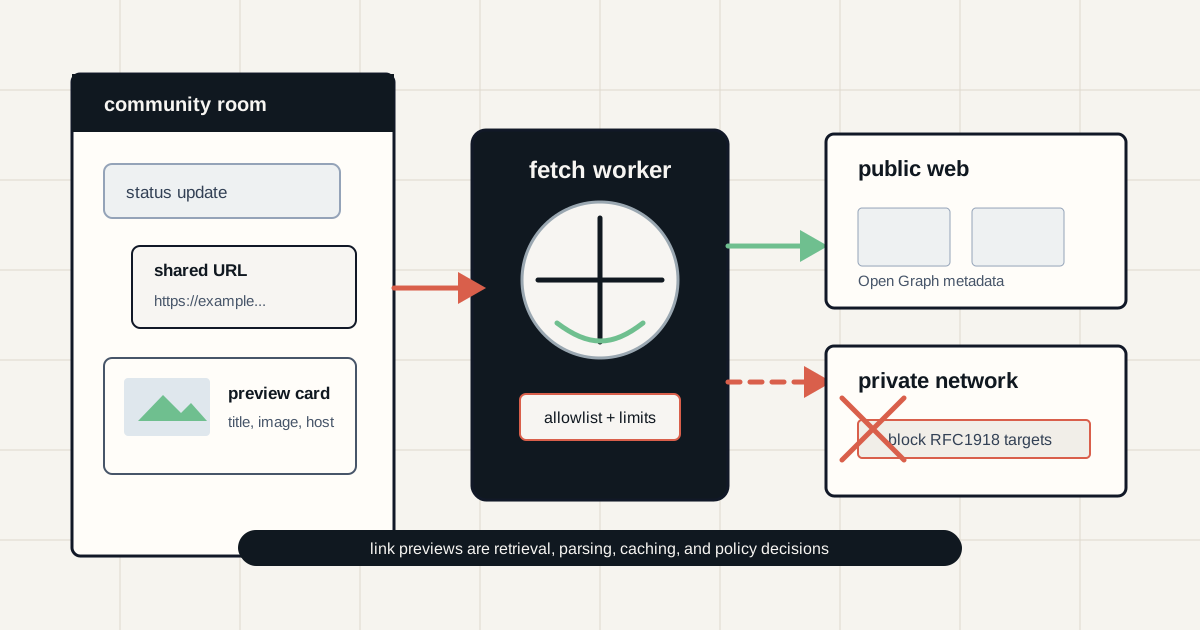
Link Previews Turn Chat Into A Fetch Surface
URL previews in chat tools are not passive decoration. They fetch, parse, cache, and sometimes notify apps about links. Secure rooms need a preview policy as much as a message policy.
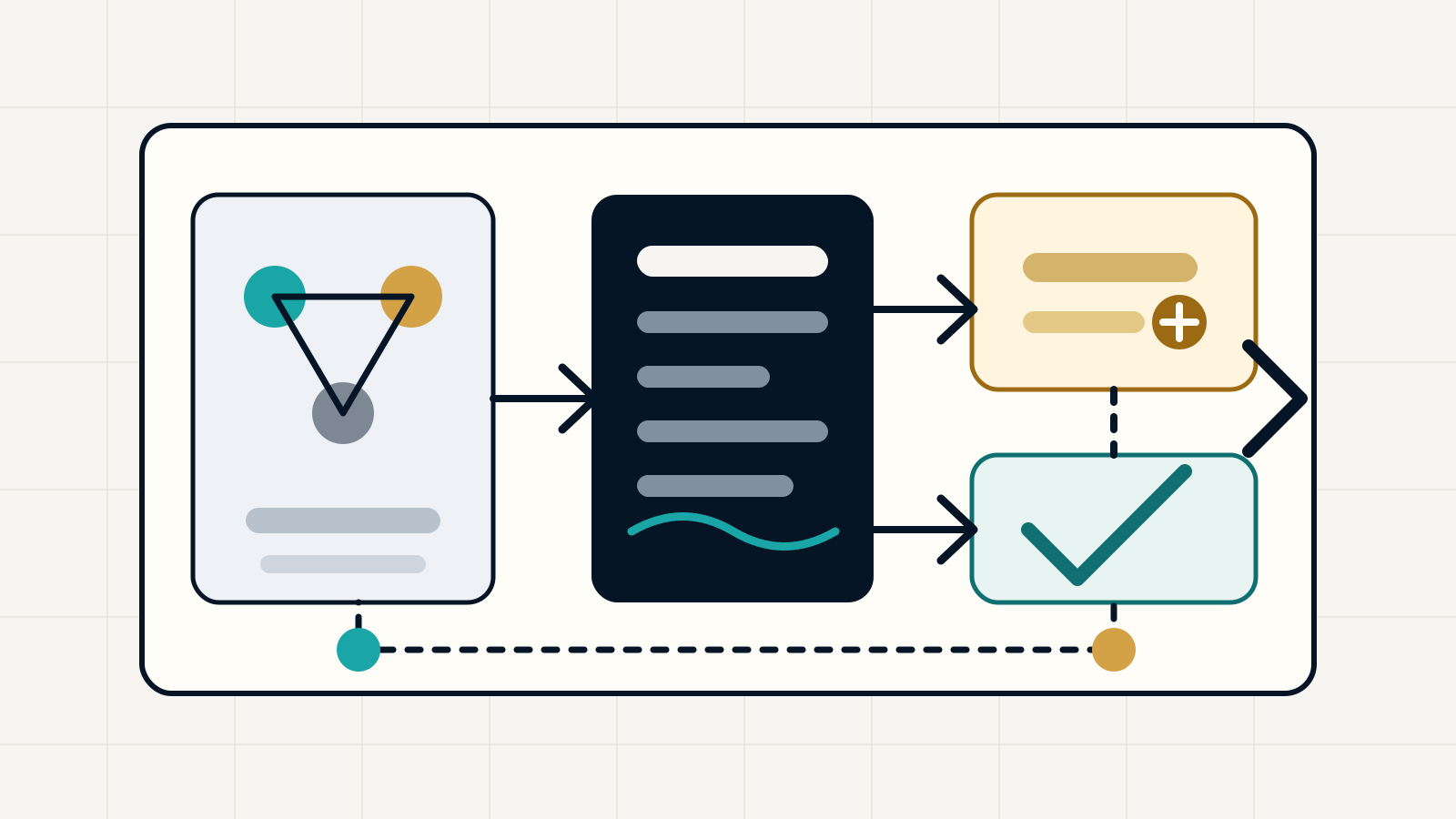
SearchLeak Makes Enterprise AI Search A Data Egress Path
Varonis says Microsoft patched CVE-2026-42824 after a SearchLeak vulnerability chain in Microsoft 365 Copilot Enterprise Search. The durable lesson is permission hygiene and output control.